
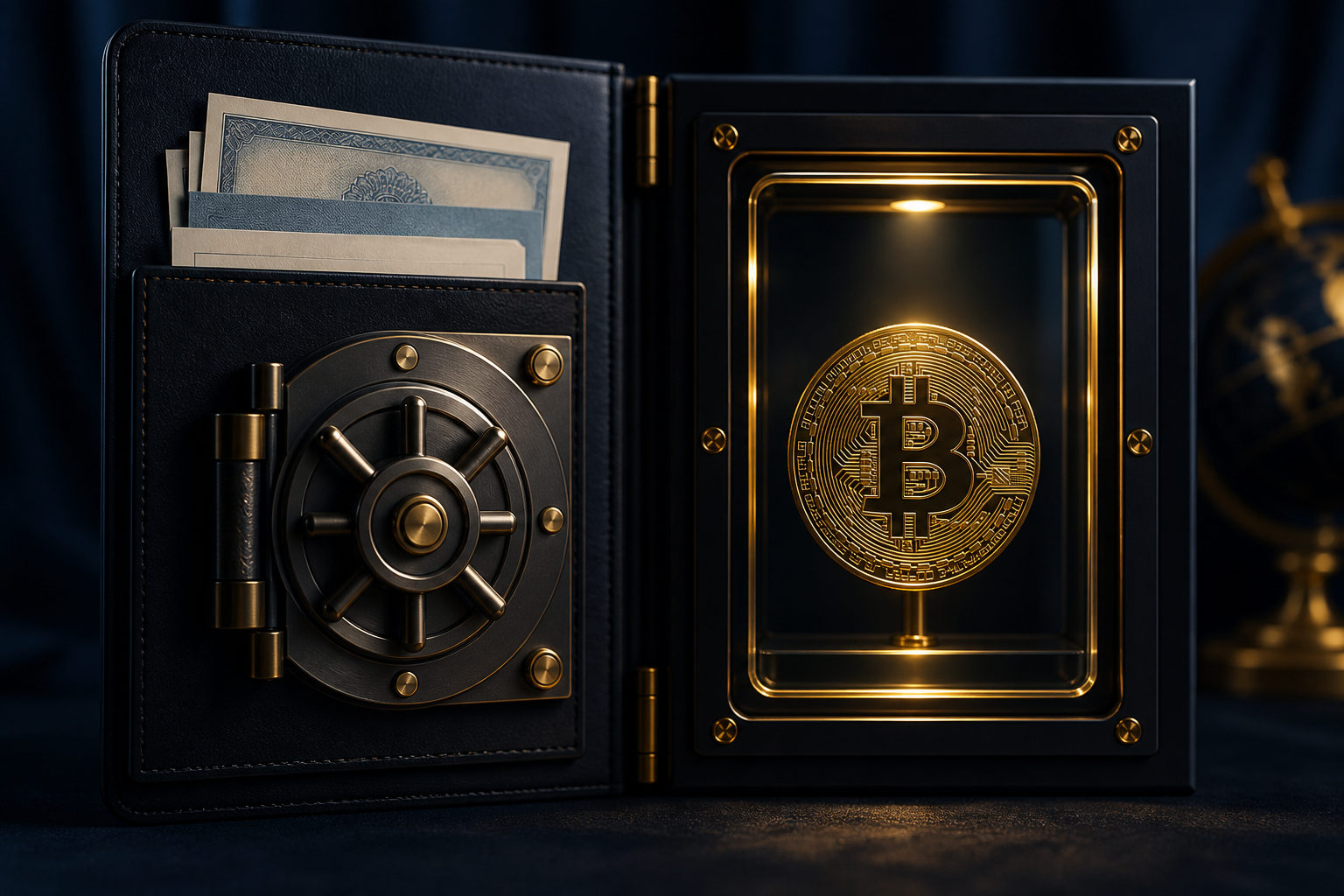
A Bitcoin IRA is an IRA-based retirement account setup that gives you exposure to bitcoin or other crypto assets, rather than a standard personal crypto purchase.
That distinction matters. Many beginners hear the term and assume a Bitcoin IRA is a special kind of coin, or that buying bitcoin anywhere automatically gives it retirement-account treatment. Neither is true. The phrase usually refers to an IRA arrangement offered through a service provider, with its own custody model, operating rules, and tax framework.
What a Bitcoin IRA actually means
It helps to separate the two parts of the term. Bitcoin is a digital asset that runs on a blockchain network. Its white paper, Bitcoin: A Peer-to-Peer Electronic Cash System, was published in 2008 under the name Satoshi Nakamoto, and the genesis block appeared in January 2009. An IRA, by contrast, is a retirement account structure used in the United States. The account structure is the point; bitcoin is the asset placed inside it.
So when people ask what a Bitcoin IRA is, the clean answer is this: it is a way to hold bitcoin within an IRA framework. In practice, that can involve an account administrator, a custodian, a trading venue, and a company that packages the whole process into a single product. For a first-time reader, the key idea is simple: a Bitcoin IRA is about the wrapper around the asset, not a different version of bitcoin itself.
How it differs from buying bitcoin directly
At first glance, both paths seem similar because both can result in bitcoin exposure. The difference is in how the position is held and controlled. If you buy bitcoin directly on a crypto platform, you usually fund an account, place an order, and then decide whether to keep the asset on-platform or move it to a personal wallet. With a Bitcoin IRA, the investment sits inside a retirement account structure and follows the rules attached to that structure.
That changes several things. First, the tax treatment is tied to the IRA, not to a regular personal account. Second, custody often works differently. In many Bitcoin IRA setups, you do not directly control the private keys in the same way you might with self-custody. Third, the operational freedom can be narrower. Transfers, withdrawals, asset movement, and account changes may require extra steps or may be limited by the provider’s process.
In other words, owning bitcoin and owning bitcoin inside an IRA are not the same experience. The account wrapper shapes what you can do, what you must pay for, and what trade-offs you accept.
What should not be confused with a Bitcoin IRA
This is where beginners often get tripped up. A few very different arrangements get grouped together under the same label, even though they do not work the same way.
- Buying bitcoin yourself and planning to keep it for retirement: that is a personal strategy, not automatically a Bitcoin IRA.
- Using a retirement account to buy a bitcoin-related security or fund: that may be indirect exposure rather than direct crypto ownership inside the account.
- Opening a retirement account through a provider that allows crypto investing: this is closer to what most people mean by a Bitcoin IRA.
- Self-custody-focused arrangements: some setups aim for more personal control, but that usually comes with more responsibility and more complexity.
Because of that, it is not enough to ask whether a provider “supports bitcoin.” A better set of questions is: Who administers the account? Who holds the assets? Where are trades executed? Can assets be transferred out? What fees apply? If something goes wrong, which party is responsible?
Common misconceptions beginners should clear up first
Misconception: A Bitcoin IRA is one standard product
It is not. The term is broad. Different firms may offer very different account structures, custody arrangements, fee schedules, and investment menus under a similar label. Two products can sound alike in marketing copy and still work very differently in practice.
Misconception: The IRA format makes bitcoin less risky
The account structure does not change bitcoin’s underlying price volatility. A Bitcoin IRA may affect how the position is held for retirement and how taxes are handled, but it does not remove market risk. The asset can still move sharply.
Misconception: A Bitcoin IRA always means you control the keys
Often, it does not. Many offerings rely on third-party custody because retirement accounts have administrative and compliance requirements. If self-custody matters to you, do not assume it comes by default. You need to read the specific custody terms.
Misconception: Tax benefits matter more than fees
Fees can have a real effect on long-term results. A Bitcoin IRA may involve account setup charges, management fees, custody fees, trading spreads, or other administrative costs. Even without quoting any figures, the principle is clear: if you do not understand the full cost stack, you do not fully understand the product.
What to check before choosing a Bitcoin IRA
A useful way to evaluate one is to follow a sequence: check the account, then the asset, then the operating details. Many beginners do this in reverse and focus only on the bitcoin angle first.
- Confirm the account structure. Read the actual account documents and not just the sales page. You want to know what kind of IRA arrangement is being used and what rules apply.
- Identify what you are really buying. Is it direct crypto exposure inside the account, or a related product that tracks the theme in some other way? Those are not the same thing.
- Review custody terms carefully. Find out who holds the assets, how records are maintained, what happens in the event of an operational issue, and whether transfers are possible.
- Map every fee. Do not stop at the trading fee. Ask about administration, custody, account maintenance, and any charge tied to moving or closing the account.
- Understand liquidity and restrictions. How easy is it to place trades? Are there processing delays? Can you move assets or switch providers without friction? These details affect real-world use.
- Get professional guidance when needed. IRA rules can carry tax and legal consequences. If you are unsure how a specific arrangement applies to your situation, a qualified tax or legal professional is the right person to ask.
For beginners, that checklist is more useful than chasing the most visible brand name. A provider that explains custody, limits, responsibilities, and fees in plain terms is often easier to evaluate than one that leans heavily on slogans.
FAQ
Is a Bitcoin IRA just buying bitcoin in a retirement account?
That is a fair short version, but it leaves out the part that matters most. A Bitcoin IRA is not just a purchase; it is a way of holding the asset inside an IRA structure, which affects custody, tax treatment, and account rules.
Does buying bitcoin on a regular crypto exchange count as a Bitcoin IRA?
Usually no. If you buy bitcoin in a standard personal account, you are simply holding bitcoin directly. Whether something qualifies as a Bitcoin IRA depends on the retirement account structure, not on the asset name.
Are Bitcoin IRAs better for long-term holders?
They can be a fit for some people, especially those focused on retirement account treatment. Still, they are not automatically better. If you care more about flexibility, self-custody, or fewer account restrictions, the trade-offs may not suit you.
Do I control my own private keys in a Bitcoin IRA?
Not always. Some arrangements rely on third-party custody, while others may offer more direct control with added responsibility. You have to check the exact product terms rather than assuming all Bitcoin IRAs work the same way.
What should I do first if I want to understand Bitcoin IRAs?
Start by separating the asset from the account structure. Then review the provider’s documents for custody, fees, transfer rules, and what the account is actually allowed to hold. If the tax side is unclear, get professional advice before opening anything.
If you are still deciding whether this route makes sense, the most practical next step is to compare two paths side by side: holding bitcoin directly versus holding it through an IRA. The right choice usually becomes clearer once you weigh control, restrictions, custody, and account rules together.
Disclaimer: This article is for informational and educational purposes only and is not investment, financial, or legal advice. Crypto assets are highly volatile and you could lose your entire investment. Do your own research and decide carefully.