
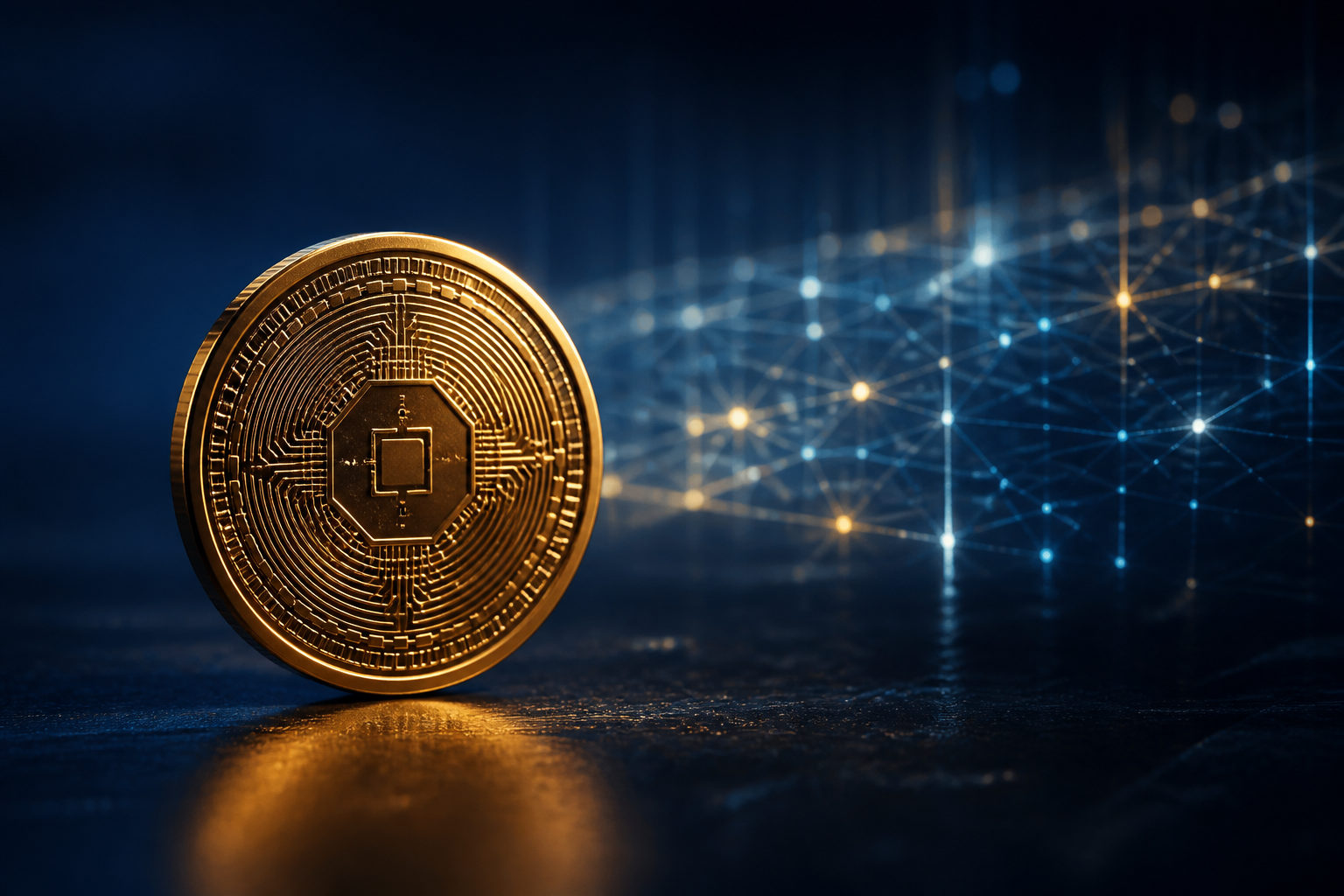
What do bitcoins look like? Real bitcoin does not have a fixed physical appearance. It exists as a digital record on the Bitcoin network, not as a coin you can hold in your hand.
The short answer: bitcoin is not a gold coin
Many beginners picture bitcoin as a shiny gold token with a bold “B” on it. That image is everywhere because it is easy to recognize and works well in articles, apps, and videos. Still, it is only a symbol.
A real bitcoin is not made of metal, paper, or plastic. It is represented by addresses, balances, transaction history, and the private keys that let someone control funds on the blockchain. So when people ask what bitcoin looks like, the honest answer is that they are usually asking about a visual stand-in, not the asset itself.
What people usually see instead
For most users, bitcoin appears inside a wallet app. That means a balance on screen, a receiving address, a QR code, and a list of incoming or outgoing transactions. Those are the forms in which bitcoin is commonly seen in day-to-day use.
This is where a common misunderstanding starts. People often say their bitcoin is “in the wallet,” as if digital coins are sitting there like cash in a pouch. A wallet mainly manages private keys or related credentials. The bitcoin itself remains part of the blockchain record.
Bitcoin is also divisible. Its smallest unit is the satoshi, and 1 satoshi = one hundred millionth of 1 BTC. That alone shows why the idea of one complete coin can be misleading. Bitcoin was built as a digital system from the start.
What does a physical bitcoin look like?
When someone asks what a physical bitcoin looks like, they may mean one of two things. First, they might be talking about a novelty or collector item: a metal round, a display piece, or a souvenir stamped with the bitcoin symbol. Second, they might mean a physical object that stores or points to important access information, such as a printed address or a concealed private key.
Even then, the object itself is not the bitcoin. Its importance depends on whether it still corresponds to actual control over bitcoin on-chain. If it only shows the logo, it is just merchandise. If it contains sensitive access data that has already been exposed, holding the object does not mean holding the bitcoin.
- Real bitcoin: a blockchain-based digital record
- What users see most often: wallet balances, addresses, QR codes, and transaction entries
- Metal coins with the bitcoin symbol: usually props, souvenirs, or visual representations
- Printed cards or codes: possible storage aids, not the asset by themselves
Why the image of a coin is so common
People understand money through physical objects. Coins, notes, and cards all have shape, texture, and size. So when they first hear about bitcoin, it feels natural to ask what it looks like. Visual design fills that gap by turning an abstract network asset into something familiar.
That shortcut is useful, but it also creates confusion. A logo is not ownership. A decorative token is not proof of control. The thing that matters is whether someone controls the private keys tied to bitcoin on the network.
How to think about a “real” bitcoin
If you want a practical mental model, think of bitcoin as verifiable digital ownership recorded across a distributed system. What you can inspect is the wallet interface, the receiving details, and the transaction record. What you cannot expect is a standard physical form shared by every bitcoin.
That is why the question “what does a real bitcoin look like” has a different answer from what many people expect. A real bitcoin looks less like a coin and more like data you can verify, send, receive, and control with the right keys.
FAQ
Does bitcoin look like a gold coin with a B on it?
Usually no. That image is a popular symbol used in media, product design, and educational content because it makes the topic easier to recognize.
Real bitcoin has no fixed material shape or color. It exists as a digital asset recorded on the Bitcoin network.
Can I hold a real bitcoin in my hand?
Not in the way you would hold a regular coin. What you can hold is usually a souvenir, a display item, or a physical carrier linked to access information.
Actual ownership depends on control of the private keys, not on the object's appearance.
Is a physical bitcoin with a QR code automatically real?
No. A QR code may simply point to an address, or it may be decorative. The presence of a code does not confirm that the object gives control over any bitcoin.
Even if it once related to real funds, that does not help if the private key has already been revealed or copied.
Why does my wallet not show an actual coin?
Because a wallet is a management tool, not a display case. It shows balances, addresses, and transaction details rather than a physical object.
That reflects what bitcoin is: a digital system of ownership and transfer, not a stack of virtual gold discs.
If you come across something advertised as a “real bitcoin,” ignore the shiny design for a moment and check what it actually represents: a souvenir, a storage aid, or genuine control tied to private keys.