
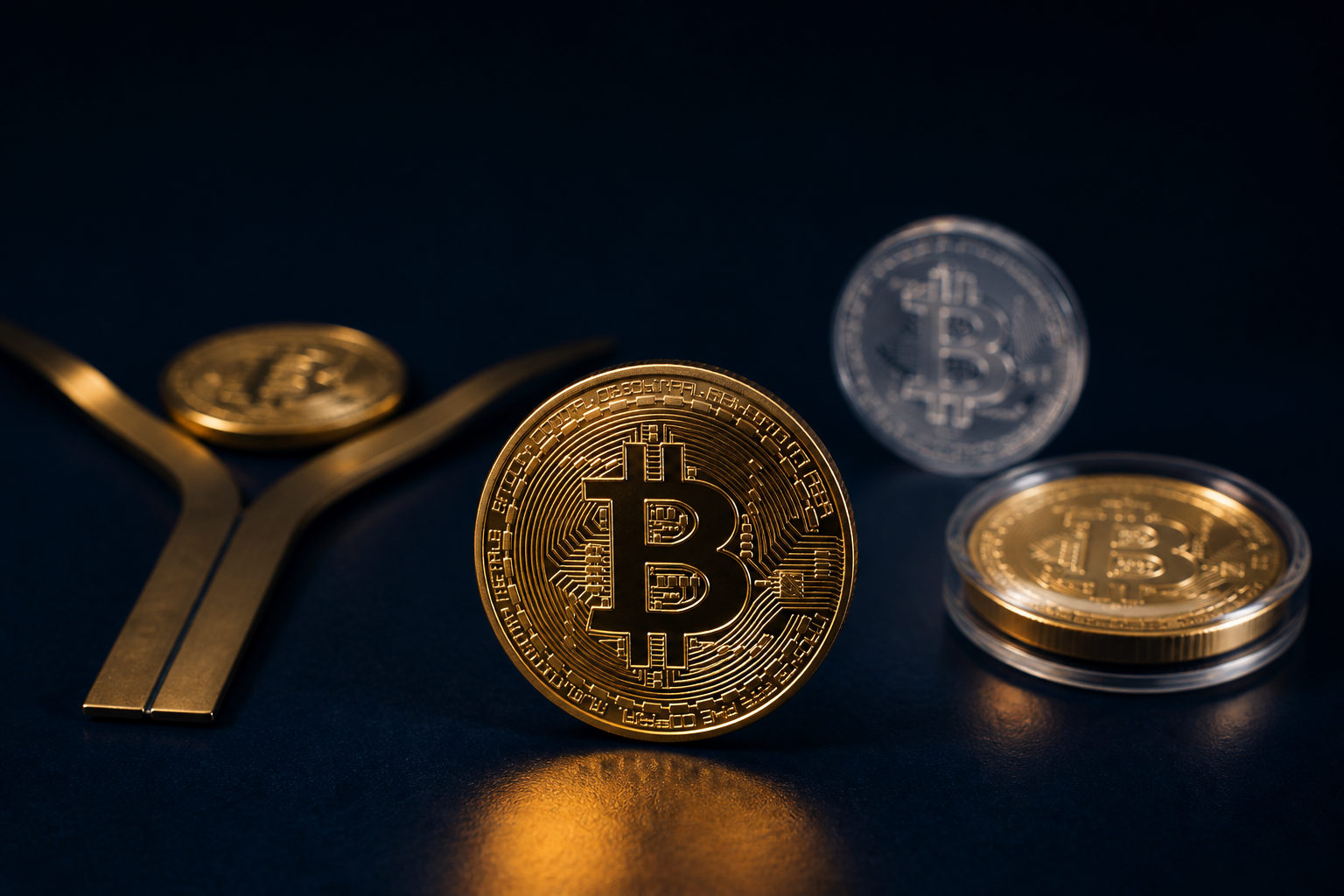
Bitcoin usually means one thing: the native asset on the Bitcoin network. When people ask about “different bitcoins,” they are often mixing up native BTC, forked coins, wrapped versions, and test tokens.
The short answer
There are not many kinds of Bitcoin in the strict sense. There is the original asset on the Bitcoin blockchain, and then there are other assets that borrow the Bitcoin name or reference its value in some way. That difference matters because the name alone does not tell you which chain the asset lives on, what rules govern it, or what risks come with it.
Once you separate those categories, the topic gets much easier. What looks like several types of Bitcoin is really a set of different assets that are only loosely related.
The main categories people confuse
| Category | What it is | Is it native Bitcoin? | Common mistake |
|---|---|---|---|
| Native Bitcoin | The asset on the Bitcoin blockchain | Yes | Assuming every BTC-related label refers to the same asset |
| Forked coin | A new asset created after a blockchain split | No | Assuming a fork still means the original Bitcoin |
| Wrapped Bitcoin | A token on another chain that represents Bitcoin through a mapping or custody setup | No | Assuming it can move like native BTC in every case |
| Testnet token | A simulated asset used for development and testing | No | Assuming it has real market value |
Native Bitcoin
Native Bitcoin, usually called BTC, exists on the Bitcoin blockchain. Its issuance, validation, and transfer rules come from the Bitcoin network itself, not from another chain.
If an asset cannot be validated and moved on the Bitcoin blockchain, it is not native Bitcoin. That may sound obvious, but many naming confusions start right there.
Forked coins
Forked coins appear when a blockchain’s rules split and a new chain emerges. Some forks inherit part of the old chain’s history, but the resulting asset follows a separate rule set.
A similar name does not make it the same asset. To tell it apart, you need to check the chain, the consensus rules, and what control the holder actually has over the asset.
Wrapped Bitcoin
Wrapped Bitcoin is a way to carry Bitcoin exposure onto another blockchain. It is often used when users want Bitcoin-like liquidity inside another ecosystem, but it depends on custody, locking, or a mapping mechanism.
That means wrapped Bitcoin is not the same layer as native BTC. The real questions are who holds the backing asset, how redemption works, and what happens if the bridge or custodian fails.
Testnet tokens
Testnet tokens are simulated coins used for wallet testing, transaction trials, fee checks, and application development. They are not meant for investment and should not be treated as real Bitcoin.
New users often confuse test environments with live ones because the interface can look very similar. If you know which network you are on, the confusion usually disappears fast.
Why the confusion happens
The first reason is naming. Wallets, exchanges, bridges, and community posts often use similar tickers or labels, and that makes different assets look interchangeable.
The second reason is that Bitcoin has a wide surrounding ecosystem. Assets built around Bitcoin may borrow the BTC label for recognition, but that does not mean they share the same chain or risk profile.
How to tell them apart quickly
- Check which blockchain the asset actually lives on.
- See whether it directly represents native Bitcoin.
- Look for any custody, locking, or mapping arrangement.
- Confirm whether it is a live asset or only for testing.
If you run through those four checks, most of the confusion clears up. The key question is not which one looks most like Bitcoin, but which one has the clearest link to native BTC and the most transparent risk.
FAQ
How many versions of Bitcoin are there?
If you mean the native asset, there is one. Other things called Bitcoin are usually forked coins, wrapped assets, or test tokens.
Can a forked coin be treated as Bitcoin?
No. A fork changes the rule set and the asset’s status, so a similar name does not give it the same rights or function.
Is Wrapped Bitcoin the same as Bitcoin?
No. Native Bitcoin mainly involves private key and chain-level risk, while wrapped versions also add custody, mapping, and contract risk.
Do testnet tokens have investment value?
No. They exist for testing, not for trading or measuring the value of Bitcoin itself.
If you want a clean way to think about different bitcoins, split them into native assets, forked assets, wrapped assets, and test assets first. Then check the chain, the rules, and the risk behind each one.
Disclaimer: This article is for informational and educational purposes only and is not investment, financial, or legal advice. Crypto assets are highly volatile and you could lose your entire investment. Do your own research and decide carefully.