
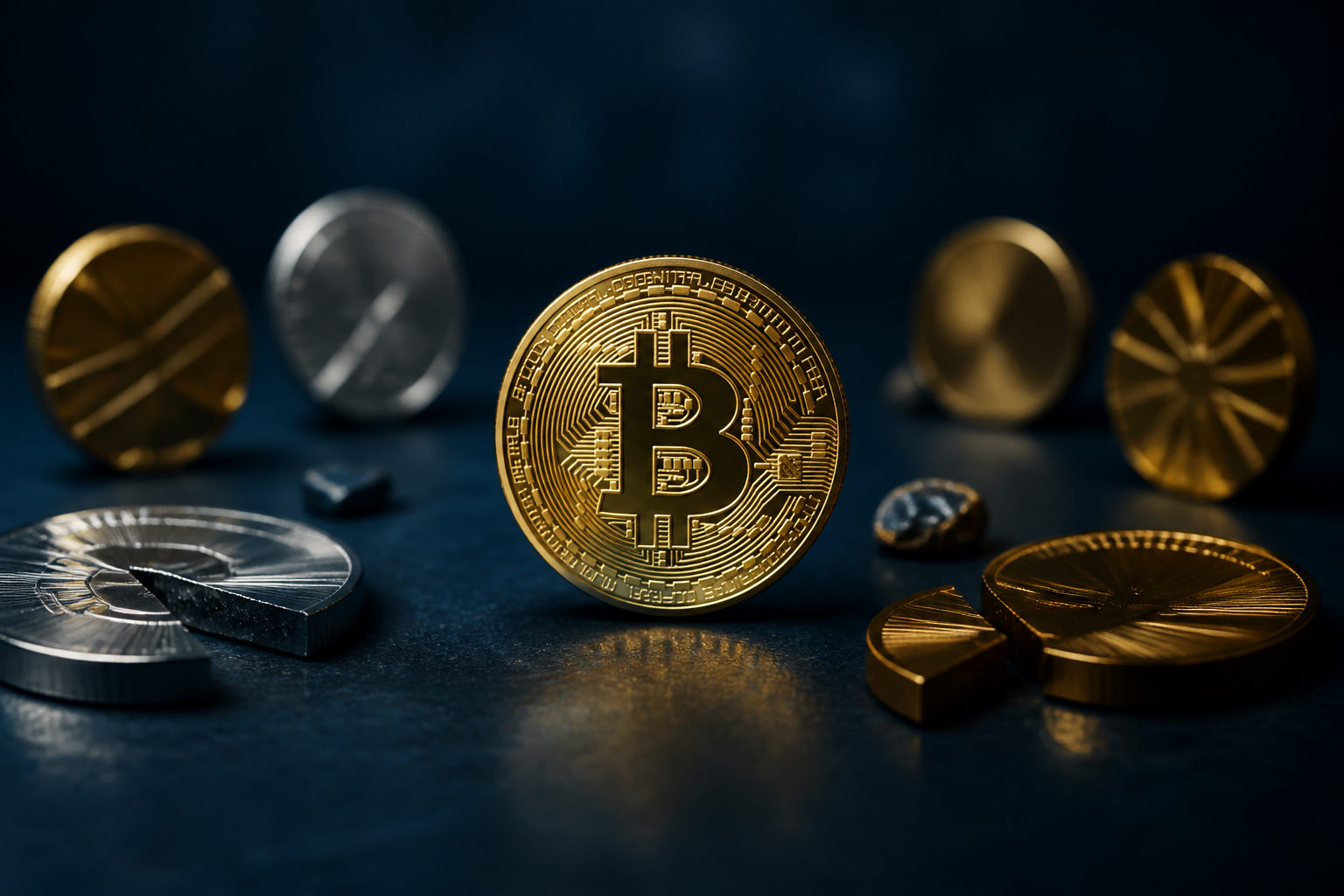
When people ask what other bitcoins are there, they usually do not mean a second real Bitcoin. They are usually asking whether coins with “Bitcoin” in the name are the same as BTC. The short answer is no: in mainstream usage, Bitcoin usually means BTC, while the rest are separate assets such as fork coins or other cryptocurrencies with similar branding.
Most people are mixing up three different things
On exchanges, wallets, and price apps, users may see Bitcoin, BTC, and several coin names that also include the word Bitcoin. That makes it easy to assume they are versions of the same asset when they are often not.
| Category | What users often assume | What it actually is | Best first check |
|---|---|---|---|
| BTC | The original Bitcoin | The asset most markets mean by “Bitcoin” | Check whether the ticker is BTC |
| Bitcoin fork coins | Another kind of Bitcoin | A separate network that split from Bitcoin rules or history | Check the full name and ticker |
| Other cryptocurrencies | Something related to Bitcoin | An independent crypto asset with its own design | Check its use case and network |
The phrase “other bitcoins” can mean different things: alternatives to BTC, coins that have Bitcoin in the name, or a way to avoid buying the wrong coin.
Why are there so many Bitcoin-like names?
Bitcoin is open source, so later developers could study its design, reuse code, or build new networks inspired by it. Satoshi Nakamoto released the white paper, Bitcoin: A Peer-to-Peer Electronic Cash System, on 2008-10-31, and the genesis block followed on 2009-01-03.
Some projects use the word Bitcoin to signal a technical connection. Some use it to suggest familiarity. Others benefit from brand recognition. For a buyer, a similar name does not mean the same asset, the same network, or the same market role.
If the ticker is not BTC, it is not the asset that most traders, wallets, and media mean when they say Bitcoin.
What a Bitcoin fork is, and why it is still not BTC
A fork coin is a separate blockchain that split from Bitcoin at the rule level, the chain-history level, or both. After that split, it continues on its own path. Even if the new asset keeps Bitcoin in its name, it is still a different asset with different market behavior.
BTC has a well-known issuance schedule. Its hard cap is 21,000,000 BTC. The target block time is about 10 minutes. The block subsidy halves every 210,000 blocks, roughly every four years. Halvings took place on 2012-11-28, 2016-07-09, 2020-05-11, and 2024-04-19. After the 2024 halving, the current block reward is 3.125 BTC, which means the network adds about 450 BTC per day. Those rules are part of why BTC is treated as a distinct monetary asset.
| Comparison point | BTC | Bitcoin fork coin |
|---|---|---|
| Common market meaning | Usually “Bitcoin” by default | Needs its own full name |
| Ticker | BTC | A different ticker |
| Network | Its own chain | Its own chain after the split |
| Monetary identity | Recognized as Bitcoin by the market | Recognized separately |
| Buying check | Confirm you are selecting BTC | Confirm the exact fork coin you want |
Many new users go wrong because they see the word Bitcoin and assume they are getting exposure to BTC. In reality, they may be buying a different asset with its own liquidity, support, and risk profile.
How to tell whether a coin is actually Bitcoin
The safest way to identify Bitcoin is to check the trading and wallet details.
- Check the ticker first: if it is not BTC, treat it as a separate asset.
- Read the full asset name: do not rely on the first word alone.
- Look at the withdrawal network: a different network usually means a different coin.
- See how wallets list it: if a wallet supports it as a separate asset, it is not just another label for BTC.
- Watch how major platforms describe it: if they name it separately, assume it trades separately too.
Mobile apps can add confusion because full names and network details may be hidden in smaller menus. That is why users who only search for “Bitcoin” can still end up buying something else.
Are “other bitcoins” worth buying?
That depends on what you are trying to do. If your goal is to buy Bitcoin in the standard market sense, make sure the asset is BTC and confirm the correct network and wallet support. In that case, a coin with a similar name is not a substitute.
If your goal is to explore crypto assets beyond BTC, each coin should be judged on its own terms. A fork coin needs to be evaluated as an independent market asset. A non-Bitcoin cryptocurrency should be judged by its own network, purpose, and adoption.
Bitcoin is divisible down to 1 satoshi, and 1 satoshi equals 0.00000001 BTC. A person does not need to buy a full coin to get BTC exposure.
FAQ
Do coins with Bitcoin in the name count as Bitcoin?
Not by default. A similar name may show branding or historical connection, but the asset still needs to be identified by its ticker, network, and market treatment.
Is a Bitcoin fork basically another BTC?
No. A fork becomes its own network and its own tradable asset. It may share some history with Bitcoin, but it does not share BTC’s default market identity.
How do I avoid buying the wrong coin when I want Bitcoin?
Check that the ticker is BTC before you place the order. Then confirm the deposit and withdrawal network matches what your wallet supports.
Do I need to buy one whole Bitcoin?
No. Bitcoin can be divided into very small units. The smallest unit is 1 satoshi, which is 0.00000001 BTC.
Can other Bitcoin-named coins change BTC’s supply rules?
No. BTC still follows its own issuance rules, including the 21,000,000 BTC cap and the current 3.125 BTC block reward after the 2024 halving.
If you only want the asset the market means by Bitcoin, verify the ticker, the full asset name, and the network. If you are researching coins beyond BTC, evaluate them as separate cryptocurrencies instead of assuming that a familiar name makes them part of Bitcoin.