
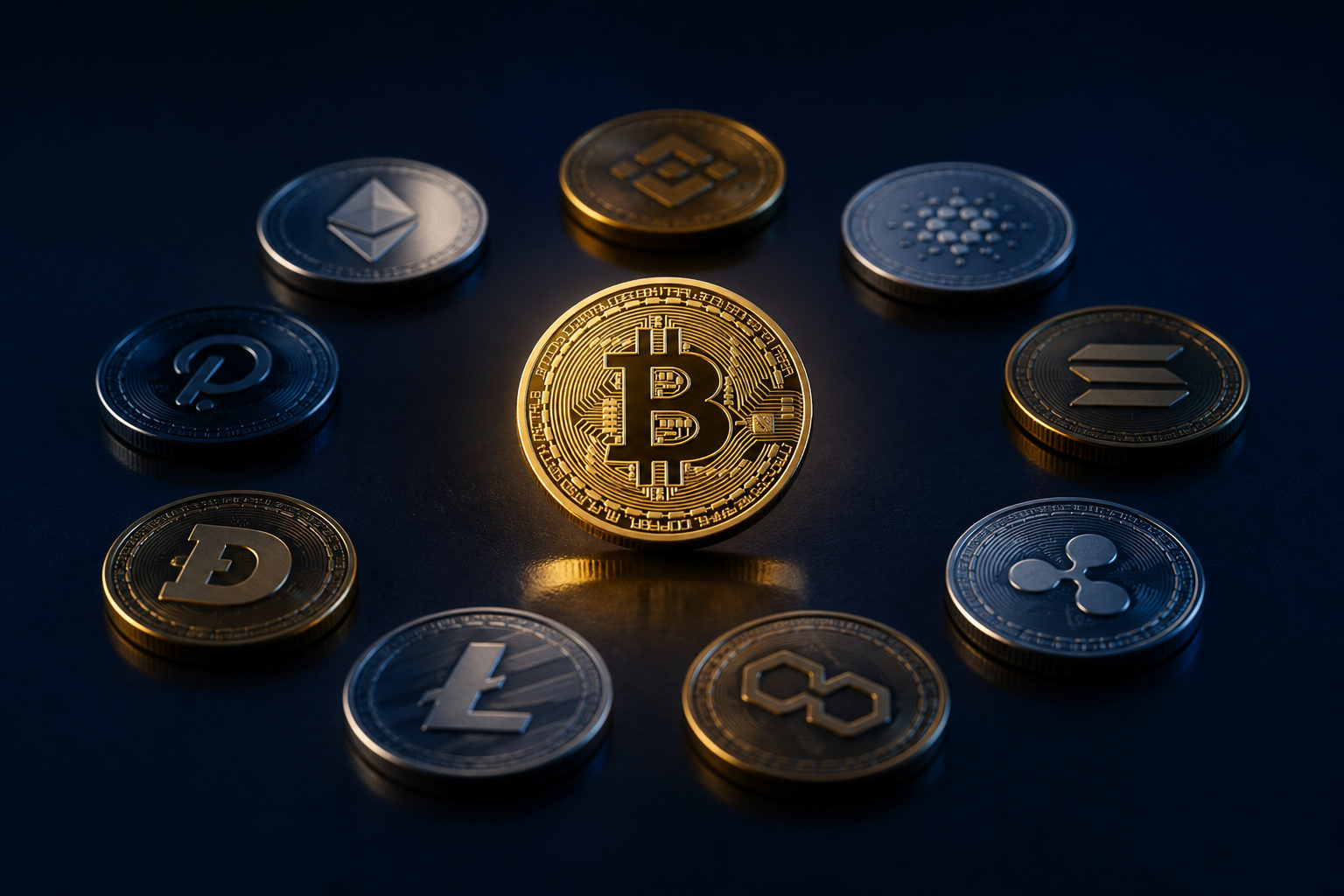
“Top 10 bitcoins” is usually not the right way to frame the topic. Bitcoin normally means BTC, while “top 10” usually refers to the largest cryptocurrencies in the broader market.
Bitcoin is one asset, not a category
For beginners, the first thing to clear up is simple: Bitcoin is not a generic label for all crypto. In normal usage, Bitcoin refers to BTC, the network and asset introduced by Satoshi Nakamoto in the 2008 white paper Bitcoin: A Peer-to-Peer Electronic Cash System and launched with the genesis block in January 2009.
That matters because the phrase “what are the top 10 bitcoins” mixes two different ideas. One idea is Bitcoin itself. The other is a ranking list, which usually means the biggest cryptocurrencies by market capitalization. In many searches, people use “bitcoin” as shorthand for crypto in general, even though that is not technically accurate.
So if you are asking this question as a beginner, the short answer is: there are not ten different main Bitcoins in the ordinary sense. There is Bitcoin, meaning BTC, and there are many other crypto assets that may appear in a top-10 market ranking.
Why this phrase confuses so many new users
The confusion usually comes from familiarity. Bitcoin is the best-known name in crypto, so many people use it as a catch-all word for the entire sector. Then they open a price app, see a ranked list of coins, and assume the top entries are all types of Bitcoin.
Another source of confusion is naming. Some assets have names that sound similar to Bitcoin, some have historical links to it, and some are described in loose marketing language that makes them look more closely related than they really are. For a new user, that can blur the line between BTC and everything else.
A better way to ask the question is one of these: “What are the top cryptocurrencies?” “What is the difference between Bitcoin and other major coins?” or “How do crypto rankings work?” Those versions point you toward the right concept instead of starting from a mistaken label.
What makes Bitcoin different from other major cryptocurrencies
Bitcoin is often discussed on its own because its role is distinct. Its supply has a hard cap of 21 million coins. Its smallest unit is the satoshi, with 1 satoshi equal to one hundred millionth of a BTC. New blocks are produced about every 10 minutes, and the issuance schedule is reduced through halvings roughly every 4 years, or every 210,000 blocks. The halving years so far are 2012, 2016, 2020, and 2024.
Those rules shape how people think about Bitcoin. It is often treated as a digital asset centered on scarcity, verifiability, and decentralization. Other large crypto assets may focus on very different goals, such as application platforms, network utility, governance, or stable settlement. They can appear side by side in a ranking table, but that does not make them interchangeable.
This is one of the most common beginner mistakes: treating all coins as if they work the same way because they appear in the same app. A shared listing format does not mean they have the same purpose, the same issuance model, or the same risk profile.
What to check instead of asking whether it is “a Bitcoin”
- Name and ticker: confirm whether you are looking at BTC or another asset.
- Primary use: is it designed for value transfer, smart contracts, settlement, or something else?
- Supply rules: does it have a cap, and how is new supply created?
- Network structure: how does the system validate transactions and maintain security?
- Liquidity and transparency: is it widely traded, and can you verify basic information easily?
These checks sound basic, but they prevent a lot of avoidable mistakes. Many beginners do not lose track because the topic is too advanced; they lose track because they started by identifying the wrong asset.
If you want the current top 10, here is the right way to look it up
Without live market data, it would be misleading to list a current top-10 set here. Rankings change, and different data platforms may order assets slightly differently depending on how they define circulating supply, classify tokens, or filter out certain instruments.
The practical step is to visit a major crypto data platform and view the market-cap ranking directly. Then read the list with care. A higher rank tells you that an asset is relatively large, not that it is automatically safer, simpler, or more suitable for you.
If your original intent behind “what are the top 10 bitcoins” is really “which crypto assets are the biggest,” then market-cap rankings can be a useful starting point. If your intent is “what should I learn first,” the better starting point is to understand the difference between Bitcoin and other major crypto categories.
One habit helps a lot: before you read commentary or consider a trade, check the full asset name, the ticker, and a plain-language description of what the project is supposed to do. That first verification step can save you from following the wrong discussion from the start.
FAQ
Does “top 10 bitcoins” mean ten versions of BTC
No. In normal usage, Bitcoin means BTC. When people say “top 10,” they usually mean the biggest cryptocurrencies overall, not ten forms of Bitcoin.
If you see that phrase in a post or video, treat it as informal wording rather than a precise definition. The key question is whether the speaker means BTC or the wider crypto market.
Are coins with “bitcoin” in the name actually Bitcoin
Not automatically. A similar name does not make an asset the same as BTC.
You still need to check the ticker, the network, and the asset’s rules. Some may have a historical connection, while others simply use similar branding.
What metric do people usually use for a top-10 crypto list
Most people start with market capitalization because it gives a quick sense of relative size. That said, size alone does not tell you how an asset works or what risks it carries.
Liquidity, purpose, supply design, and transparency also matter. Ranking is a starting point, not a final judgment.
Why is Bitcoin often discussed separately from other coins
Bitcoin has a distinct position because of its history, design, and fixed monetary rules. Its capped supply and scheduled halvings give it a framework that many people analyze on its own terms.
So even when BTC appears in the same table as other major assets, it is often better understood separately rather than as just one more interchangeable coin.
What is the biggest mistake beginners should avoid here
The biggest mistake is using “Bitcoin” as a label for all crypto assets. The next one is assuming that similar names or tickers mean similar function and risk.
Start by identifying the asset correctly. After that, compare what Bitcoin is designed to do with what other major crypto assets are designed to do.
If you want to research this topic further, search for terms like “what is Bitcoin,” “how Bitcoin differs from other cryptocurrencies,” or “how crypto market-cap rankings work,” then verify the asset name and ticker before you go any deeper.