
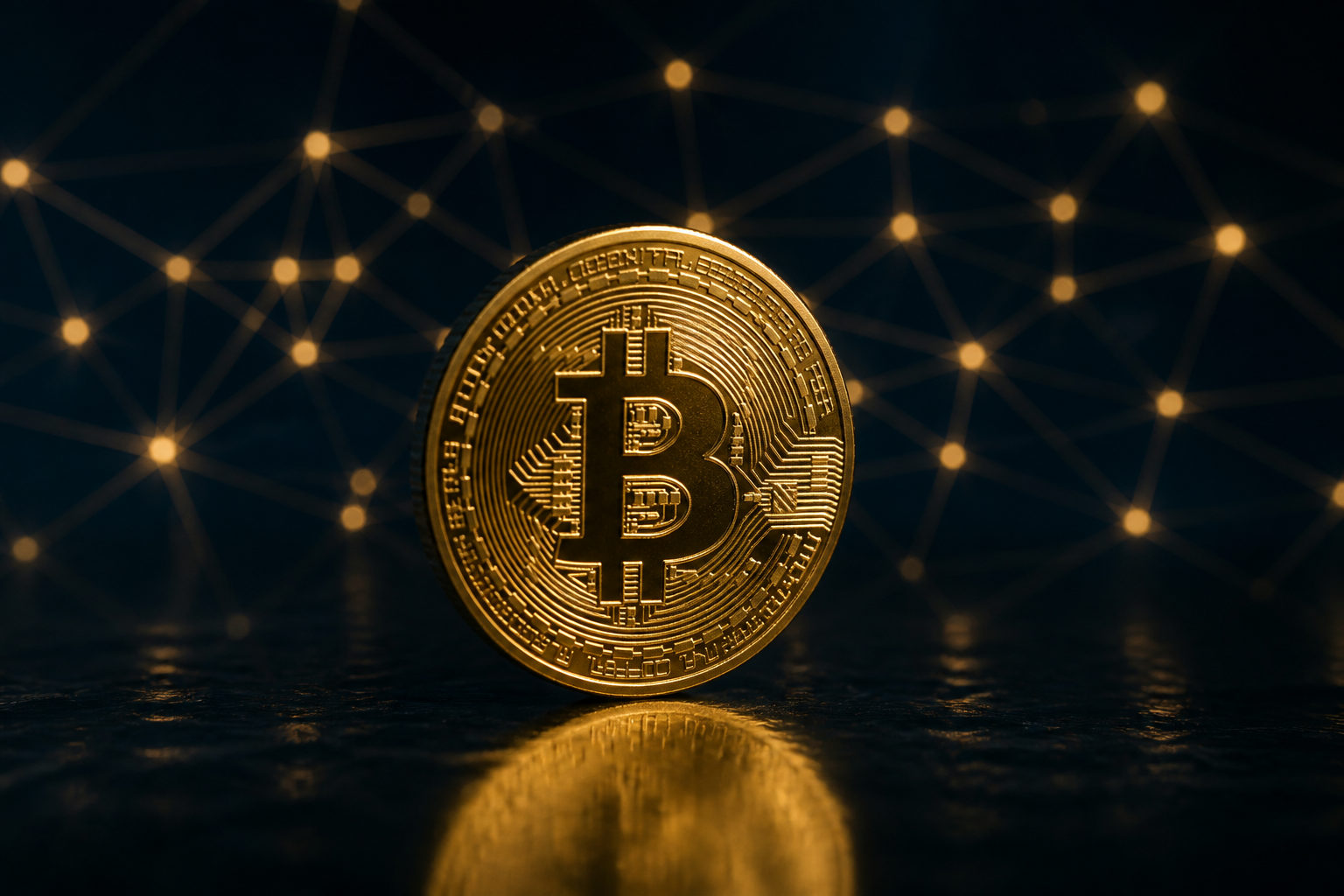
Bitcoin is a decentralized digital currency and a peer-to-peer payment network that runs by public rules rather than a single company or government.
What Bitcoin actually is
People who search for “what are bitcoins wikipedia” usually want a plain definition first. Fair enough. Bitcoin is a system for moving value over the internet, with transactions checked by a distributed network of participants instead of one central operator keeping the master ledger.
That definition has two parts, and mixing them up causes a lot of confusion. One part is BTC, the asset unit people send, receive, or hold. The other part is the Bitcoin network itself: the software rules, the shared ledger, the validation process, and the participants who keep the system running. If you only look at headlines about price swings, Bitcoin can seem like nothing more than a speculative token. If you only look at the code, you miss why people use it as money.
The project began with the white paper Bitcoin: A Peer-to-Peer Electronic Cash System, published by Satoshi Nakamoto on 2008-10-31. The genesis block followed on 2009-01-03. Satoshi’s real identity is still unknown, but that mystery is separate from the network’s day-to-day operation. Bitcoin continues because the rules are public and the system is maintained by many participants, not because a founder sits at a control panel.
How the network works
At a basic level, Bitcoin works like a public ledger. When someone sends a transaction, network nodes check whether it follows the rules. Is the digital signature valid? Does the sender control the coins being spent? If the transaction passes those checks, it can be included in a block. Blocks are then added in sequence, forming the blockchain.
Mining is the process that adds those blocks. That matters for two reasons. First, it helps secure the ledger against tampering. Second, it is how new bitcoin enters circulation. The target pace is about 10 minutes per block, which is why Bitcoin transfers are confirmed over time rather than updated instantly by a single company database.
The issuance schedule is fixed in advance. Every 210,000 blocks, the block subsidy is cut in half, which happens roughly every 4 years. The halving dates so far are 2012-11-28, 2016-07-09, 2020-05-11, and 2024-04-19. After the 2024 halving, the current block reward is 3.125 BTC, and that remains in place until the next halving around 2028 if the rules stay the same. On that basis, the network adds about 450 BTC per day in total. The hard cap is 21,000,000 BTC, with issuance expected to continue until around 2140.
| Item | Bitcoin rule | Why it matters for beginners |
|---|---|---|
| Genesis block | 2009-01-03 | Marks the network launch |
| Block timing | About 10 minutes per block | Transaction confirmation takes time |
| Halving cycle | Every 210,000 blocks | New supply falls in stages |
| Current block reward | 3.125 BTC | Sets the current issuance rate |
| New BTC per day | About 450 BTC | This is network-wide output, not personal mining income |
| Total supply cap | 21,000,000 BTC | Supply is limited by design |
| Smallest unit | 1 satoshi = 0.00000001 BTC | You do not need to buy a whole coin |
What Bitcoin is not
A lot of beginner mistakes come from putting unlike things in the same bucket. Bitcoin is not a stock. Owning BTC does not give you equity in a company, voting rights, or a claim on corporate earnings. It is also not the same thing as an exchange or a wallet app. Those are services and tools built around Bitcoin. Useful, sometimes necessary, but still separate from the protocol.
The word “decentralized” also gets stretched past its meaning. It does not mean nobody is involved, and it does not mean total anonymity. Bitcoin has nodes, miners, developers, wallet providers, and trading platforms. What it does not have is one institution that can rewrite the full system on its own. Transactions on the chain are publicly visible, even though addresses do not automatically display a real-world name.
Then there is the scam question. Bitcoin itself is an open network that has operated for years under public rules. Fraud using the Bitcoin name is something else entirely: fake support staff, fake wallet software, guaranteed-return pitches, and other familiar tricks. For a newcomer, this distinction matters more than it sounds. The asset, the network, the service provider, and the scam wrapper are four different layers.
| Often confused with Bitcoin | What it is | Relationship to Bitcoin |
|---|---|---|
| Bitcoin | Digital currency and payment network | The core subject |
| Exchange | Trading and custody service | An access point, not the protocol itself |
| Wallet | Tool for managing private keys | Used to store and send bitcoin |
| Stock | Ownership claim in a company | A different asset category |
| Scam scheme | Fraud using a popular topic | Uses the name without being Bitcoin itself |
Three things beginners should understand early
First: you do not need to buy one whole bitcoin. The smallest unit is 1 satoshi, which equals 0.00000001 BTC. That means Bitcoin is divisible enough for partial ownership and small transfers. A lot of people get stuck on the idea of “one coin” and assume the entry point must be high. It does not work that way.
Second: control depends on private keys. Simple, but central. If you control the private keys, you usually control the bitcoin associated with that address. With a custodial platform, the platform holds those keys on your behalf. With a self-custody wallet, you hold them yourself. Same asset. Very different responsibility.
Third: the question of what Bitcoin is should be kept separate from the question of what it costs right now. The price changes with the market. The system definition does not. If you want a live quote, check a major market data service or trading venue on the day you look. If you want to understand why Bitcoin keeps drawing attention, you need to look at supply rules, portability, divisibility, and the fact that the network can be accessed globally.
One early milestone still gets mentioned for a reason. On 2010-05-22, Laszlo Hanyecz used 10,000 BTC to buy two pizzas. That day is now known as Bitcoin Pizza Day. The point is not to turn it into a hindsight price story. The point is that it stands as a well-known example of BTC being used to buy a real-world item.
FAQ
What does one bitcoin mean?
It means 1 BTC, the standard unit used inside the Bitcoin system. You do not need to own a full unit to use Bitcoin, because it can be divided down to satoshis.
Is Bitcoin the same thing as blockchain?
No. Blockchain is the record structure made of linked blocks, while Bitcoin is a monetary and payment system built on that structure. Related, yes. Identical, no.
Why do Bitcoin transfers take time?
A transaction has to be broadcast, checked by nodes, and included in a block by miners. Since the target block interval is about 10 minutes, confirmation is a process rather than an instant account update.
Can new bitcoin still be mined now?
Yes. New coins are still being issued because the total supply is not expected to be fully reached until around 2140. After 2024-04-19, the current block reward is 3.125 BTC, and those coins are part of network-wide issuance, not a guaranteed amount for any one miner.
Is a Wikipedia-style overview enough to understand Bitcoin?
It is enough to build the frame: what Bitcoin is, when it began, and how the rules work. If you plan to use it, you still need practical knowledge about wallets, private keys, custody choices, and how to spot fraud.
If you want a quick check on whether you really understand Bitcoin, ask yourself four things: what it is, who maintains the ledger, where new coins come from, and who controls the private keys. Get those right first. Everything else you read will make a lot more sense.
Disclaimer: This article is for informational and educational purposes only and is not investment, financial, or legal advice. Crypto assets are highly volatile and you could lose your entire investment. Do your own research and decide carefully.