
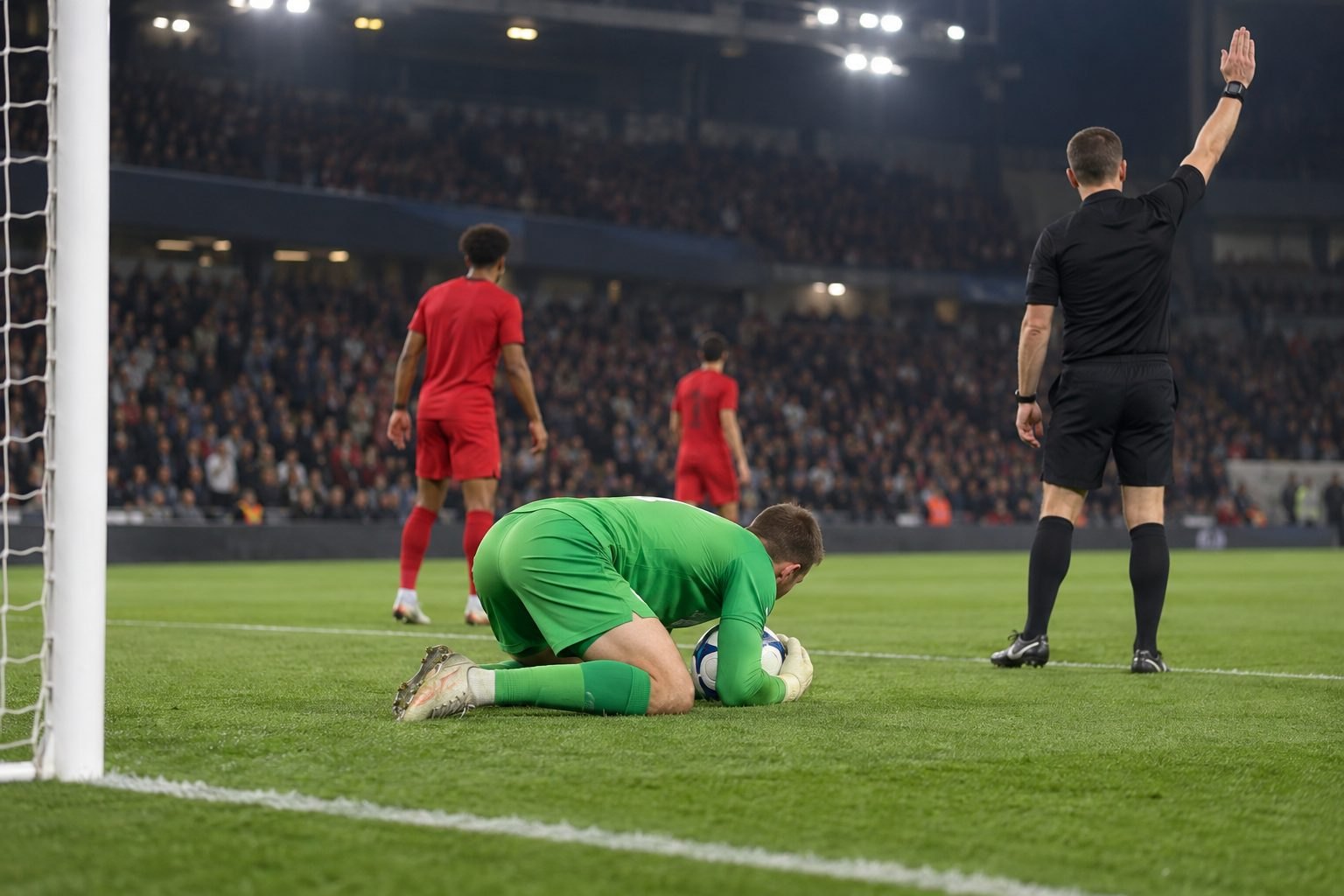
A goalkeeper may control the ball with the hands or arms inside their own penalty area for up to eight seconds. If that control lasts longer before release, the restart is a corner kick to the other team, and the referee shows the last five seconds with a raised-hand countdown.
The limit and the sanction
The time limit applies when the goalkeeper is inside their own penalty area and is controlling the ball with the hands or arms. The cap is eight seconds, and the punishment for going beyond it is a corner kick for the opposing team.
The referee decides when control begins and when the count starts. Once the goalkeeper is judged to be in control with the hands or arms, the clock is running until the ball is released.
What counts as control of the ball
These situations count as the goalkeeper controlling the ball.
| The goalkeeper is | In control |
|---|---|
| Holding the ball between the hands or arms | Yes |
| Holding the ball between a hand or arm and any surface, such as the ground or their own body | Yes |
| Holding the ball in an outstretched open hand | Yes |
| Bouncing the ball on the ground | Yes |
| Throwing the ball in the air | Yes |
Control is wider than simply clutching the ball against the body. Any one of the situations in the table is enough for the goalkeeper to be in control, and the eight-second count begins from the moment the referee judges that control to have started.
How the referee runs the count
The referee determines when the goalkeeper has control and when the eight seconds start. That decision sits with the referee from the first moment of hand or arm control.
For the last five seconds, the referee gives a visible countdown with a raised hand. That signal makes the final part of the count clear to both teams on the field.
What opponents can and cannot do
An opponent cannot challenge a goalkeeper who is in control of the ball with the hands or arms. That protection applies while the goalkeeper remains in that controlled state.
Two separate requirements apply during that control: the eight-second limit on the goalkeeper, and the bar on an opponent challenging. Neither is a consequence of the other.
FAQ
What happens if a goalkeeper holds the ball too long?
The other team is awarded a corner kick. The restart is not a free kick of any kind.
Does bouncing the ball still count as holding it?
Yes. Bouncing the ball on the ground still counts as control by the goalkeeper, so the count does not stop just because of that action.
Does throwing the ball into the air still count?
Yes. Throwing the ball in the air also counts as control, so it remains part of the same controlled period.
Why does the referee raise a hand and count down?
The last five seconds must be shown with a visible countdown. The raised hand is the way the referee signals that final part of the count to everyone on the field.