
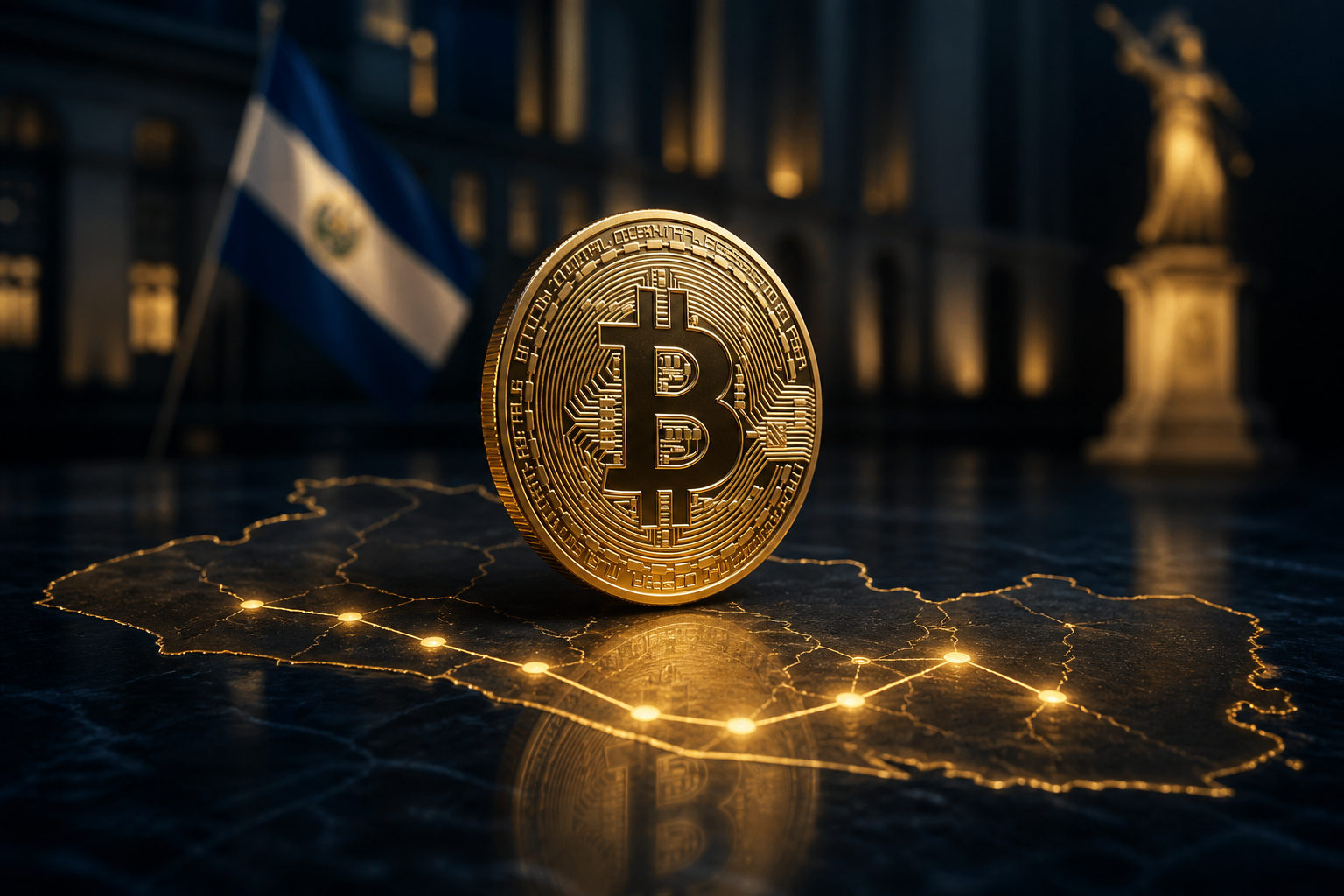
El Salvador adopted Bitcoin in 2021 by bringing it into its legal tender framework. The key point is not just the year, but what “adopted Bitcoin” actually means in legal and practical terms.
What the question really asks
People who search for when El Salvador adopted Bitcoin are usually asking more than one thing. One part is simple: what year marked the legal shift. The other part is harder: did that step mean Bitcoin immediately became an everyday payment method for everyone in the country.
Those are different questions. A government can recognize Bitcoin within a legal tender structure, while real-world use still depends on payment tools, merchant readiness, user habits, and tolerance for volatility. If you separate the legal milestone from actual day-to-day usage, the timeline becomes much easier to understand.
Why 2021 matters
Bitcoin itself did not begin in 2021. Its white paper, Bitcoin: A Peer-to-Peer Electronic Cash System, was published in 2008. In January 2009, the genesis block launched the network. The creator used the name Satoshi Nakamoto, but that identity remains unknown.
From the start, Bitcoin was built around rules that anyone can inspect. Its total supply is capped at 21 million coins. Its smallest unit is the satoshi, and 1 satoshi equals one hundred millionth of a BTC. The network produces a block about every 10 minutes, and the issuance schedule halves about every 4 years, or every 210,000 blocks. The halving years include 2012, 2016, 2020, and 2024.
That matters here because El Salvador’s move did not create Bitcoin. It placed an already existing decentralized monetary network into a national legal framework. That is why 2021 keeps coming up in articles, search results, and public debate.
A timeline view makes the story clearer
If you look only at the headline, El Salvador’s adoption can seem abrupt. A longer view shows a different picture. Bitcoin spent years being discussed as a decentralized digital asset, a payment rail, a store-of-value candidate, and a speculative instrument, depending on who was speaking.
Over time, the conversation expanded from developers and early users to investors, businesses, regulators, and policymakers. Some saw Bitcoin as useful because it can move without a central issuer. Others focused on its volatility and the difficulty of turning a technical network into something that feels simple for ordinary consumers. Both sides were reacting to real features of the system.
By 2021, Bitcoin had already developed a strong global identity, but it was still unusual to see a sovereign state treat it as part of a legal tender structure. El Salvador changed that. So if the direct question is when El Salvador adopted Bitcoin, the direct answer is 2021. If the deeper question is why the year matters, the answer is that it moved Bitcoin from a market discussion into a state-policy discussion.
What “adopted Bitcoin” means, and what it does not
This is where confusion starts. Some readers hear the phrase and assume the whole country instantly switched to BTC for all payments. Others treat it as nothing more than a symbolic gesture. Neither view is precise enough.
A better way to read the event is this: El Salvador took a legal and institutional step that recognized Bitcoin within its monetary framework. That affects rules, obligations, and public debate. It does not automatically guarantee universal consumer use, smooth technical execution, or broad merchant enthusiasm from day one.
Legal status and practical use move at different speeds. A country can pass rules. People still need wallets they trust, payment systems they can navigate, and reasons to choose Bitcoin in real transactions. Merchants also need processes that fit daily business operations. Without that distinction, readers tend to overstate either the success or the limits of the decision.
- Legal layer: Bitcoin entered a formal monetary framework.
- Usage layer: Daily use depends on tools, incentives, and local habits.
- Market layer: A state action does not set the price by itself.
- User layer: Recognition does not erase the learning curve around wallets and self-custody.
Why the move drew so much attention
It drew attention because it forced a wider audience to think about Bitcoin in a different category. Before that, many discussions stayed focused on trading, storage, transfers, or long-term holding. Once a country put Bitcoin into a legal tender conversation, the subject expanded into taxation, wages, merchant acceptance, accounting, infrastructure, and public education.
It also sharpened the divide between supporters and critics. Supporters tend to emphasize Bitcoin’s transparent issuance rules, fixed supply, and independence from a single central operator. Critics tend to point to its price swings, user-experience barriers, and the challenge of turning a decentralized network into a practical payment option for everyday commerce.
Both sides raise valid questions. Bitcoin’s monetary rules do not change because one country embraces it. The capped supply remains 21 million. Blocks are still produced about every 10 minutes. The halving schedule still follows the same design. What changes instead is the national layer around it: how the country handles payments, compliance, public access, and software support.
That is why this case remains important. It offers a real example of what happens when a decentralized protocol meets a sovereign legal system. Readers do not need to pick a side to learn from it. They just need to ask the right questions.
If your real question is about price, ask it the right way
Many readers start with when El Salvador adopted Bitcoin and then jump to questions about what Bitcoin cost at that time or what it is worth today. Without live market data, the responsible answer is not to guess a number. The better answer is to explain what drives the price and where to check it.
Bitcoin’s market price usually reflects supply and demand, liquidity conditions, regulatory expectations, macro risk appetite, and exchange-specific order flow. A country-level policy event can influence sentiment and narrative, but it does not mechanically determine Bitcoin’s long-term price path.
If you want the current price, check a major market data platform or a large spot exchange and verify the quote time, trading pair, and denomination. A single screenshot without context is rarely useful. A consistent data source is.
FAQ
What year did El Salvador make Bitcoin part of its legal tender system?
The key year is 2021. That refers to the legal and institutional move, not an instant nationwide switch in how every person or business handled payments.
Did El Salvador’s decision mean everyone there started using Bitcoin right away?
No. Legal recognition and broad daily use are different things. Real adoption depends on merchant processes, payment apps, consumer comfort, and the trade-offs of using a volatile asset for spending.
Why is this date such a common reference point in Bitcoin articles?
Because it marked a rare moment when Bitcoin moved from being mainly a market and technology topic into a national policy issue. That made the year relevant far beyond crypto-native circles.
Does this event tell investors where Bitcoin’s price should go?
Not by itself. It is better understood as a policy and narrative milestone than as a standalone trading signal. Market prices react to many forces at once.
Where should I look if I want Bitcoin’s live price today?
Use a major market tracker or a large spot exchange and check the quote time carefully. Make sure you know which trading pair and pricing convention you are looking at before drawing conclusions.
How to read this topic without getting misled
When you see the phrase that a country adopted Bitcoin, break it into three separate checks: what the law says, how payments are meant to work, and how people actually use the system. That simple framework prevents two common mistakes. One is assuming a legal milestone means total social adoption. The other is assuming practical friction means the legal step had no significance.
If you want to research the subject further, start with the timeline and legal framing, then compare coverage from established media, and only after that check live market data on a separate page. Keeping the adoption year and the market price as two different questions will give you a much cleaner understanding of what happened.
Disclaimer: This article is for informational and educational purposes only and is not investment, financial, or legal advice. Crypto assets are highly volatile and you could lose your entire investment. Do your own research and decide carefully.