
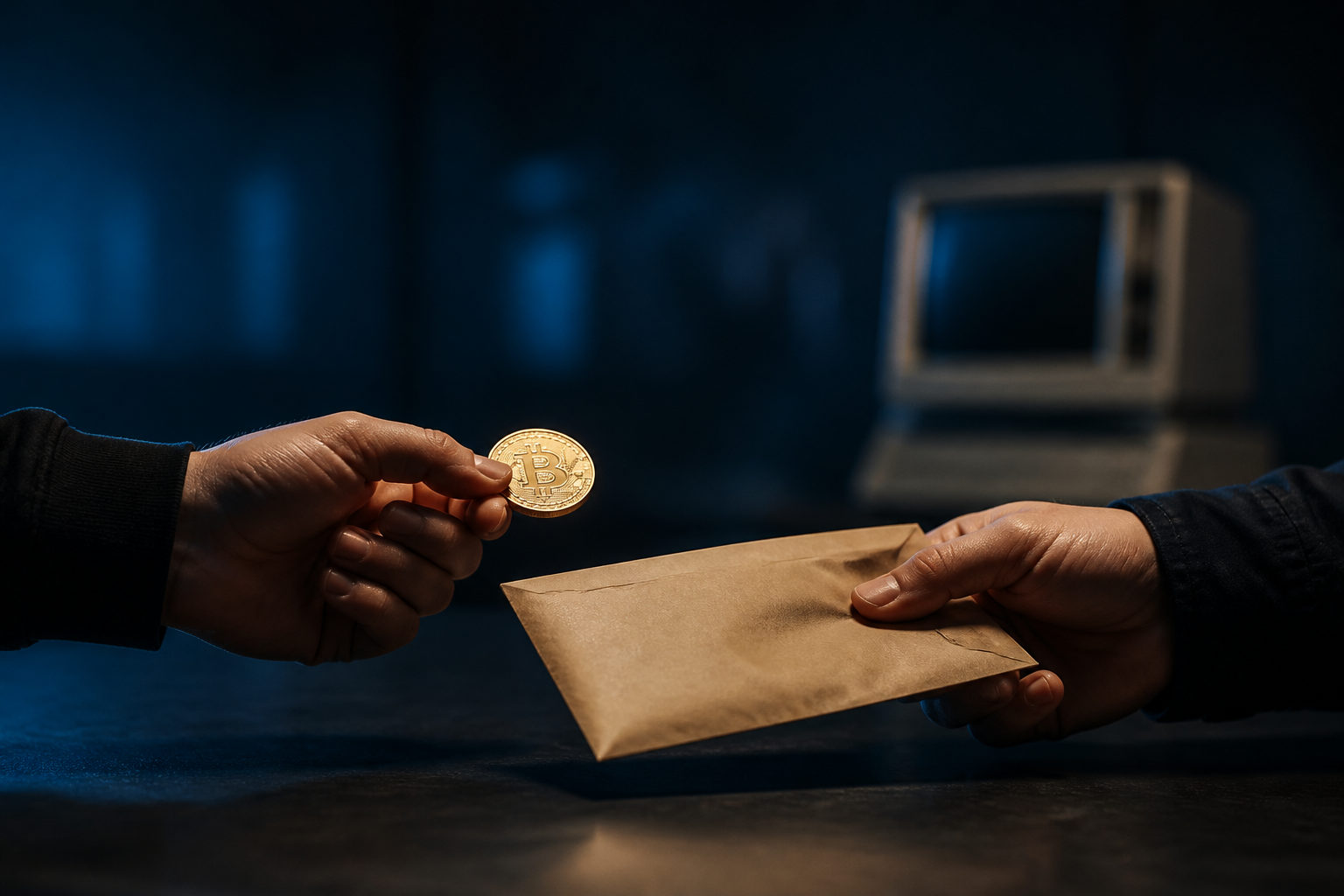
Bitcoin was not originally sold in one official place. In its earliest days, it changed hands through small technical communities and peer-to-peer deals, long before the market looked anything like a modern exchange app.
What “originally sold” really meant in Bitcoin’s early days
Start with the timeline. Satoshi Nakamoto published the Bitcoin white paper on 2008-10-31, and the genesis block arrived on 2009-01-03. At that point, there was no mainstream marketplace waiting to list BTC for the public. The people paying attention were mostly developers, cryptography enthusiasts, and readers of niche online discussions.
So when people ask where Bitcoin was originally sold, the honest answer is less tidy than they expect. It usually meant one person was willing to transfer bitcoin, another person was willing to pay in fiat or trade something else, and both sides handled the terms themselves. No polished interface. No standard order flow. Just early participants finding each other.
| Phase | Main way bitcoin changed hands | What that looked like | Main risk |
|---|---|---|---|
| Early community phase | Forums, mailing lists, direct person-to-person trades | No unified trading venue | Counterparty failure and poor transparency |
| Real-world exchange phase | Bitcoin traded for goods or services | Use value started to appear | Messy pricing and hard-to-settle disputes |
| Platform phase | Dedicated sites for listing and matching trades | Access became easier | Custody, security, and rule clarity |
That is why there is no single storefront to point to. Bitcoin did not debut the way a new gadget does. It spread through a network, then through people, then through markets.
A step-by-step view of how early bitcoin sales worked
Looking at the process step by step makes the history much easier to understand. Early sales were not one formal event. They were a chain of actions between individuals.
Step 1: Find a place where people even knew what Bitcoin was
In practice, an early holder who wanted to sell had to speak up in a relevant community. That might be a technical forum, a mailing list, or a discussion group where people already understood the idea. The reason is obvious once you put yourself back in that moment: most people had never heard of Bitcoin, so the pool of possible buyers was tiny.
The caution here is simple. These trades leaned heavily on reputation. A username, old posts, prior discussions, and community familiarity could help, but none of that made a deal safe. It only gave people a rough signal about whom they were dealing with.
Step 2: Negotiate payment and delivery by hand
After finding a potential buyer, both sides had to work out the mechanics themselves. How would payment be sent? Who moves first? Would the trade happen in one transfer or in parts? There was no standard rulebook doing that job for them, because there was no mature exchange structure yet.
This is where fraud and confusion could creep in fast. A trade built on chat messages can fall apart over timing, payment reversals, fake proof of transfer, or plain bad faith. Some people romanticize this old-school peer-to-peer setup. You should not. It may feel direct, but direct does not mean protected.
Step 3: Use an on-chain transfer to deliver the bitcoin
Once terms were agreed, the seller would send bitcoin to the buyer’s address. Bitcoin’s target block time is about 10 minutes per block, so settlement was never meant to be instant in the way a centralized app updates a balance. The transfer depended on blockchain confirmation.
That matters because a blockchain record only proves the coin transfer happened. It does not guarantee that the fiat payment arrived cleanly, and it does not settle off-chain disputes for you. If the payment method on the other side could be reversed, the seller still faced a real problem.
Step 4: Real-world purchases showed that bitcoin could actually be exchanged
The most famous early example is Bitcoin Pizza Day on 2010-05-22, when Laszlo Hanyecz used 10,000 BTC to buy two pizzas. People cite that story all the time, and for good reason. It showed that bitcoin had moved beyond an experiment passing around among programmers and into an actual exchange for a physical good.
Still, do not stretch that fact too far. Pizza Day was an early real-world transaction record. It was not the one official place where Bitcoin was first sold.
Why there is no single correct location to name
People often expect a clean answer because they are thinking in terms of a company launch: first there is a product page, then there is a sale. Bitcoin did not start that way. The network existed first. Participants mined it, held it, discussed it, and only then gave it market value through exchange.
Its supply design helps explain the difference. Bitcoin has a hard cap of 21,000,000 BTC, expected to be fully issued around 2140. The block subsidy halves every 210,000 blocks, roughly every four years. Those halving dates were 2012-11-28, 2016-07-09, 2020-05-11, and 2024-04-19. After the 2024 halving, the current block reward is 3.125 BTC, which stays in place until the next halving around 2028. That setup shows why early bitcoin entered circulation through mining rewards on the network itself, then moved between people. It was not released from one central sales desk.
One more detail matters here. The smallest unit is 1 satoshi, equal to 0.00000001 BTC. Bitcoin was built to be divisible from the start, but divisibility is not the same thing as easy market access. A system can support tiny units and still be hard to buy if only a small technical crowd knows how to use it.
| Common claim | Better reading of the history | Why people get it wrong |
|---|---|---|
| Bitcoin must have had an official first sales site | Early circulation was mostly community-based and peer-to-peer | People apply the usual tech-product launch model |
| Pizza Day marks the first place it was sold | It marks an early physical-goods purchase record | The story is famous, so it gets oversimplified |
| Buying bitcoin early must have worked like it does now | The early process was fragmented and trust-heavy | Later exchange tools rewrote public memory |
If you want to buy bitcoin today, use a safer process
History is interesting. Avoiding avoidable mistakes is more useful. If your real question is how to approach bitcoin now without getting trapped by bad actors, follow a process instead of reacting to hype.
Step 1: Confirm that you are buying actual bitcoin
Look carefully at the product in front of you. Is it spot bitcoin, a derivative, a copy-trading wrapper, or a yield pitch using the word bitcoin as bait? New buyers often search for a simple answer and end up looking at something very different from an asset they can actually move on-chain.
The key caution: check whether withdrawal to a wallet you control is supported. If all you can see is an account balance and you cannot move the asset out, stop and read more before sending money.
Step 2: Read the rules before you fund anything
Check how deposits work, how purchases settle, what identity checks are required, what withdrawal conditions apply, and how custody is handled. This matters because many losses begin long before a hack or scam. They begin when the buyer never understood the rules in the first place.
Watch for channels that keep pushing urgency while staying vague about process. If someone talks only about profit and keeps dodging plain questions about withdrawals, storage, or account controls, that is enough reason to back away.
Step 3: Run a small test from start to finish
Do one small purchase. Then test the next step, whether that means a transfer or a withdrawal. A small test catches the boring mistakes that cause real damage: wrong address, wrong network, hidden limits, or assumptions about timing that turn out to be false.
Do not treat the test like a ritual. Treat it like a diagnostic. Slow down and verify each field before you confirm anything.
Step 4: Separate the act of buying from the act of holding
Buying bitcoin and storing bitcoin are related, but they are not the same job. After the purchase, decide whether you plan to keep it in the service you used or move it to a wallet under your own control. That choice changes your risk profile.
Here is the caution that matters most for beginners: never hand over a recovery phrase, private key, one-time code, or remote screen access to anyone claiming to help. Many scams start after the buy, when the victim feels relieved and less guarded.
| Step | What to do | Why it matters | What to watch for |
|---|---|---|---|
| Confirm the product | Check whether it is actual spot bitcoin | Avoid buying a wrapper instead of BTC | See whether withdrawal to your own wallet is possible |
| Check the rules | Read deposit, purchase, withdrawal, and custody terms | Know how funds and assets move | Be careful with pressure tactics and vague answers |
| Run a small test | Complete one limited trial transaction | Catch process errors early | Verify address and network details carefully |
| Plan storage | Decide whether to self-custody | Reduce holding-stage single-point risk | Never share recovery phrases or private keys |
FAQ
Was bitcoin first sold on an exchange?
Not in the way most people mean that today. Before formal trading venues became common, bitcoin was mainly passed between individuals in technical communities and direct trades.
Does Pizza Day count as the first place Bitcoin was sold?
No. The 2010-05-22 pizza purchase is an important early record of bitcoin buying a real-world item, but it does not identify a single original sales location for all early BTC transactions.
Is it safe to buy bitcoin directly from another person now?
It can be done, but the risk is often higher than beginners expect. Identity issues, reversible payments, fake receipts, and pressure tactics all show up in person-to-person deals.
How can I tell whether I am buying real bitcoin?
Read the product terms and check whether on-chain withdrawal to a wallet you control is available. If the seller keeps steering the conversation toward bigger deposits and away from delivery details, be careful.
Do I need to move bitcoin to my own wallet right after buying?
Not always. That depends on your purpose and your ability to manage backups and recovery. Self-custody can reduce some risks, but only if you understand the responsibility that comes with it.
If you only want the short answer, keep this: bitcoin was not first sold in one official place. It entered circulation through mining and early community exchange, then later moved into more structured trading venues. Before you buy, read the rules and test the process with a small amount.
Disclaimer: This article is for informational and educational purposes only and is not investment, financial, or legal advice. Crypto assets are highly volatile and you could lose your entire investment. Do your own research and decide carefully.