
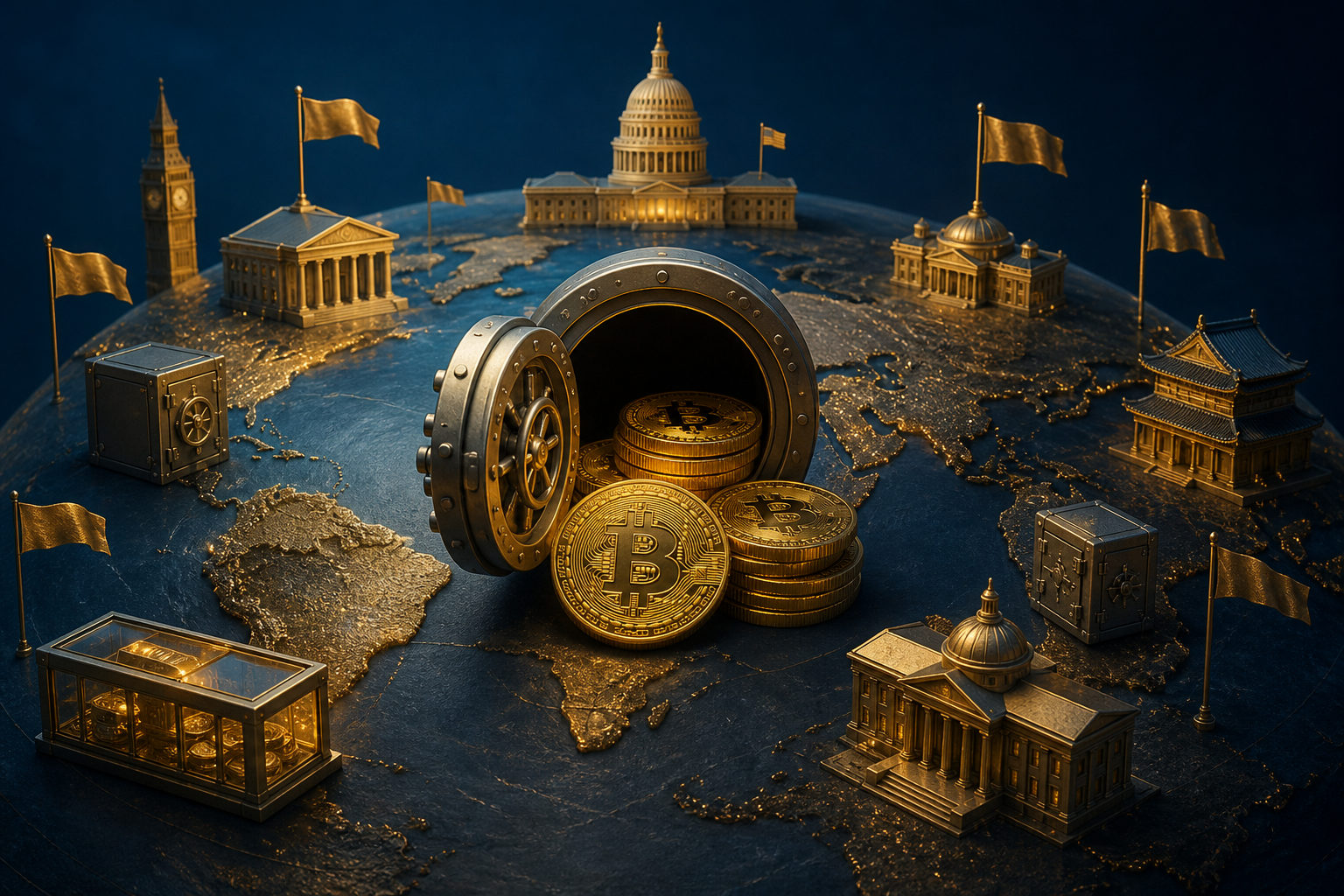
If you ask which country has most bitcoins, the honest answer is that there is no single permanent winner across every measurement. The result changes depending on whether you mean government-controlled holdings, publicly disclosed institutional holdings, or the estimated total held by people and businesses in that country.
Why there is no one final answer
Bitcoin lives on a public blockchain, but wallet addresses do not come with a country label. An address can belong to an exchange, a custodian, an investment vehicle, a company treasury, or an individual using self-custody. That makes national attribution much harder than many headlines suggest.
The other problem is methodology. One ranking may count only government wallets that can be linked to seizures or official disclosures. Another may add listed companies, funds, and custodians based in a country. A third may try to estimate total ownership by residents. Those are very different questions, even if they all get reduced to the same search phrase.
Three common ways people use this question
Government-held bitcoin
This version looks at bitcoin directly controlled by a state or its agencies. It often includes coins obtained through law enforcement seizures, forfeitures, or formal treasury holdings. Because some of these positions are publicly discussed, they are easier to track than private holdings.
Still, even this category has limits. Coins under temporary control during legal proceedings are not always the same as strategic reserves, and not every government gives regular updates on what it still holds.
Publicly disclosed institutional holdings in a country
Another approach is to total the bitcoin held by listed companies, funds, exchange-traded products, or custodians associated with a country. This can make financially developed markets look dominant, partly because disclosure is better and large vehicles are easier to monitor.
That does not mean those coins belong to the state. It also does not mean the economic owners are all local. A fund may be based in one country while its investors are spread across many others.
Total bitcoin held by residents and businesses
This is the most intuitive reading of the question, but it is also the hardest to measure. People can hold bitcoin in self-custody, on exchanges, through funds, or in business treasuries. One person can control many addresses, and one service can hold coins for users from many regions.
For that reason, any claim that one country definitely holds the most bitcoin should be treated with caution unless the scope is clearly defined. In many cases, the best you can say is that certain countries are often placed near the top under specific reporting methods.
What to check before trusting a ranking
When you read an article answering which country has most bitcoins, look at the footnotes before you look at the headline. The ranking is only as useful as its definitions. If the article does not explain what counts as national ownership, the conclusion may be too broad to rely on.
- Does it separate government holdings from private-sector holdings? Those categories serve different purposes and should not be merged without explanation.
- Does it count only publicly disclosed positions? Public data is easier to verify, but it is not the full picture.
- Is the country assigned by registration, operations, or investor base? Those can point to different places.
- Does it treat custodial balances as local ownership? Assets held for clients are not automatically owned by the host country.
This is why simple rankings can mislead. A country with strong disclosure rules may appear to hold more bitcoin than a country where ownership is less visible, even if the hidden share is meaningful.
Why some countries show up more often in the debate
The countries most often mentioned usually have one of three features: public records tied to seizures or official holdings, active capital markets with company disclosures, or large financial institutions that manage bitcoin-related products. Visibility matters. The more open the reporting, the more often that country appears in rankings.
The reverse is also true. A country may have heavy retail usage or substantial private ownership but still rank lower in public comparisons because self-custody is harder to map and disclosure may be limited. High visibility is not proof of first place, and low visibility is not proof of small ownership.
FAQ
Is a country's bitcoin total the same as government bitcoin reserves?
No. A national total may include households, companies, funds, and platforms connected to that country. Government reserves refer only to assets under public-sector control.
Why do different lists disagree so much?
They usually measure different things. Some track verifiable government wallets, while others compile corporate disclosures or include custodial and fund-related holdings.
Can blockchain data alone show which country owns the most bitcoin?
Not by itself. Blockchain records balances and transfers, but it does not identify nationality or location unless outside evidence links an address to a known entity.
Should exchange balances count as the bitcoin holdings of the exchange's country?
Not automatically. Exchanges often hold assets on behalf of users from many places, so treating all custody balances as domestic ownership can distort the picture.
What is the practical way to follow this topic?
Start with government disclosures, public company filings, fund documents, and methodology notes from major data providers. The most useful question is not who is first, but what exactly is being counted.
If you want a usable answer, define the category before comparing countries: government-controlled bitcoin, publicly disclosed institutional holdings, or estimated nationwide ownership. Without that step, the headline answer is too loose to be trusted.
Disclaimer: This article is for informational and educational purposes only and is not investment, financial, or legal advice. Crypto assets are highly volatile and you could lose your entire investment. Do your own research and decide carefully.