
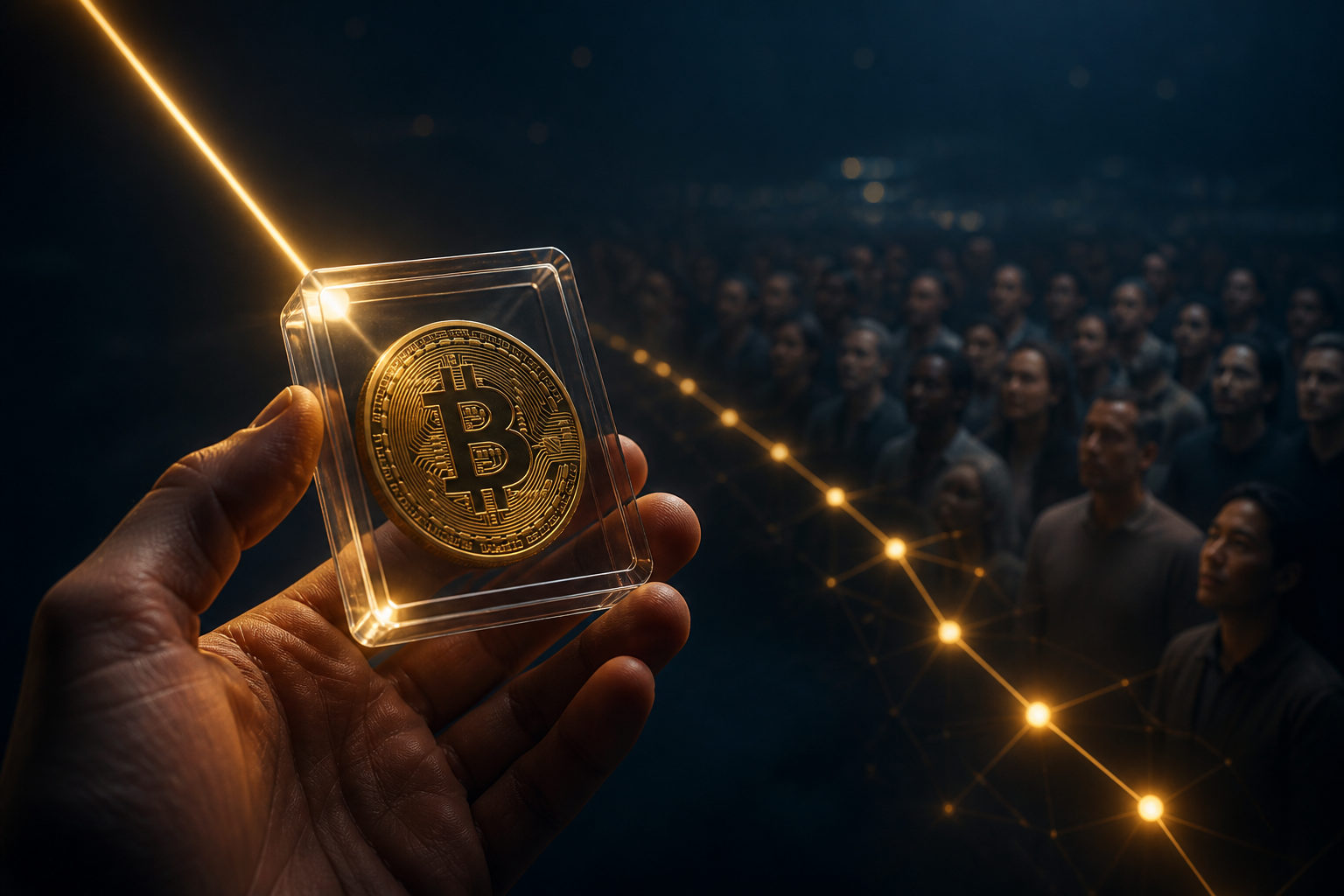
Bitcoin is valuable because it combines fixed supply, open verification, transferability, and shared market acceptance in one system.
Scarcity matters, but scarcity alone is not enough
A big part of the answer to why is bitcoin valuable starts with supply. Bitcoin has a hard cap of 21 million coins. That matters because people can judge it against a rule set that is public rather than a promise from a single company or government.
Still, scarcity by itself does not create value. A random object can be rare and yet have little demand. Bitcoin gets attention because its scarcity comes with a clear ownership system and a way to transfer that ownership across a network.
Bitcoin makes digital scarcity believable
Digital files are easy to copy. That creates a problem: if something exists online, how do users know which unit is real, who owns it, and whether it has already been spent? Bitcoin addresses that issue with a public ledger and a validation process that allows participants to check transactions against the same rules.
That is a major reason why are bitcoins so valuable to many holders. The asset is not just scarce on paper. Its scarcity can be checked. In practice, that means users do not need to rely on a private database operator to tell them whether a unit is valid.
This point is easy to miss. Many digital items can look scarce because a platform says they are limited. Bitcoin is different because the rule set is open, and independent participants can verify the record for themselves.
Why people are willing to hold it
Another reason behind bitcoin's value is usability as an asset. It can be moved across the internet, divided into very small units, and held without depending on a single issuer. The smallest unit is 1 satoshi, which is one hundred millionth of a BTC.
Those traits do not guarantee a stable price, but they do help explain demand. Some people treat bitcoin as a long-term store of value candidate. Others focus on its role in transferring value without needing one central party to maintain the entire system.
That does not mean every buyer shares the same motive. Some care about monetary rules. Some care about self-custody. Some simply want exposure to an asset with a very different structure from traditional financial products. Different motives can still support one market.
Consensus is built through repeatable rules
People often say bitcoin has value only because others believe it does. That statement misses an important step. Market belief matters for every asset, but with bitcoin, that belief is tied to a process that users can inspect.
You can think of it as a public record book with rules that came first. Participants join, test the rules, and continue using the same record because they accept the method for checking ownership and transfers. Over time, that repeated validation becomes part of the asset's value proposition.
This also explains why price swings do not settle the question of value. Price reflects changing expectations, risk appetite, regulation, and liquidity. Value is the deeper question of why people keep returning to the asset at all.
Price volatility does not erase the value case
A common mistake is to assume that a volatile asset cannot have value. Volatility tells you the market is still debating future demand, risk, and use. It does not prove the asset is meaningless.
If someone asks why is bitcoin so valuable, the better answer is not a price quote. It is a mechanism-based explanation: fixed supply, independent verification, portability, divisibility, and a network of users willing to recognize and transfer it.
If your real question is about live price, check a major market data platform. If your question is about value, focus on what gives bitcoin durable demand and why some users see it as different from ordinary digital payment balances.
FAQ
Why can bitcoin have value if it is not physical?
Physical form is not required for value. Many assets are based on records, rights, and market acceptance, and bitcoin fits that pattern in a digital-native way.
The key issue is whether it can be verified, held, and transferred under trusted rules.
Is bitcoin valuable only because people agree it is?
Agreement is part of every market, but bitcoin also has visible foundations. Its supply cap, public ledger, and verification model give that agreement more structure.
So the answer is not just belief. It is belief attached to a system that users can inspect.
Why does the 21 million cap matter so much?
Supply expectations shape how markets value assets. A fixed cap makes bitcoin different from assets that can be expanded more freely.
That does not promise rising prices, but it does affect how holders think about long-term scarcity.
How is bitcoin different from ordinary digital money in an account?
An account balance is usually updated by a financial institution inside its own system. Bitcoin uses a shared network record with common validation rules.
Both appear as numbers on a screen, yet the trust model behind them is very different.
What should beginners study first if they want to judge bitcoin's value?
Start with four basics: supply rules, transaction verification, wallet custody, and sources of demand. Those pieces will help you separate short-term noise from the deeper value argument.
After that, read the white paper and learn how confirmations and wallets work before relying on slogans from either side.
If you want a practical next step, study how bitcoin's scarcity, verification, transfer process, and custody model fit together before making any judgment about its value.
Disclaimer: This article is for informational and educational purposes only and is not investment, financial, or legal advice. Crypto assets are highly volatile and you could lose your entire investment. Do your own research and decide carefully.