
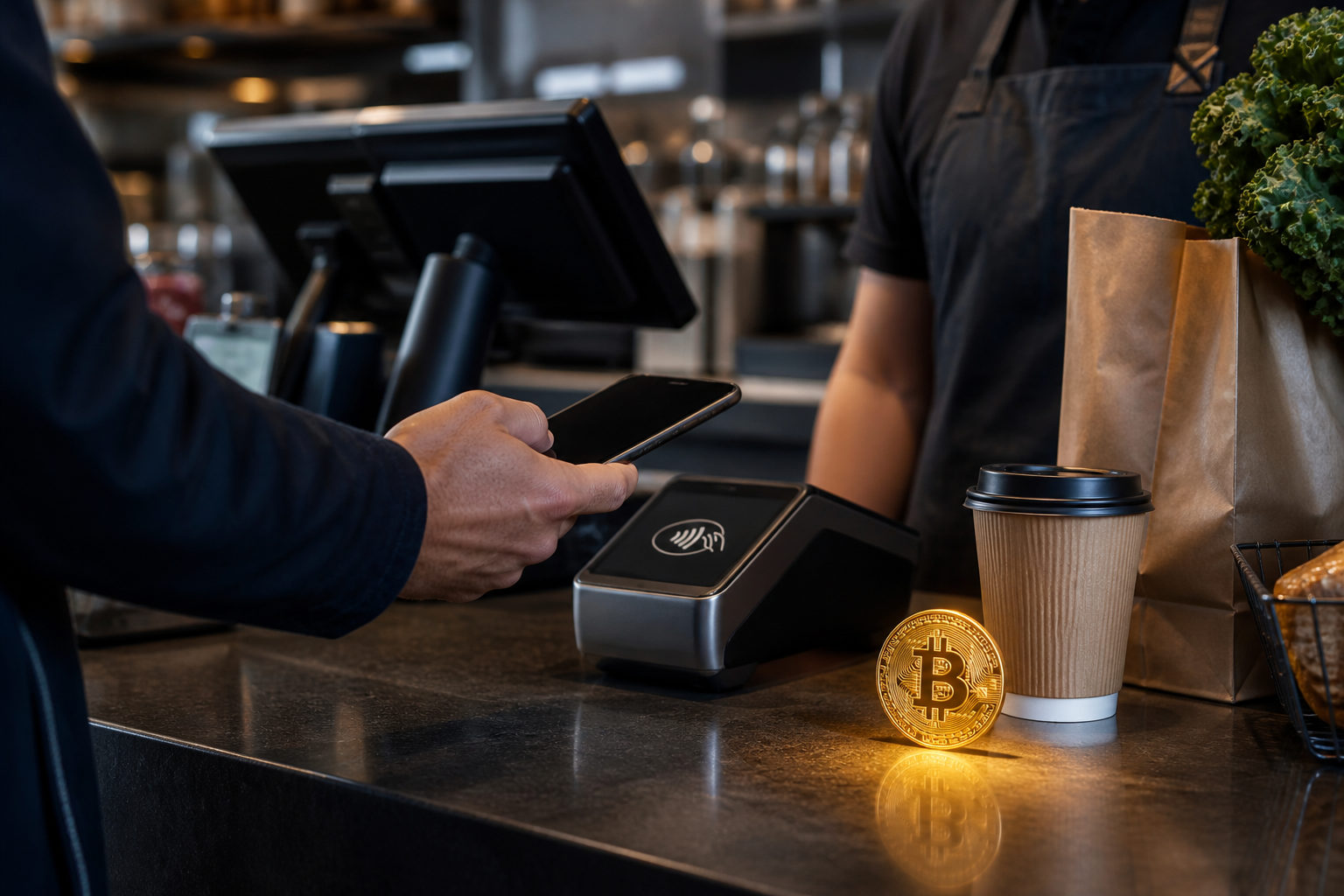
As of August 1, 2026, the clearest answer to whether Bitcoin will ever be used as currency is yes in some contexts, but not yet as a broadly adopted everyday money.
Bitcoin already works for payments, but that is not the same as full currency use
People often compress two separate questions into one. The first is whether Bitcoin can be used to pay for goods or services. The second is whether households, merchants, and financial systems will treat it as a normal unit for pricing, settlement, and repeat spending. Those are related, but they are not identical.
Bitcoin already has several traits associated with money. It can move across borders on an open network, it can be held without relying on a single issuer, and it gives users a way to transfer value outside standard banking hours. For people who care about self-custody or international transfers, that is not theoretical. It is a practical feature.
Still, everyday currency use asks for more than transferability. A mature currency needs low-friction payments, familiar consumer behavior, merchant acceptance, predictable accounting treatment, and enough stability that both sides of a transaction feel comfortable using it. Bitcoin does not fail these tests in every setting, but it does not pass them across the board either.
That is why Bitcoin is better described today as a digital asset that can function as a payment tool, rather than a payment standard that has already won mass adoption.
What holds Bitcoin back from wider currency adoption
If the question is whether Bitcoin will ever be a currency, the main obstacle is not ideology. It is day-to-day usability. Consumers and businesses care less about slogans and more about whether paying and getting paid feels simple enough to repeat.
Price volatility is the first barrier. Businesses need workable pricing for inventory, wages, services, and margins. If the asset they accept can swing materially over a short period, many merchants will convert receipts back into fiat quickly. Consumers face a similar tradeoff. If they think an asset may appreciate, they often prefer holding it over spending it.
Usability is the second barrier. Mainstream payment systems became common because users do not need to understand the mechanics underneath them. Bitcoin payments can still involve wallet setup, address handling, fee awareness, confirmation timing, and self-custody risks. Even when these steps are manageable for experienced users, they create friction in small and frequent purchases.
Merchant operations are the third barrier. Accepting Bitcoin is not just adding a button at checkout. It can involve treasury policies, accounting workflows, refunds, conversion choices, internal controls, and tax treatment. Large businesses usually adopt a payment method only when demand is clear and operational handling is predictable.
There is also a behavior problem. A large share of Bitcoin holders still treat BTC as something to save, not something to spend. When an asset is viewed mainly as a long-term store of value, circulation tends to stay limited.
Where Bitcoin is more likely to be used as currency first
A more useful way to frame the topic is not to ask whether Bitcoin will become currency everywhere at once. The better question is where it has the strongest chance of functioning like currency before broader retail adoption arrives.
Cross-border payments are an obvious candidate. When two parties are in different jurisdictions, traditional rails can involve delays, restrictions, and uneven access. Bitcoin can offer an alternative transfer path that is not tied to one local schedule. Even if the recipient converts to fiat at the end, Bitcoin can still serve as part of the value transfer process.
Online-native commerce is another candidate. In communities where users already hold BTC and understand wallets, education costs are lower. Merchants in those niches do not need universal adoption to benefit. They only need enough overlap between willing buyers and willing sellers.
A third path is back-end settlement rather than front-end spending. Consumers may continue using familiar payment interfaces while some transfer or settlement functions rely on Bitcoin-related infrastructure behind the scenes. In that case, Bitcoin would still be acting in a currency-like role even if the customer does not experience the transaction as direct BTC spending.
This distinction matters. Direct retail pricing in BTC and indirect use of Bitcoin in payment settlement are different forms of monetary use. Bitcoin may gain ground in the second category before it becomes common in the first.
What current market forecasts say about Bitcoin's role
Price targets do not prove whether Bitcoin will be used as currency, but they do show how major market voices frame the asset. If most forecasts focus on flows, volatility, and valuation models, that tells us the dominant narrative still leans toward investment demand rather than everyday payment adoption.
Bernstein, in a forecast published on 2026-06-15, set a 150,000 美元 target for Bitcoin by the end of 2026. The reasoning centered on a reset from a previous higher target and a recovery toward the 100,000 to 150,000 range. That is clearly an asset-pricing discussion, not a consumer payments discussion.
Standard Chartered, in a forecast published on 2026-02-12, gave Bitcoin a 100,000 美元 target for the end of 2026. The bank cut its near-term target more than once while still keeping a longer-run view, with ETF flows described as a key variable. That framework also points to market allocation and investor demand rather than checkout adoption.
JPMorgan, in a report published on 2026-02-01, projected Bitcoin at 150,000-170,000 美元 in 2026 based on a volatility comparison with gold. That comparison matters because it places Bitcoin in a store-of-value and portfolio context. It does not tell us that daily retail use is close.
Galaxy Digital CEO Mike Novogratz, in comments published on 2026-07-10, expected Bitcoin to trade in a 60,000-80,000 美元 range during 2026, arguing that without a strong catalyst it would be difficult to reclaim 100,000. A range-bound market does not automatically block payment adoption, but it does show that near-term attention remains focused on trading conditions and momentum.
Fidelity's Jurrien Timmer, in a view published on 2026-06-01, described Bitcoin as consolidating in the 65,000-75,000 美元 range in 2026 and argued that the four-year cycle remained intact, with the market in a post-peak consolidation phase. Again, that is a cycle and valuation lens.
Put together, these forecasts disagree on direction and magnitude, but they share one trait: they talk about Bitcoin mainly as an asset. That does not mean it cannot become more useful as currency. It means the market's current center of gravity is still investment-focused.
What would need to change for Bitcoin to act more like money
If Bitcoin is ever used as currency at a larger scale, several pieces probably need to improve at the same time. Better user experience is one of them. A payment system gets stronger when the hard parts move out of view and the customer can pay without thinking through technical steps each time.
Merchant tooling matters just as much. Businesses need smoother settlement, easier reconciliation, workable refund handling, and practical conversion options. When accepting Bitcoin feels less like a specialist activity and more like a standard payment integration, adoption can rise.
Clearer rules matter too. Businesses are reluctant to expand a payment method when accounting and tax treatment feel uncertain. Consumers react the same way. If using Bitcoin introduces extra confusion, many will stick to familiar rails.
The final piece is behavioral. As long as many holders see BTC mainly as something to keep rather than spend, Bitcoin will continue to look more like digital gold than wallet money. Broader currency use would likely require a cultural shift from pure holding toward selective spending.
So the realistic answer is not that Bitcoin either becomes the default money everywhere or fails completely. A more credible path is narrower but still meaningful: it can become a useful currency in certain payment corridors, online niches, and settlement functions long before it becomes ordinary cash for everyone.
FAQ
Can Bitcoin become a normal way to pay for everyday things?
It can expand in certain use cases, but that is different from becoming a universal everyday currency. Cross-border transfers, online-native commerce, and crypto-familiar communities are more likely to adopt it earlier than general retail.
For broader daily use, the payment experience has to get easier for both buyers and merchants.
If Bitcoin already works for payments, why is it still treated mostly as an asset?
Because many holders still prefer to save BTC rather than spend it. That behavior slows circulation and keeps Bitcoin closer to an investment or store-of-value role.
Merchants often reinforce that pattern when they accept BTC but convert it quickly into fiat.
Does Bitcoin need to replace fiat to count as currency?
No. A currency role can exist without total replacement of state-issued money. Bitcoin can be used as a payment or settlement tool in specific settings even if fiat remains dominant in daily pricing and wages.
That is why the question of currency use should be separated from the question of replacing the dollar or other fiat systems.
Do bullish price targets mean Bitcoin is close to mass payment adoption?
Not by themselves. Bernstein on 2026-06-15, Standard Chartered on 2026-02-12, and JPMorgan on 2026-02-01 all discussed Bitcoin through targets, flows, or valuation models.
Those views tell us how institutions price BTC as an asset. They do not automatically show that merchants and consumers are ready to use it at scale.
What should users watch if they want to judge Bitcoin's currency future?
Watch merchant acceptance, user friction, and settlement practicality. If businesses can accept BTC without major accounting or operational pain, and users can pay without technical stress, Bitcoin's currency role becomes more credible.
Before using BTC for a purchase, check wallet handling, security, fee conditions, and the merchant's payment rules.
If you want to assess whether Bitcoin will ever be used as currency, spend less time on one-day price moves and more time on whether payments are getting easier, merchants are keeping support in place, and users are becoming willing to spend at least part of their BTC instead of holding all of it.
Disclaimer: This article is for informational purposes only and does not constitute investment advice. Cryptocurrency prices are highly volatile. Always do your own research.