
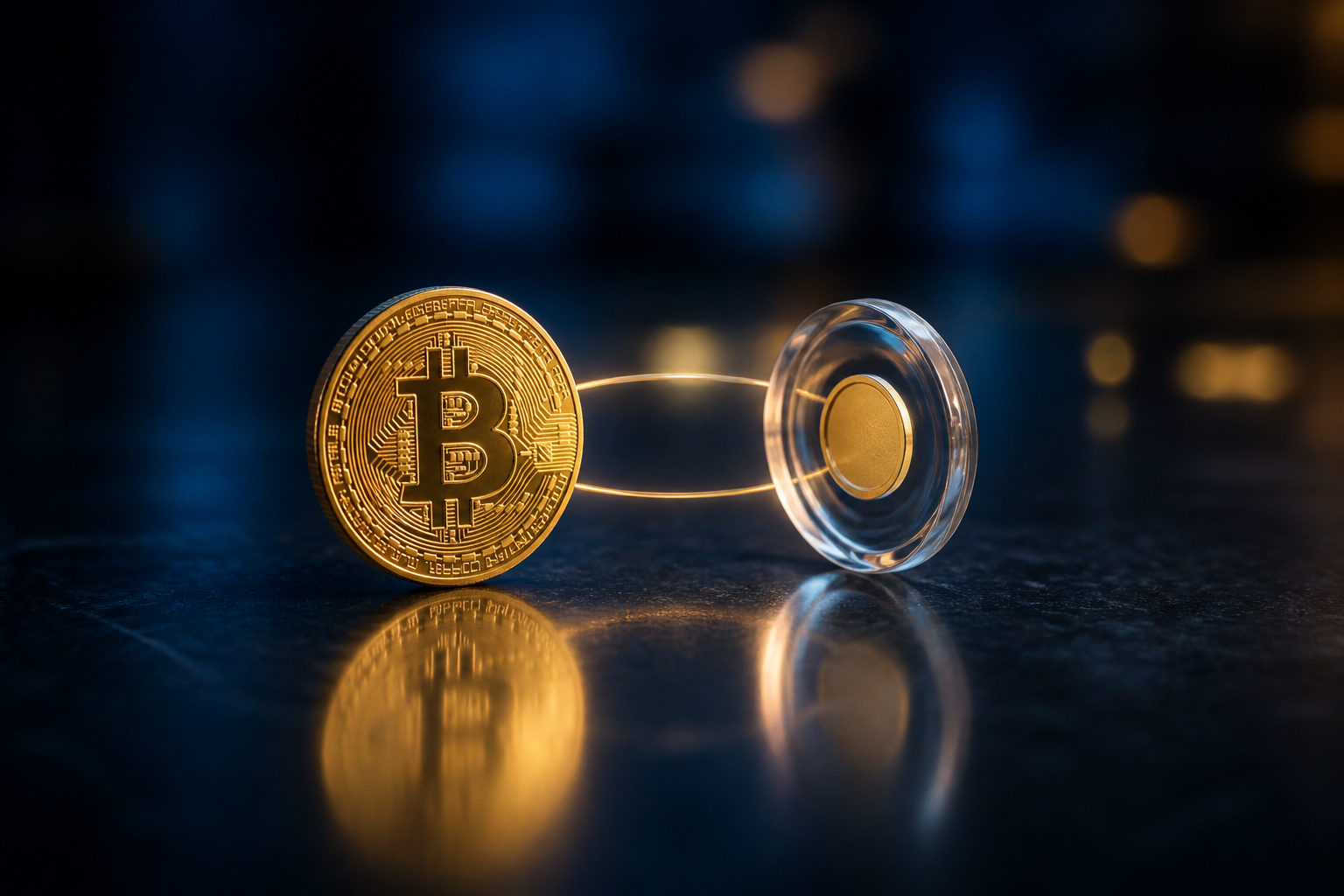
No. Wrapped Bitcoin is not the same as Bitcoin. It is usually built to track BTC's value, but it sits on a different blockchain and comes with a different set of moving parts.
Start with the basic split
When people say Bitcoin, they usually mean native BTC on the Bitcoin blockchain. That asset moves under Bitcoin's own network rules, and it stays inside that network when you send or receive it.
Wrapped Bitcoin, often written as WBTC, is a token version of Bitcoin that exists on another blockchain. The idea is simple enough: take Bitcoin-related value and make it usable in places where native BTC does not fit directly.
That distinction matters more than many beginners expect. If you hold BTC, you hold the native asset. If you hold Wrapped Bitcoin, you hold a token that represents Bitcoin value in another chain environment.
Why Wrapped Bitcoin exists at all
Bitcoin's core role is fairly clear. It is used for holding, sending, and settling value on the Bitcoin network. A lot of other on-chain activity, though, happens elsewhere. Trading apps, lending systems, liquidity pools, and similar tools are often built on other blockchains.
So users ran into a practical issue. They had BTC, but they wanted something Bitcoin-like that could function inside those other systems. Wrapped Bitcoin became a workaround for that gap. It gives users a way to bring Bitcoin-linked value into another chain without abandoning the Bitcoin exposure they wanted.
Useful, yes. Clean and identical to BTC, no. The moment an asset is wrapped, extra dependencies appear: custody design, minting and redemption flow, smart contract behavior, and the health of the chain where the token lives.
The main differences between BTC and Wrapped Bitcoin
| Category | Bitcoin | Wrapped Bitcoin |
|---|---|---|
| Asset form | Native BTC | Tokenized representation of BTC on another chain |
| Network | Bitcoin blockchain | Usually another blockchain |
| Transfer rules | Bitcoin network rules | Target-chain and token-contract rules |
| Typical use | Holding, transfers, native settlement | Use inside other on-chain apps |
| Risk sources | Private key management and transaction mistakes | Also includes custody, bridge, contract, and target-chain risk |
| Same as native BTC | Yes | No |
A lot of confusion comes from price behavior. People see Wrapped Bitcoin trading close to BTC and assume the two assets are basically interchangeable. That is too loose a way to think about it.
Close value does not erase structural differences. Wrapped Bitcoin depends on a mechanism that the market has to keep trusting. If that mechanism is stressed, if redemption gets messy, or if the chain hosting the token has issues, Wrapped Bitcoin can behave differently from native BTC.
Same reference value. Different plumbing. Different failure points too.
Where beginners usually get tripped up
The first mistake is buying by name alone. If a token says Bitcoin in the label, some users assume they are buying actual BTC. They are not checking the network, the asset type, or the wallet standard. That is where trouble starts.
The second mistake shows up during transfers. WBTC usually lives on a different chain, so sending it as if it were native Bitcoin can create a real mess. The receiving address, wallet support, and network selection all need to match the asset you are moving.
There is also a longer-term misunderstanding. Someone may want plain Bitcoin for storage, then end up with Wrapped Bitcoin because a wallet app, exchange screen, or token list made the wrapped version look close enough. The exposure may look familiar, but the custody and operating logic are no longer the same.
When BTC makes more sense, and when Wrapped Bitcoin may be relevant
If your goal is straightforward ownership of Bitcoin, native transfers, or long-term holding of the original asset, BTC is usually the cleaner choice. You stay within the Bitcoin network, and the questions you need to answer are more direct: who controls the wallet, is the address correct, and are you using the right network?
Wrapped Bitcoin tends to come up when you already know you need access to another blockchain's apps. Maybe you want to use a protocol on a different chain. Maybe a service only accepts tokenized assets there. In that setting, Wrapped Bitcoin can be practical because it lets Bitcoin-related value move through tools that native BTC does not plug into directly.
Before you click buy or send, pause and ask one plain question: do I need Bitcoin itself, or do I need a Bitcoin-linked token on another chain? That single check prevents a lot of expensive confusion.
FAQ
If I buy Wrapped Bitcoin, do I own Bitcoin?
You own an asset designed to represent Bitcoin value, but that is not the same as holding native BTC on the Bitcoin blockchain. For some uses, that distinction is minor. For storage, transfers, and direct Bitcoin ownership, it is a big one.
Does Wrapped Bitcoin always trade at exactly the same price as BTC?
It is usually designed to stay close to BTC, but close is not the same as guaranteed identity at every moment. Liquidity conditions, redemption friction, market stress, and chain-specific issues can all create gaps.
Can I send WBTC to a Bitcoin address?
You should not treat them as the same transfer format. WBTC usually exists on another blockchain, so sending it to a Bitcoin address without checking network support can lead to serious recovery problems.
Which is better for long-term holding: BTC or Wrapped Bitcoin?
If your aim is direct ownership of Bitcoin, many users prefer native BTC because the structure is simpler. Wrapped Bitcoin becomes relevant when you specifically need to use Bitcoin-linked value inside another chain's applications.
How can I tell whether my wallet holds BTC or Wrapped Bitcoin?
Check the asset symbol, then check the network. The word Bitcoin by itself is not enough. What matters is whether the asset is native to the Bitcoin blockchain or a token version issued on a different chain.
Before any purchase or transfer, verify three things: the asset name, the network, and whether the platform supports deposits and withdrawals on that exact chain. Miss one of those, and Wrapped Bitcoin can stop looking simple very quickly.
Disclaimer: This article is for informational and educational purposes only and is not investment, financial, or legal advice. Crypto assets are highly volatile and you could lose your entire investment. Do your own research and decide carefully.