
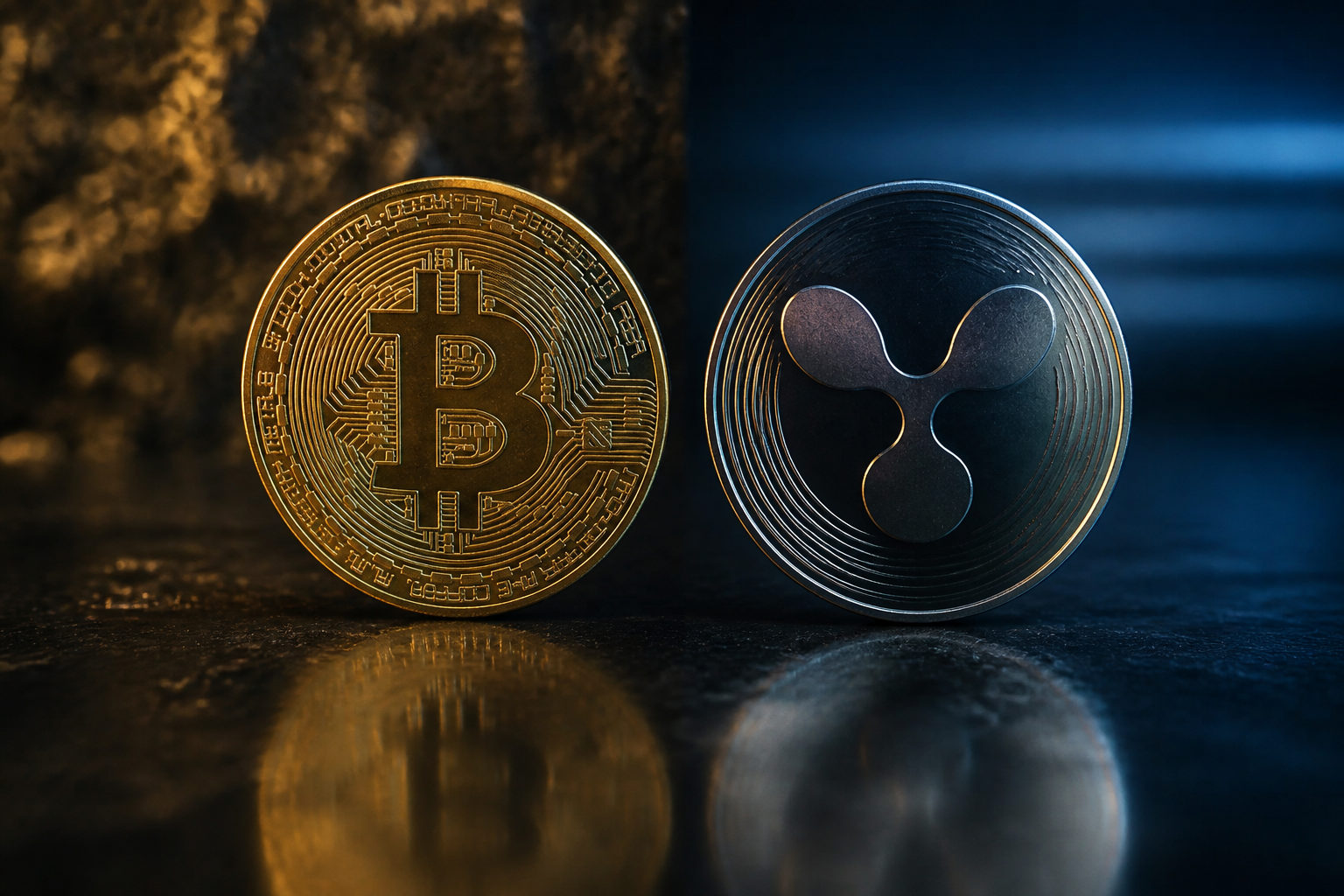
XRP and Bitcoin can be compared, but they should not be judged by the same standard. Bitcoin is usually discussed as a scarce digital asset, while XRP is more often framed around payment flow, settlement speed, and transfer efficiency.
Start with purpose: they are built for different priorities
When people ask how XRP compares to Bitcoin, they are often mixing two separate questions: which network is better at moving value, and which asset makes more sense to hold over time. Bitcoin began as a peer-to-peer electronic cash system and later came to be viewed by many market participants as a store-of-value asset. That shift matters because much of Bitcoin’s appeal now sits in scarcity, rule stability, and resistance to unilateral control.
XRP is commonly discussed in the context of payments and cross-border settlement. That does not mean it can only be used one way, but it does mean the market often evaluates it through a different lens. A user who cares about long-term monetary properties may prefer Bitcoin’s structure, while someone focused on moving funds across platforms may pay more attention to XRP’s transaction experience.
This is why headline comparisons can be misleading. Two assets can trade in the same market and still answer different user needs. If the use case is not clear at the start, the comparison quickly turns into people talking past each other.
| Category | Bitcoin | XRP |
|---|---|---|
| Main role in market discussion | Scarce digital asset, long-term holding, peer-to-peer transfer | Payments, settlement, transfer flow |
| What users often focus on | Scarcity, security, censorship resistance | Speed, transaction experience, utility in movement of funds |
| Typical narrative | Often described as digital gold | Often linked to payment network use |
| Best way to compare | Asset properties and network durability | Settlement function and adoption logic |
Network design and issuance work very differently
Bitcoin is easier to understand in structural terms because its monetary schedule is widely known. It has a hard cap of 21 million coins, produces a block about every 10 minutes, and goes through a halving about every 4 years, or every 210,000 blocks. New issuance is tied to mining, and that connection shapes how investors think about supply, security, and credibility.
XRP is not produced through Bitcoin-style mining, so the comparison changes at a basic level. Once that is clear, the useful questions become: how does supply enter circulation, who helps maintain the network, and how much influence can any single group have over the system? Those questions matter because they affect how people judge decentralization and long-term trust.
Bitcoin supporters often place heavy weight on permissionless access and the difficulty of changing core rules. People who favor XRP are more likely to emphasize practical throughput, payment utility, and commercial integration. Both views reflect priorities, not just technical preferences.
| Dimension | Bitcoin | XRP |
|---|---|---|
| How the network is commonly understood | Built around mining and proof-of-work security | Does not use Bitcoin-style mining |
| Supply story | Hard cap and scheduled halvings | Needs to be understood through its own issuance and circulation model |
| Decentralization debate | Node distribution, miner participation, rule stability | Validator structure, governance influence, network participation |
| What many investors ask first | Can it serve as long-term digital money or store of value? | Can payment use and ecosystem activity support demand? |
Use case matters more than ticker symbols
If the goal is long-term holding, Bitcoin often enters the conversation first because the market has spent years building a scarcity-based thesis around it. That does not remove volatility, but it does explain why many people evaluate Bitcoin more like a monetary asset than a payment rail.
If the goal is moving funds, XRP tends to appear more often in comparisons about transaction efficiency. That distinction is useful because transfer convenience and investment quality are not the same thing. An asset can be practical for movement without becoming the default choice for long-duration holding, and the reverse can also be true.
Many beginners blur those lines. They assume that stronger payment utility must lead to stronger investment returns, or they assume that store-of-value positioning makes an asset poor for actual transfers. Both shortcuts miss the main issue: what exactly are you trying to do with the asset?
| User goal | Asset more often associated with it | What to evaluate |
|---|---|---|
| Long-term holding | Bitcoin | Scarcity, social consensus, rule stability |
| Frequent transfers | XRP | Transaction experience, settlement flow, exchange support |
| Diversified crypto exposure | Either or both | Whether the risk drivers are actually different |
| Learning how crypto networks differ | Both are useful case studies | Purpose, governance, and market narrative |
From an investment view, the risk profile is not the same
Bitcoin and XRP can both be volatile, but the drivers behind that volatility are not always identical. Bitcoin is often affected by macro sentiment, policy shifts, changes in market liquidity, and broad crypto cycle behavior. Its advantage, in the eyes of many holders, is that the investment case is relatively easy to state: fixed supply, long-running network, and strong brand-level recognition.
XRP often requires a more situation-specific analysis. Market participants may focus on whether its payment narrative is gaining traction, whether its ecosystem use is expanding, and how regulation shapes trading access and adoption. That means a research process built for Bitcoin will not automatically work for XRP.
Portfolio construction should reflect that difference. Some investors treat Bitcoin as the base reference asset of the crypto market, while XRP is more likely to be assessed through targeted themes tied to payment utility or network adoption. Buying both does not create diversification by itself; it only helps if the reasons for owning them are truly distinct.
| Risk factor | Bitcoin | XRP |
|---|---|---|
| Volatility | High | High |
| Core valuation frame | Scarcity and network consensus | Payment utility, circulation expectations, ecosystem use |
| Regulatory sensitivity | High | High, with different pressure points |
| Main research challenge | Macro framing and long-term monetary thesis | Adoption quality, governance, and use-case durability |
FAQ
Is XRP a better investment than Bitcoin?
That depends on what you mean by better. If you want an asset often discussed as digital scarcity, Bitcoin usually fits that frame more clearly; if you are studying payment-focused utility, XRP may be the more relevant asset to examine.
Why do many people say Bitcoin is more decentralized?
The answer usually comes back to who maintains the network, how rules are enforced, and how much any single actor can influence the system. You do not need every technical detail to grasp the key point: the harder it is for one group to steer the network, the more decentralized it is usually seen to be.
Is XRP better for transfers than Bitcoin?
In many discussions, XRP is brought up more often when people care about transfer efficiency. Still, actual convenience depends on exchange support, the receiving party’s preferences, and the rules that apply where you live.
Can XRP and Bitcoin belong in the same portfolio?
Yes, but only if you know why you own each one. A portfolio makes more sense when Bitcoin fills one role, such as long-term monetary exposure, and XRP fills another, such as payment-related optionality or a distinct market thesis.
What should I check first when comparing XRP and Bitcoin?
Start with purpose, then move to network design, and only after that look at market behavior. If you skip the use case and jump straight to charts, you will miss the reasons these assets are evaluated so differently.
If you want a practical way to compare them, write down your goal before reading price commentary: long-term holding, active transfers, or thematic exposure. That one step removes much of the confusion around XRP versus Bitcoin.
Disclaimer: This article is for informational and educational purposes only and is not investment, financial, or legal advice. Crypto assets are highly volatile and you could lose your entire investment. Do your own research and decide carefully.