
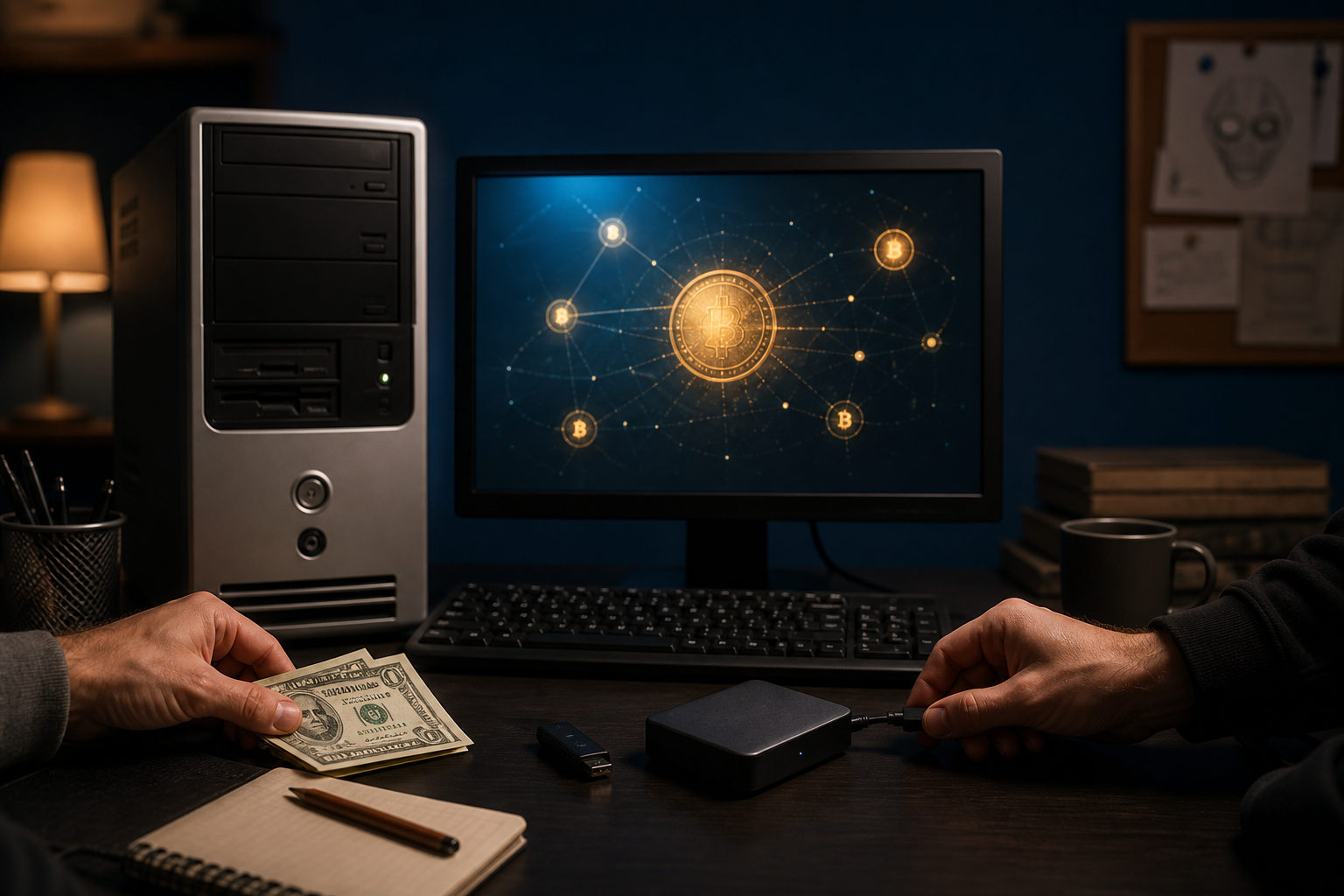
In 2009, buying bitcoin was not a one-click trade. The practical path was to set up your own wallet first, then find an early peer-to-peer transfer or obtain bitcoin by joining the network, because the market structure people know today did not exist yet.
First, understand what “buy bitcoin in 2009” really meant
When people ask how to buy bitcoin in 2009, they often imagine a familiar process: open a trading app, place an order, and wait for settlement. That is not the right frame for that year. Bitcoin began with the genesis block in January 2009, and the surrounding ecosystem was still extremely small.
So the real challenge was not just finding someone willing to part with bitcoin. You also had to know where to receive it, how to verify a transfer, and how to reduce the odds of being tricked in a setting with very little structure.
Step 1: Set up your wallet before you look for a seller
If you were trying to buy bitcoin in 2009, your first move should not be payment. It should be wallet preparation. Without a wallet you control, you have no secure receiving address, no clear way to confirm delivery, and no reliable claim over the coins once they arrive.
The action here is simple in principle: run bitcoin software in a trusted environment and create a wallet under your own control. The reason matters just as much as the step itself. Early transfers depended heavily on self-custody, and handing control to an unknown third party would add another layer of risk before the transaction even started.
- Action: Create a wallet and generate a receiving address in an environment you trust.
- Why: You need a destination under your own control before anyone can send bitcoin to you.
- Watch out for: Keep wallet files, backups, and private key material separate and protected. Do not send them to anyone.
This is where many beginners would fail. They would focus on how to get bitcoin and ignore the fact that possession depends on key control. A lost file, a damaged device, or malware could wipe out access even if the transfer itself succeeded.
Step 2: Look for peer-to-peer transfers in early communities
The next step in how to buy bitcoin in 2009 was usually community-based, not platform-based. In practice, that meant watching early forums, technical discussion spaces, or small groups where the first users gathered. There were far fewer structured marketplaces, so peer-to-peer contact carried much more weight.
The action is not “find any person offering coins.” It is “find a person whose history gives you something to assess.” Check whether that person had a continuing presence, whether they explained the process clearly, and whether their messages were consistent over time. In such an early setting, reputation traces were a major part of risk control.
- Action: Favor people with visible community history and a willingness to explain each step.
- Why: A long trail of normal interaction is better than a fresh account making bold claims.
- Watch out for: Be careful with anyone who rushes payment, avoids direct questions, or pushes you to skip verification.
Urgency was one of the biggest warning signs. A seller who demanded quick payment while resisting even basic checks would be far riskier than someone willing to move slowly and test the process.
Step 3: Start with a small test transfer
Once you found a possible counterparty, the next step should be a small test rather than a full transfer. Ask for a small amount of bitcoin first, sent to your wallet, and confirm that your setup works as expected before moving on.
This matters for two reasons. First, it checks your own receiving setup. Second, it shows whether the other person can and will send bitcoin as promised. For anyone asking “how did people buy bitcoin in 2009,” this was not extra caution for the sake of caution. It was one of the few practical defenses available.
- Action: Complete a small test transfer before discussing a larger handoff.
- Why: You verify both your wallet flow and the other side’s willingness to perform.
- Watch out for: Do not skip the test just because someone claims to be an early user. Double-check the receiving address every time.
It also helps to define expectations in plain language. Who moves first, what counts as confirmation, and what happens if there is a delay should be stated clearly. In an early peer-to-peer trade, vague assumptions could turn into losses very quickly.
Step 4: Use payment methods you understand and can document
If someone asks “how would you buy bitcoin in 2009,” the best answer is not a specific service. It is a rule: choose a payment method you understand, can document, and can explain afterward. At that time, payment arrangements were less standardized, and disputes were harder to sort out.
The action is to favor methods that leave a usable record of your communication and your payment steps. The reason is straightforward. If something goes wrong, you may have no central support channel to rely on, so your own records become part of your protection. The main caution is not to accept a payment setup just because it sounds fast or attractive.
Another useful habit is to break the process into stages. Verify identity signals, do the test transfer, then proceed in smaller steps instead of treating the whole exchange as one all-or-nothing event.
Step 5: In 2009, obtaining bitcoin could also mean joining the network
A full answer to how to buy bitcoin in 2009 should include an important point: early users did not always “buy” bitcoin in the modern sense. Some obtained it by running the software, participating in the network, and mining. In that period, “getting bitcoin” was often a broader idea than “placing a purchase.”
The action here would be to understand the basics first: addresses, private keys, transaction flow, and how the blockchain records transfers. The reason is that if trade channels are thin, direct participation can be more realistic than waiting for a polished marketplace to appear. The caution, again, is that technical access does not remove security risk. Backups and device safety still matter.
This historical point is useful because it changes the frame. The lesson is not to imitate the exact conditions of that year. The lesson is that infrastructure changes, while control of keys and careful verification stay important.
Why the 2009 process was so different from today
The difference comes from maturity. In 2009, the protocol existed, but the surrounding market, user tools, and liquidity were still very early. With fewer organized venues, a would-be buyer had to rely more on direct communication, technical understanding, and manual checks.
That is why a good answer to “how did you buy bitcoin in 2009” sounds less like a platform review and more like a checklist: prepare a wallet, assess the other party, run a small test, keep records, and only then continue. It was slower, but that slower pace was part of the protection.
FAQ
Could an ordinary person really buy bitcoin in 2009?
Yes, but it was much less straightforward than it is now. A typical path involved early communities, direct contact with another user, or participation in the network rather than a polished exchange flow.
What was the biggest risk in a 2009 bitcoin purchase?
The biggest risk was trust failure: fake identities, false promises, or a seller taking payment and not sending coins. Any push to skip checks or move too fast should have been treated as a warning sign.
Should you set up a wallet before trying to buy?
Yes. Without a wallet under your control, you cannot receive bitcoin safely or confirm that delivery really happened. Self-custody starts before the transfer, not after it.
Did people only get bitcoin by buying it?
No. In the earliest period, some users obtained bitcoin by running the software and mining rather than by purchasing from another person. That is why “getting bitcoin” is often a better description than “buying bitcoin” for that year.
If I want the live bitcoin price now, what should I do?
Use a mainstream market data tool and compare the live quote with order-book depth, spread, and the transfer network you plan to use. A 2009-style historical discussion will not tell you what bitcoin costs today.
What is still useful today from this 2009 question
If you searched how to buy bitcoin in 2009 because you want a practical lesson for today, keep the parts that do not age: control your own wallet first, verify the other side, test with a small amount, and keep complete records. Those steps still reduce risk, even though the market structure is very different now.
Disclaimer: This article is for informational and educational purposes only and is not investment, financial, or legal advice. Crypto assets are highly volatile and you could lose your entire investment. Do your own research and decide carefully.