
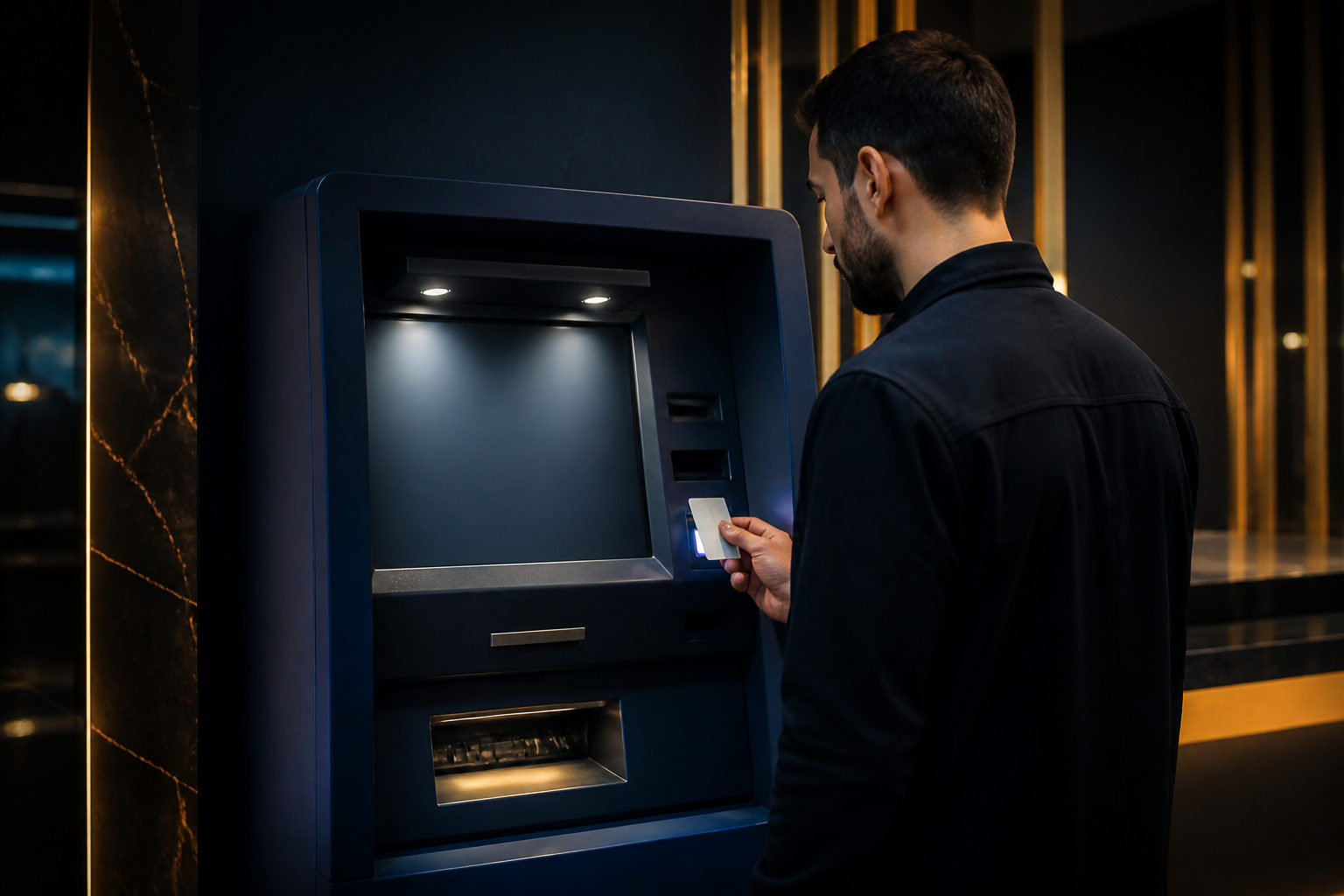
Does Bitcoin Depot require ID? Not always. The company runs thousands of bitcoin ATMs across the U.S. and also sells crypto through cash registers inside retail stores. Whether you need to show ID depends on the channel, the amount, and your state.
The short answer
Small cash purchases at an ATM usually skip identity checks entirely. Go over the limit and the machine will demand a phone number, your name, and a government-issued ID. That threshold moves by state; some states treat crypto ATMs as money services businesses and force stricter checks on nearly every transaction.
- ATM, small amount: No name, no ID in most cases.
- ATM, large amount: Phone number, name, and a driver's license or passport.
- In-store cash counter: ID is typically required from the very first purchase.
- Online platform: Full KYC, including a photo ID and proof of address.
Even within one state, individual machines can behave differently. Watch the screen before you start; it will show whether verification is needed.
Why verification exists in the first place
Bitcoin Depot operates under U.S. anti-money-laundering rules enforced by FinCEN. A core obligation is Know Your Customer: verify who you are, at least above a certain size of transaction. Regulators are especially nervous about cash moving into crypto because cash is inherently anonymous.
The exact bar comes from two layers: federal law sets a baseline, and each state's money transmitter license can add stricter conditions. Some states push frequent checks, others stick close to the federal minimum.
Buying channels compared
| Channel | ID requirements | Typical use case |
|---|---|---|
| Bitcoin ATM | Small amounts skip ID; above the limit, phone + ID | Fast purchase straight to your own wallet |
| In-store cash counter | ID usually required on the first transaction | Paying cash with a store clerk's help |
| Online platform | Full KYC: photo ID, address, phone | Managing money and trades from your phone or computer |
Here's a wrinkle: even when an ATM skips ID, it may not support a true wallet-to-wallet transfer. Some machines work through a redemption code sent by SMS. Your phone number is already a form of identity at that point.
Before you buy, have these ready
You don't want to reach the payment step and freeze up. Get these together ahead of time:
- Valid ID: driver's license, passport, or state ID. Essential for large purchases or the cash counter.
- Phone number: receives the verification code and stays on record for smaller transactions too.
- Bitcoin wallet address: double-check it before sending. A typo can be costly.
- Cash or debit card: ATMs mostly take cash. Online channels accept debit cards and bank transfers.
The screen will show the exchange rate, the fee, and the final amount before you confirm. Screenshot that screen. It's your receipt if something goes wrong.
FAQ
Can I use Bitcoin Depot anonymously?
Small ATM purchases can avoid a name, but the phone number and the purchase record may still be kept. Full anonymity isn't realistic under current regulations.
How do I find out the exact limit in my state?
Start a transaction on the machine. If local rules are stricter, the prompt will tell you before you commit. Store staff and Bitcoin Depot's help pages can also point you in the right direction.
No driver's license — can I use a passport instead?
Yes, in most cases. The system accepts several types of government-issued ID, and passports are the most common alternative. If your ID can't be read, you'll need to switch to another buying channel.
Is the online KYC process the same as the ATM one?
No. Small ATM buys might skip verification altogether. Online accounts typically face full KYC from registration or the first trade.
Is it safe to hand over my ID?
Bitcoin Depot's privacy policy explains how data is used, but there is always some risk in uploading a photo of your ID to any company. Share only what's necessary and stay alert to data-breach news.
Bottom line
Whether you need ID depends on the channel, the amount, and the state you're in. Privacy-minded buyers can use small ATM transactions and learn their local limits first; bigger purchases go smoother with documents ready. Just don't treat bitcoin buying like a cash purchase at a corner store.