
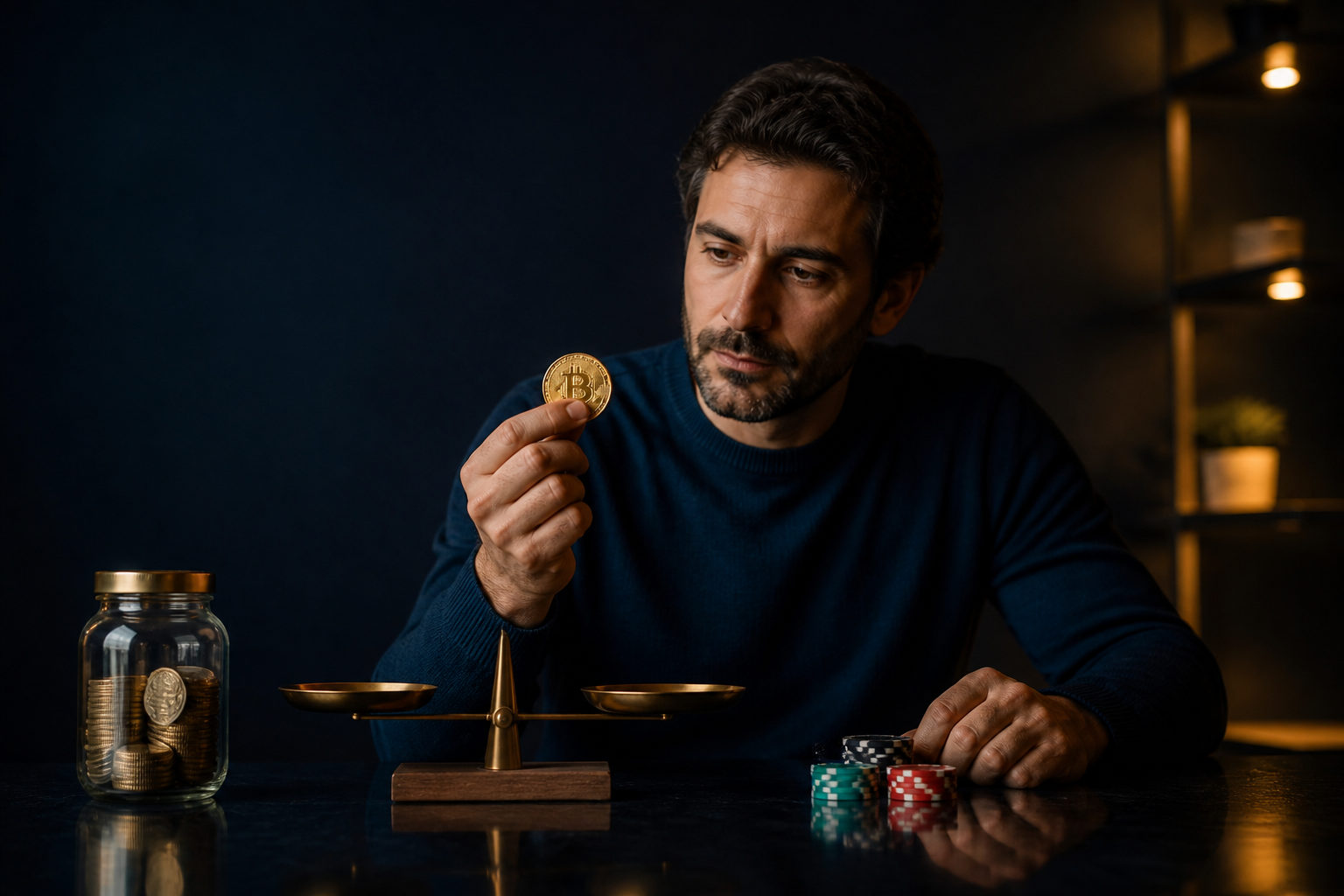
Is bitcoin gambling? On its own, no. Bitcoin is a digital asset with public rules, but the way a person trades or buys it can turn the experience into something very close to gambling.
Bitcoin itself is not the same thing as a bet
People often ask this question because they are trying to judge risk, not just define a word. The real issue is whether holding or trading bitcoin is being treated as a considered financial decision or as a thrill-driven wager on price moves.
Bitcoin was introduced under the name Satoshi Nakamoto, and its genesis block appeared in January 2009. Its supply has a hard cap of 21 million coins, and its smallest unit is 1 satoshi, which equals one hundred millionth of a BTC. Those facts matter because they show that bitcoin is not a casino game with house rules changing at will.
That said, a transparent system does not protect anyone from poor decisions. A person can study custody, market structure, and portfolio risk before buying bitcoin. Another person can jump in because of hype, stare at price charts all day, and keep trading on impulse. They are touching the same asset, yet their behavior has very different characteristics.
When bitcoin activity starts to look like gambling
The cleanest way to judge this is to focus on process. Ask what drives the decision, how money is managed, and what happens emotionally after gains or losses.
| Area | Closer to investing | Closer to gambling |
|---|---|---|
| Reason for entry | A defined thesis and risk awareness | A hunch, a tip, or fear of missing out |
| Time frame | A planned holding period or review point | Constant switching based on short-term moves |
| Source of funds | Money that can handle volatility | Borrowed funds or essential living money |
| Reaction to losses | Review the original plan | Trade bigger to win it back fast |
| Emotional pattern | Can tolerate uncertainty | Acts out of panic or greed |
| Main focus | Security, allocation, and thesis | Only the next price swing |
This distinction matters because gambling behavior is often less about the asset and more about the user's habits. Bitcoin can be bought and sold quickly, and its price can move sharply. That combination creates a strong pull toward compulsive checking, revenge trading, and overconfidence after a few wins.
Many newcomers think easy access means easy profit. It does not. A market that is open, liquid, and fast can punish poor discipline just as fast. Convenience lowers the barrier to entry, but it also lowers the barrier to impulsive mistakes.
Why people reach different conclusions about bitcoin
Some people see bitcoin as a long-term digital asset with a fixed issuance model. Others see it as a vehicle for pure speculation. The disagreement comes from the user's purpose as much as from the asset itself.
Bitcoin runs on a public issuance schedule. A new block is produced about every 10 minutes, and the block reward halves about every 4 years, or every 210,000 blocks. The halving years so far are 2012, 2016, 2020, and 2024. Those rules shape supply expectations, but they do not remove demand uncertainty or short-term volatility.
That is why bitcoin can support two very different experiences. One person studies why a scarce digital asset might matter, how self-custody works, and where it fits in a wider portfolio. Another person treats every move as a chance to score a quick win. The first approach may still be risky, but it is operating in an investment frame. The second is far more likely to drift into gambling behavior.
Psychology plays a large role here. Fast feedback can train bad habits. Social media can amplify urgency. Stories about sudden gains can push people to trade without understanding what they own. Once the goal changes from managing risk to chasing excitement, the label people use starts to make more sense.
How to keep bitcoin from becoming a gambling habit
Start with purpose. Why are you buying bitcoin at all? If the only honest answer is that you hope it goes up quickly, there is a good chance your decisions will depend on mood rather than method.
Next, put boundaries in writing. Decide how much capital you are willing to expose, what would make you add or reduce exposure, and what level of volatility you can live with. People often say they have a plan, but many are only carrying a vague idea in their head. A written rule is harder to bend in the heat of the moment.
Then examine your reaction to drawdowns. If price swings are disrupting your sleep, your work, or your daily spending choices, the position may already be too large for your circumstances. In that case, the pressing issue is not whether bitcoin recovers soon. It is whether your risk size was sensible from the start.
| Self-check question | Healthier sign | Warning sign |
|---|---|---|
| What did you do before buying? | Learned about wallets, custody, and volatility | Acted on posts, chats, or rumors |
| How was position size chosen? | Set a limit first | Kept adding after emotional swings |
| How do you handle losses? | Reassess the thesis | Increase risk to recover quickly |
| What gets most attention? | Security and discipline | Minute-by-minute price action |
| Is normal life affected? | Daily routine stays intact | Mood and spending revolve around the market |
Security deserves its own place in the discussion. Bitcoin transactions are not something you casually undo. Wallet choice, exchange account protection, seed phrase storage, and operational mistakes can all shape outcomes. Some people lose money through reckless trading, while others lose it because they ignored basic custody practices. Both situations are risky, but they come from different failures.
It also helps to accept that understanding bitcoin does not require certainty about future price. You do not need to predict every move to decide whether the asset belongs in your financial life. What you do need is a clear view of what you can afford to risk and what kind of behavior the market tends to trigger in you.
FAQ
Does buying bitcoin automatically count as gambling?
No. Buying bitcoin by itself does not automatically make the act gambling. The answer depends on your method, your risk controls, and whether the decision is driven by analysis or by the urge for a quick payoff.
Is long-term bitcoin holding always investing?
Not always. A long holding period can still hide poor judgment if the purchase was made blindly, with money that should not be at risk, or without any understanding of custody and volatility.
Why does short-term bitcoin trading often feel like gambling?
Because it combines quick feedback with strong emotion. When every small move feels important, people are more likely to abandon their rules and make repeated decisions based on fear or excitement.
Does leverage make bitcoin trading more like gambling?
In many cases, yes. Leverage magnifies both gains and losses, and it can tempt traders to take oversized risks after a setback. That pattern can turn a risky market into a destructive habit very quickly.
Can someone with no technical background approach bitcoin responsibly?
Yes, but learning should come first. You do not need deep technical knowledge, though you should understand wallets, custody choices, transaction finality, and the possibility of large price swings before putting money in.
If you are still unsure how to classify your own behavior, look less at the word “bitcoin” and more at your routine. The strongest clue is usually simple: are you managing exposure to a volatile asset, or are you chasing the emotional rush of being right on the next move?
Responsible Gambling Notice: This article is for informational and educational purposes only and is not gambling, investment, or legal advice. Gambling carries a risk of losing your funds and is not legal in every jurisdiction. Check your local laws, be of legal age, and gamble responsibly; seek professional help if gambling becomes a problem.
Disclaimer: This article is for informational and educational purposes only and is not investment, financial, or legal advice. Crypto assets are highly volatile and you could lose your entire investment. Do your own research and decide carefully.