
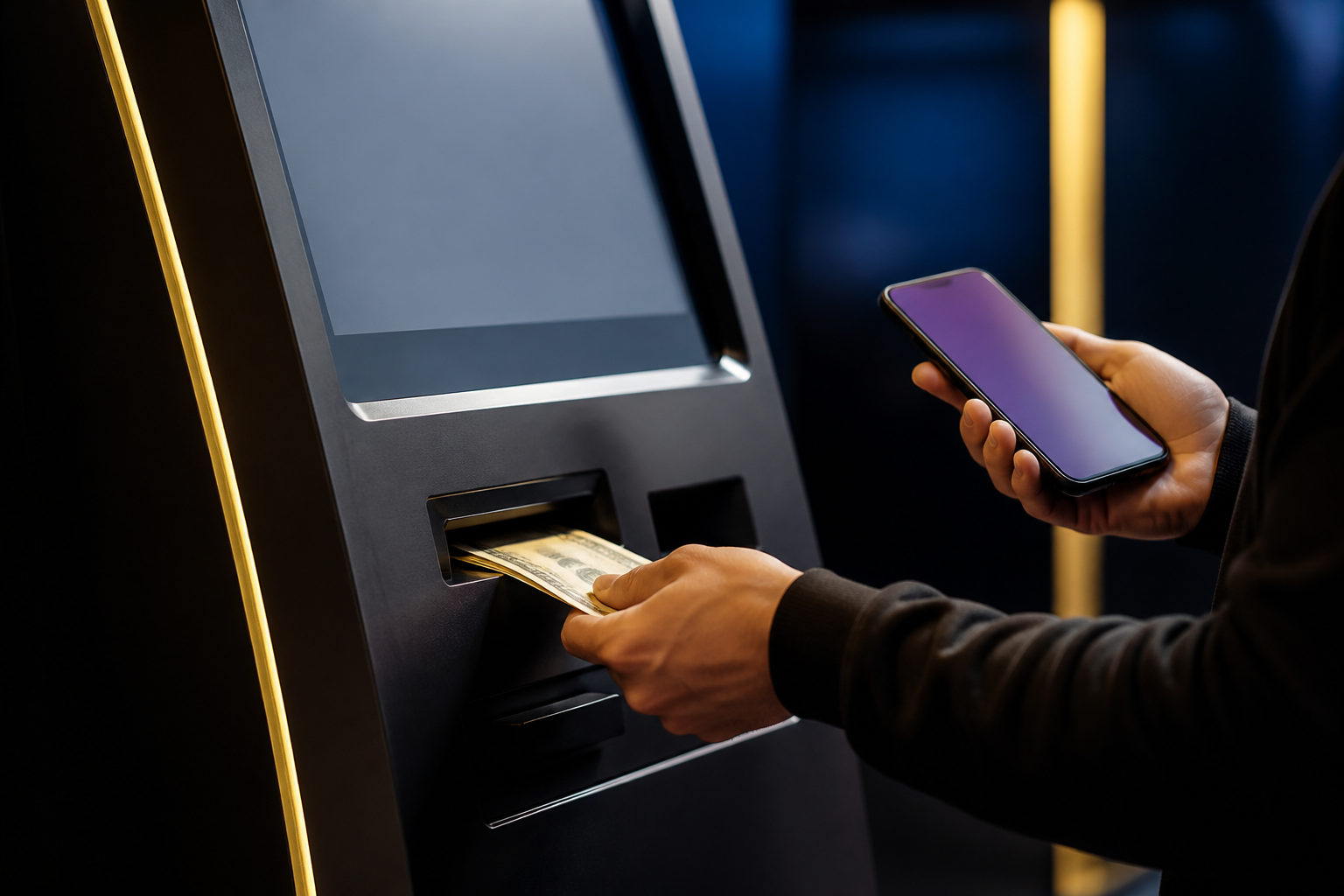
To deposit money in a Bitcoin ATM, you usually need your own Bitcoin wallet first, then confirm the machine accepts cash for Bitcoin purchases, scan your receiving address, review the terms shown on screen, insert cash, and keep the receipt.
Start by checking what kind of machine you are using
People often use the phrase Bitcoin ATM for any kiosk with crypto branding, but the actual functions can differ. Some machines let you buy Bitcoin with cash. Some also let you sell Bitcoin for cash. Others are closer to account-service terminals and do not follow the usual self-service purchase flow.
Before you touch anything, read the home screen. You want a clear path that says you can buy Bitcoin, insert cash, and send the coins to your wallet. If the screen mainly pushes you to sign in to a third-party account, contact a person outside the machine, or follow instructions sent through a messaging app, that is a different situation and a riskier one.
Look around the machine as well. A legitimate setup usually presents fees, supported assets, basic terms, and a customer support method before the transaction is final. If the machine has handwritten notes, a personal QR code taped to the side, or a stranger standing nearby telling users where to send funds, that is enough reason to walk away.
What to prepare before you leave home
The first item is your own Bitcoin wallet, opened and ready to display a receiving QR code. A software wallet can work. A hardware wallet can work too. The key point is control: the receiving address should belong to you, not to a stranger, not to a social media contact, and not to someone who claims they will hold the coins for you.
The second item is a phone that works properly. Many machines send status messages, verification codes, or digital receipts to a mobile number. If your battery is low, your camera permission is off, or your screen is too dim for scanning, the process becomes harder right when accuracy matters most.
The third item is cash you are prepared to exchange only after you have read the machine’s terms. A Bitcoin ATM is a conversion point, not a guarantee of value. Before any bill goes in, check the screen for fees, quote details, and any wording about how the Bitcoin will be delivered.
Step-by-step: how to deposit cash into a Bitcoin ATM
Choose the buy option that matches your goal
When the main menu appears, select the option for buying Bitcoin or using cash to get Bitcoin. Do not rush through this part. Some machines show several services on the first screen, including selling, account actions, or support for other digital assets.
This choice shapes everything that follows. If you enter the wrong path, the verification steps, address handling, and final result may all differ from what you intended, and trying to backtrack in a hurry is a common source of mistakes.
Complete the identity checks shown on the screen
Some Bitcoin ATMs ask for a phone number and a one-time code. Some request an ID scan. Others present a shorter flow. The right approach is simple: follow what the machine itself asks for at that moment, and do not assume every kiosk uses the same process.
Keep the process inside the machine’s own interface. If someone tells you to scan an extra QR code with your phone, install an unfamiliar app, or message a so-called support agent to finish the transaction, stop there. Once cash has gone into the machine and Bitcoin has been sent out, reversal is often difficult or impossible from a practical standpoint.
Scan your own wallet’s receiving address
Open your wallet to the receive screen and present the QR code to the scanner. After the machine reads it, the screen may display part of the address or ask you to confirm it. Slow down here and actually check what is shown.
This is where many scams take shape. A victim is told to buy Bitcoin and send it to a customer service address, an investment mentor, a recovery agent, or a government contact. If the receiving address does not belong to your own wallet, you are no longer funding yourself; you are transferring value to someone else.
Read the fee and delivery details before inserting cash
Most machines show the terms for the transaction before they accept bills. That can include service charges, network-related deductions, or a quoted exchange rate that differs from what you may see elsewhere. You do not need to master every term on the spot, but you do need to understand what the machine says you will receive for the cash you insert.
If the screen is vague, if the fee display is hard to find, or if the machine keeps pushing you forward without explaining the conversion clearly, there is no reason to continue. Transparency matters more than speed, especially for a first-time user.
Insert cash one bill at a time and watch the screen
Once you have confirmed the terms, feed the cash into the bill acceptor carefully. A typical machine counts the bills as they go in and updates the amount accepted along with the Bitcoin estimate. Watch that screen while each bill is processed.
If a bill is rejected, if the accepted amount looks wrong, or if the machine freezes, do not keep feeding cash into it. Pause the transaction, note what happened, and preserve any visible details you may need later, such as the machine location or an on-screen reference.
Confirm the transaction and keep proof
The final step is usually a confirmation button, a printed receipt, a text message, or some combination of those. Some machines send the Bitcoin out quickly. Others show that processing is still underway. Follow the machine’s own guidance and avoid doing the whole purchase again just because your wallet does not show a balance immediately.
Keep the receipt, any message sent to your phone, and any transaction reference the machine provides. If something goes wrong, those records matter much more than your memory of the screen order.
Fraud warning signs that should end the transaction
The first red flag is remote coaching. If someone on the phone, in a chat app, or through social media is walking you through a Bitcoin ATM deposit step by step, stop. The story can vary: account recovery, security verification, tax payment, a frozen balance, a prize claim, or an urgent investment window. The pattern is the same. They want you to convert cash into Bitcoin and send it where they say.
The second red flag is a last-minute address change. You may arrive expecting to use your own wallet, then get told to scan a different QR code because of a system issue, manual review, or a temporary holding arrangement. That changes who controls the funds. Treat it as a major shift, not a minor update.
The third red flag is pressure. Scammers try to keep people moving fast so they do not read the screen carefully or step away to think. A normal self-directed purchase does not require a stranger to create urgency.
The fourth red flag is a promise attached to the deposit. A Bitcoin ATM is simply a way to buy Bitcoin with cash. It does not create guaranteed returns, special mining access, or automatic entry into a profitable strategy. If the pitch combines cash deposit instructions with claims of easy gains, leave.
What to do after the cash deposit is complete
Open your wallet and look for the incoming transaction record. Wallets present activity in different ways, so the exact display may vary, but you should still be able to confirm that the receiving address is yours and that the transaction matches the one you just made.
Store your records in one place. A photo of the receipt, a screenshot of any text message, and a note of the machine location can save time if you need to contact support or review the transaction later.
It also helps to review your own process while the details are still fresh. Did you verify the address yourself? Did you read the fee screen before inserting cash? Did you complete the transaction without outside pressure? Those answers tell you more about the quality of the transaction than speed ever will.
FAQ
Do I need a Bitcoin wallet before I use a Bitcoin ATM?
Yes, in most practical cases you should have one ready first. The machine needs a receiving address, and using your own wallet keeps control of the Bitcoin in your hands instead of someone else’s.
Can I deposit cash first and decide where to send the Bitcoin later?
Many machines require the receiving address during the purchase flow, before the transaction is sent. For a new user, sending the Bitcoin to a wallet you control is the safer move, and any later transfer can be decided after the coins arrive.
What if the machine says processing but my wallet shows nothing yet?
Check the receipt or message for a transaction reference and confirm that you scanned the correct address. Do not repeat the cash deposit right away; wait based on the machine’s instructions or contact support using the details on the receipt.
Is it safe to help someone else deposit cash into a Bitcoin ATM?
That carries serious risk. You may not know why they want Bitcoin, where the address leads, or whether the transaction is tied to a scam, while your phone number or activity may still be connected to the operation.
What should I verify first at the machine?
Check that the receiving address belongs to your own wallet. After that, read the fee and delivery terms carefully, because a correct address protects control, and clear terms help you understand what the machine will actually send.
If this is your first attempt, the most practical move is to prepare at home: open your wallet to the receive page, make sure your phone can display the QR code clearly, and only then use the machine on your own. If another person steps in, changes the address, or tells you to ignore what the screen says, end the transaction on the spot.
Disclaimer: This article is for informational and educational purposes only and is not investment, financial, or legal advice. Crypto assets are highly volatile and you could lose your entire investment. Do your own research and decide carefully.