
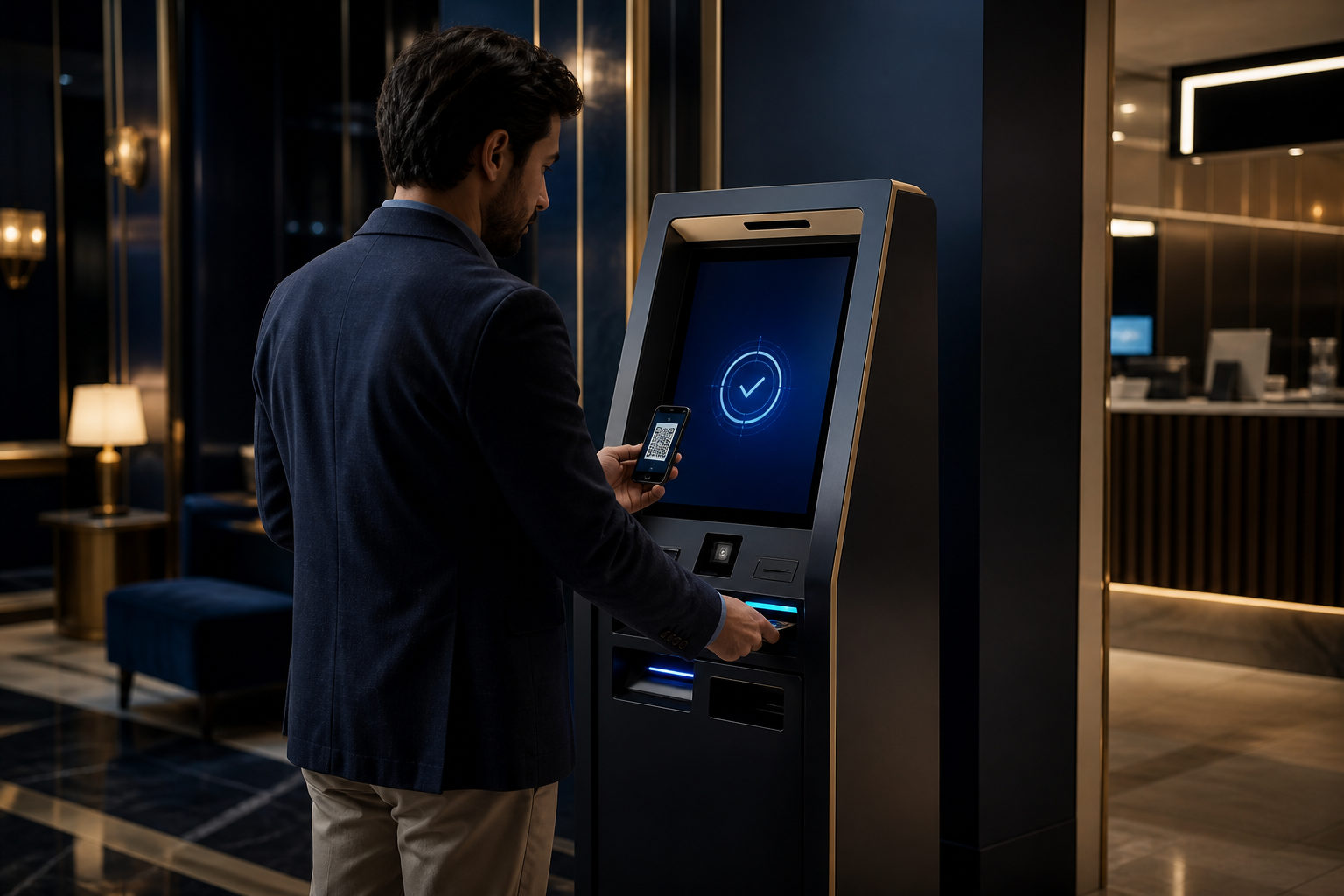
A bitcoin ATM works in a fairly simple sequence: verify what the machine supports, complete identity checks, enter or scan a wallet address, pay cash or send bitcoin, and then confirm the transaction record.
People searching for “how does a bitcoin ATM work step by step” usually want more than a button-by-button guide. They want to know why each step exists, where mistakes happen, and how to avoid scams. That is the part that matters most, because a bitcoin ATM transaction can involve an irreversible blockchain transfer.
What a bitcoin ATM actually does
A bitcoin ATM is not the same thing as a bank cash machine. In most cases, it helps a user exchange cash for bitcoin, or send bitcoin to a designated address in order to receive cash, depending on the machine’s features.
That distinction matters. Some machines only let you buy bitcoin. Others support both buying and selling. Some ask for a phone number or a basic verification step, while others require a fuller identity check before you can continue. The exact flow varies, but the purpose stays the same: the operator needs to identify the user, confirm payment, and connect the transaction to a blockchain address.
This is also why bitcoin ATMs can be convenient and risky at the same time. Once bitcoin is sent to the wrong address, there usually is no simple chargeback process like the one people expect from cards or bank transfers.
Before you walk up to the machine
The safest part of the process happens before you touch the screen. You should already have your own bitcoin wallet set up, know how to open it, know how to display your receiving QR code, and know that you control that wallet yourself.
If you are buying bitcoin, the machine needs a destination address. That means you must have a wallet ready to receive BTC. It can be a software wallet on your phone or a hardware wallet used with a companion app. The format matters less than control. If someone else created the wallet for you, or if you do not understand how to access it on your own, stop there and learn that first.
If you are selling bitcoin for cash, check in advance that the machine supports selling. Many do not. You also need enough bitcoin in your wallet and enough familiarity with sending a transaction without outside help. In some cases, the machine gives you a deposit address first and only releases cash after the transfer meets its processing conditions. In other cases, it may issue a code or receipt that you use later. Never assume every machine works the same way.
You should also look closely at fees before you start. A bitcoin ATM may build its costs into the exchange rate, the service charge, or the final amount shown on screen. You may not see a perfect breakdown, but you should at least understand what you are paying and what you expect to receive. If the terms are vague, do not continue.
Buying bitcoin at an ATM: step by step
Step one: inspect the machine and the setting
Do not rush into the first button you see. Look at where the machine is placed and whether the interface appears normal. Watch for paper notes stuck to the machine telling you to call a number, scan an extra QR code, or follow off-screen instructions. A legitimate process should be presented through the machine’s own interface, not through a stranger’s separate directions.
This matters because many bitcoin ATM scams do not depend on breaking the machine itself. The scammer simply pressures the user into using it in a way that sends funds to the scammer’s wallet. If anyone is on the phone telling you to “just follow my steps,” that is a major warning sign.
Step two: choose the correct transaction type
Once the home screen appears, make sure you choose the correct path: buy or sell. That may sound obvious, but it is a common point of confusion. The two flows can look similar at first while leading to very different outcomes.
You need to get this right because the rest of the process depends on it. In a buy transaction, you are paying money and need to tell the machine where to send bitcoin. In a sell transaction, you usually send bitcoin first and then follow the machine’s rules to collect cash.
Step three: read the fee and risk prompts carefully
Most machines present fee information, transaction terms, identity requirements, and a warning that blockchain transactions may be final. Do not keep tapping “next” out of habit. If the screen does not clearly explain what you will pay, what you expect to receive, or what address is involved, you do not have enough information yet.
There is no single universal interface standard for bitcoin ATMs. Operators design their own flows, so the burden falls on the user to understand the final confirmation screen before any cash goes in.
Step four: complete identity verification
At this stage, the machine may ask for a mobile number, an ID scan, a photo, or another verification step. Not every machine asks for the same level of detail, but the principle is the same: only provide personal information if you are comfortable that the machine is legitimate and that you understand the transaction you are about to make.
The reason for this step is usually compliance and fraud control. The practical caution is simple: do not send your ID to a private number, and do not let a stranger standing next to you “help” by taking over the process. Verification should happen through the machine’s interface or through the operator’s formal support path.
Step five: open your own receiving wallet
When buying bitcoin, you usually need to present a wallet address, often by showing a QR code on your phone for the machine to scan. The important issue is not whether the machine can scan the code. It is whether the code belongs to your own wallet.
This is one of the most common scam points. A fraudster may send you a QR code and claim it is part of a refund, a security check, or a deposit procedure. If you scan that code, the bitcoin you buy may go straight to the scammer instead of to you. The receiving address must come from your own wallet app, opened by you, on your own device.
Step six: check the address again
After the machine scans your QR code, it may display the full address or only part of it. Do not glance at the first few characters and move on. Compare enough of the beginning and end to be sure it matches the address shown in your wallet.
The reason is straightforward. Bitcoin transfers are generally not reversible in any practical sense. If the address is wrong, you usually cannot ask the operator to pull the transaction back like a mistaken card payment.
Step seven: insert cash or follow the payment instruction
Once the address is confirmed, the machine will ask you to insert cash or complete payment in the way shown on screen. The exact method varies, but you should only follow the instructions attached to the current on-screen order. Never send money to a person because someone nearby or on the phone told you to do that instead.
This step exists because the machine has to confirm your payment before it can process the bitcoin side of the transaction. If the machine accepts cash in stages, make sure the displayed amount matches what you inserted. If it does not, stop and review before adding more.
Step eight: review the final confirmation page
Before completion, the machine should present a final review showing the amount paid, the expected bitcoin amount, the destination address, and any final notices. This is your last clear chance to cancel.
A lot of losses do not come from advanced technical errors. They come from rushing. If the destination address is not yours, if the amount seems very different from what you understood, or if the machine suddenly tells you to contact a third party, do not confirm.
Step nine: keep the receipt and wait for processing
After submission, the machine may print a receipt or show an order record. Keep that information until the bitcoin appears in your wallet and you can verify the transaction details yourself.
Why the wait? Because the machine interface is only one part of the process. The bitcoin transaction still has to be broadcast and processed through the network. You should trust your wallet’s transaction record more than any verbal reassurance from someone at the location.
Selling bitcoin for cash: similar flow, different risks
Step one: confirm that the machine supports selling
Not every bitcoin ATM lets you sell bitcoin. Some only support purchases. If your goal is to exchange BTC for cash, confirm that feature at the start instead of assuming it is available.
That saves you from sharing personal information for a transaction the machine cannot even complete.
Step two: create the sell order and read the conditions
In a sell flow, the machine may ask you how much cash you want, verify your identity, and then generate a deposit address or order QR code. That address is where you send your bitcoin. The machine is not paying you first. It is waiting for your transfer under the order terms shown on screen.
Before you send anything, check how cash is released, whether a code or receipt is required, and whether you must wait for the system to recognize the transfer before collection. If those points are unclear, stop there.
Step three: send bitcoin from your own wallet
Use your own wallet app to send BTC to the address generated by the machine. Do not let a stranger handle the send step, and do not ask someone else to “take care of it” for you.
The big risk here is losing control of the order details. If your bitcoin has left your wallet but you did not keep the order record, the reference number, or the machine instructions, sorting out the next part becomes much harder. Save the machine receipt and your wallet’s outgoing transaction record.
Step four: collect cash only when the machine’s conditions are met
Some machines ask you to wait on site. Others may provide a code that you use later once the transfer has been processed. The exact process depends on the operator, but one rule is consistent: sending bitcoin does not automatically mean instant cash in hand.
Do not send another transaction just because you are impatient. A second transfer usually does not speed anything up. It only complicates the record.
The anti-scam checklist behind every step
A bitcoin ATM is not automatically a scam, but it is a common tool used inside scams. The setup is useful for criminals because the user is often under time pressure, standing in a public place, and dealing with an irreversible asset transfer.
- Beware of remote instructions: If someone on the phone, in a chat app, or on video is directing you to use the machine, stop. Claims about frozen accounts, urgent refunds, security deposits, or legal problems are classic pressure tactics.
- Beware of fake wallet QR codes: The QR code must come from your own wallet’s receive screen, not from a message, image, or printed code provided by someone else.
- Beware of strangers taking over: A person standing nearby who offers to “help” may redirect the transaction to a wallet they control. Read the machine’s own prompts first.
- Beware of unclear pricing: High fees are one issue. Unclear terms are a bigger one. If you cannot tell what you are paying and receiving, do not proceed.
- Beware of losing records: Keep receipts, order references, and wallet transaction records until the transaction is fully complete.
One practical rule beats many technical tips: if someone is rushing you, slow down. A delayed bitcoin ATM transaction is inconvenient. A misdirected one can be permanent.
Who should use a bitcoin ATM, and who should wait
A bitcoin ATM is better suited to someone who already knows how to use a bitcoin wallet, can verify an address independently, and understands that convenience often comes with added cost. It is a poor fit for anyone who is still learning what a receiving address is or how wallet backups work.
It is also a bad fit if you are under pressure from another person. If someone has told you that you must go to a machine immediately to protect your money, clear a payment, or solve an account problem, you are likely walking into a scam. Bitcoin ATMs should be used on your own terms, not under pressure.
If your goal is simply to understand the process, start by practicing three basic wallet skills at home: how to find your BTC receiving address, how to recognize an incoming transaction in your wallet, and how to send a transaction only to an address you trust. Those skills matter more than memorizing a machine screen.
FAQ
What do I need before using a bitcoin ATM for the first time?
You should have your own bitcoin wallet ready and know how to display your receiving QR code. You should also know that you control the wallet and can access it without anyone else’s help.
If you are still unsure how to check an address or read a wallet record, learn that first. The machine is not the best place to figure it out for the first time.
Does bitcoin arrive right away after I buy it at the machine?
Not always in the sense people expect. The machine may finish its part quickly, but the blockchain transaction still needs to be processed, so you should verify the result inside your own wallet.
If the machine prints a receipt, keep it until you can match it to the transaction record in your wallet.
Why do I usually have to send bitcoin first when selling?
Because the sell process depends on the machine or operator receiving your BTC under the order terms before releasing cash. The machine needs to tie your transfer to that order.
That is why the on-screen instructions matter so much. If you do not understand the release conditions, do not send the bitcoin.
Can I accept help from someone standing near the machine?
That is usually a bad idea. If they tell you which QR code to scan, which number to call, or which buttons to press in sequence, the risk is high.
If you need assistance, rely on the machine’s own prompts or the operator’s formal support channel instead of a stranger nearby.
Why is checking the wallet address such a big deal?
Because bitcoin transfers are generally irreversible in practice. If the address is wrong, there may be no realistic way to get the funds back.
The safest habit is to open your own wallet app, show the receive screen yourself, and compare the address again on the machine before confirming.
If you plan to use a bitcoin ATM in real life, practice receiving bitcoin, sending bitcoin, and reviewing wallet records before you ever stand in front of a machine; at the machine, only complete actions you fully understand, and never hand control of the process to anyone giving live verbal instructions.