
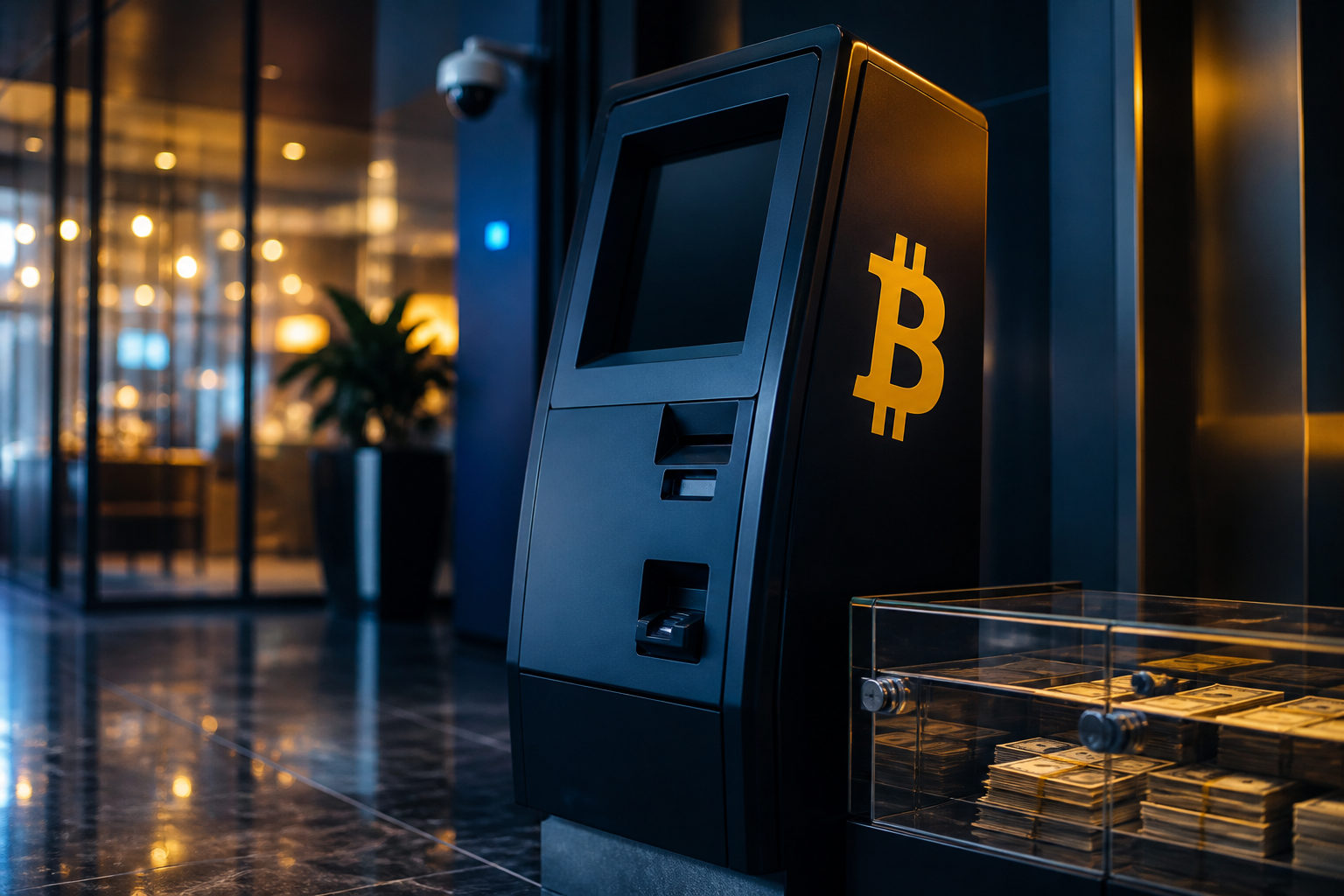
How much does a bitcoin ATM make per month? There is no fixed number. Monthly results depend on location quality, user demand, fee design, cash and crypto float management, compliance workload, machine uptime, and how well the operator blocks scams before they turn into losses.
Step 1: Define what “make” means before you estimate anything
Many people ask how much does a bitcoin ATM make per month without deciding what they want to measure. Gross fee revenue, total transaction volume, and take-home profit are very different figures. If you mix them together, the answer becomes useless.
The first action is to build a simple model with separate lines for transaction volume, fee income, operating expense, and net profit. The reason is straightforward: a machine can look busy and still produce weak profit after site rent, maintenance, support time, compliance checks, cash handling, and failed transaction work are counted. One key caution is to avoid treating a strong week as a normal month. Another is to avoid copying assumptions from another operator whose location, audience, and rules may have little in common with yours.
A bitcoin ATM business usually earns money from transaction fees. Some operators also think about exchange spread, convenience pricing, and the cost of handling exceptions. If those pieces are not separated clearly, any estimate of how much a bitcoin ATM makes per month can mislead you before the machine is even installed.
Step 2: Start with location demand, not the machine itself
If you want a realistic view of how much does a bitcoin ATM make per month, begin with the site. The practical move is to study where the machine would sit, who passes by, why they are there, how long they stay, and whether they already have reasons to handle cash, remittance, or digital asset activity nearby.
This matters because a bitcoin ATM does not convert foot traffic into revenue by magic. Most users do not walk up out of curiosity and complete a transaction on impulse. They usually arrive with intent: they want convenience, they want a familiar cash-based action, or they want to avoid a more complex online process. A busy shopping area may still be a poor site if people are rushing, if privacy is weak, or if the machine is hard to access during the hours when demand is most likely to appear.
The caution here is subtle. A premium location can raise expectations while also raising costs and restrictions. Property rules, limited opening hours, visibility concerns, and queue pressure can all hurt completion rates. A machine in a quieter but better-matched setting may produce steadier results than one in a headline location with the wrong audience.
Privacy also affects usage more than many beginners expect. If the screen is exposed or the user feels watched, they may stop midway. That abandoned transaction never shows up as a complaint about the site, yet it still reduces what the bitcoin ATM can make in a month.
Step 3: Test fees against completion rates, not in isolation
The next step is to plan fees with user behavior in mind. The action here is to map likely customer types and ask what each group is buying besides the transaction itself. Some care most about speed. Some care about convenience. Some want a simpler path than a trading app. Others compare every cost closely.
The reason fee planning needs this context is simple: a higher fee can raise income per transaction while reducing the number of people who finish the flow. If users feel the total cost is too high, they may leave and use a different method later. In that case, the machine earns more on paper per completed trade but less across the month.
One important caution is fee transparency. If the full cost appears only at the final screen, you raise the chance of drop-off and complaints. That can damage repeat use, which is often more important than squeezing extra margin out of a first visit. When someone asks how much does a bitcoin ATM make per month, the real question is often how fees interact with trust, conversion, and retention.
You should also remember that user motivation changes the fee ceiling. A person using a bitcoin ATM for quick convenience may tolerate a premium that another user would reject immediately. Without understanding the local demand pattern, fee strategy becomes guesswork.
Step 4: Separate cash logistics, crypto liquidity, and uptime risk
Many first-time operators focus on demand and overlook operations. The action in this step is to write down how cash will be loaded, removed, stored, and monitored, then do the same for crypto inventory or settlement access. You also need a plan for paper jams, network issues, verification delays, and support tickets.
The reason this deserves its own step is that a bitcoin ATM is not just a screen in a public place. It sits at the meeting point of physical cash, identity checks, software, and blockchain settlement. If any one part fails, revenue pauses at once. A machine that cannot dispense, accept, verify, or settle consistently becomes a trust problem long before it becomes a pure hardware problem.
The caution is that downtime costs more than the value of a few missed transactions. First-time users often give a service one chance. If their first attempt fails, many will not return. That means uptime has a direct effect on what the machine can make per month, even though operators sometimes treat it as a technical issue for later.
It is also important to keep theory and reality separate. A spreadsheet based on continuous operation can look attractive. Real monthly performance must include interruptions, support time, refunds, manual review, restocking trips, and the stress of moving cash safely. If those are left out, the estimate will be too optimistic.
Step 5: Put compliance and scam prevention at the center of the model
This step is where many weak plans break down. The action is to review local rules for digital asset exchange activity, self-service terminals, cash handling, customer identification, suspicious transaction review, record retention, and consumer warnings before launch rather than after a problem appears.
The reason is not abstract. Bitcoin ATMs are attractive tools for scammers because they can be used to push victims into converting cash and sending funds quickly to unknown wallets. A victim may be coached by a fake support agent, a fake investment contact, a false government warning, or a pressure-filled message from someone pretending to be a trusted person. If the operator does not build defenses into the process, scam-related disputes can become one of the biggest threats to monthly performance.
The caution here is that fraud control cannot be reduced to a sticker on the machine. It needs visible warnings before the transaction starts, clear language about common scam scenarios, internal rules for pausing suspicious activity, and a support process that knows what questions to ask. If a user is on a call during the transaction, appears panicked, cannot explain the purpose, or repeats the same failed attempt under pressure, the system should treat that as a risk signal rather than routine behavior.
When people ask how much does a bitcoin ATM make per month, they often focus on fee income and ignore the cost of weak controls. Scam losses do not always appear first as a direct financial hit. They can arrive as complaints, chargebacks where allowed, regulatory attention, reputational damage, and a drop in future usage.
Step 6: Run a small test and study behavior before expanding
The final step is to test one location thoroughly before thinking about a larger rollout. The action is to track when users appear, where they stall, which warnings reduce risky activity, what support requests show up often, and how much staff time unusual cases consume.
This is useful because a single machine can reveal operational truths that a market thesis cannot. You may find that demand exists only during narrow windows, that many users quit at verification, or that support overhead is heavier than expected. You may also learn that scam prevention messages need better wording or that site privacy matters more than foot traffic.
The caution is to treat the test as a stability check, not a proof exercise. If results depend on one customer type, one nearby business pattern, one source of liquidity, or one temporary burst of attention, the monthly income figure may not hold. A bitcoin ATM business becomes easier to judge only after demand, operations, and risk controls work together without constant improvisation.
At that point, the question “how much does a bitcoin ATM make per month” turns into a practical checklist. You are no longer guessing from fee headlines. You are asking whether the location has real demand, whether users accept the pricing, whether uptime is reliable, whether cash and crypto can be managed cleanly, and whether scam exposure is under control.
FAQ
What should I calculate first before opening a bitcoin ATM?
Start with net profit structure, not headline fee revenue. If you skip rent, support, maintenance, compliance work, and cash handling, the estimate will be distorted from the start.
Do higher fees always mean a bitcoin ATM will make more per month?
No. Higher fees can increase income per completed trade while pushing more users to abandon the process or choose another channel later.
Can someone without crypto experience run a bitcoin ATM business?
They can learn the model first, but launching without understanding wallet transfers, identity checks, failed transactions, and refund handling creates avoidable risk. The hardest problems usually come from process mistakes, not from the screen itself.
How do I know whether a location has real demand?
Look beyond raw foot traffic. The better question is whether people in that area have a real reason to convert between cash and digital assets and whether they are willing to finish the flow on site.
Why does scam prevention affect monthly revenue so much?
Because scam events can lead to disputes, trust damage, extra review work, and pressure from authorities or site partners. A machine that processes risky transactions too easily may look profitable for a moment while becoming harder to operate over time.
If you are trying to judge how much does a bitcoin ATM make per month, build a checklist before you build a forecast: location demand, fee clarity, cash movement, crypto availability, downtime response, identity review, and scam interception. Any box you cannot explain clearly is a weak point that should be fixed before expansion.
Disclaimer: This article is for informational and educational purposes only and is not investment, financial, or legal advice. Crypto assets are highly volatile and you could lose your entire investment. Do your own research and decide carefully.