
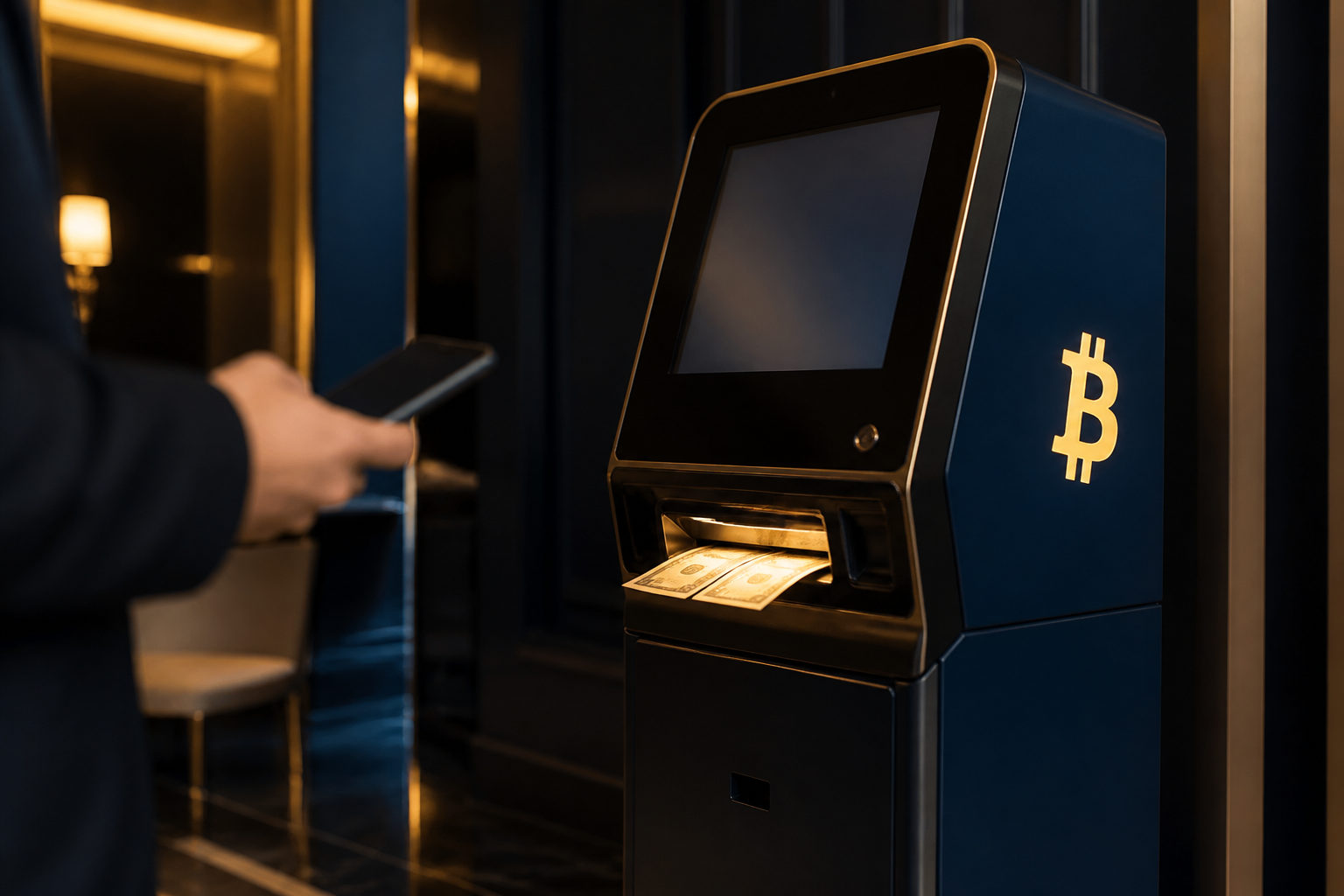
A Bitcoin ATM does not always give you cash. You can only get cash if the machine supports selling bitcoin and paying out bills, so the first job is to confirm what that specific machine actually does.
Step one: identify the type of Bitcoin ATM in front of you
People often use one label for several different machines. Some devices let you insert cash to buy bitcoin. Some support two-way use, which means you may also be able to sell bitcoin and receive cash. Others are closer to self-service crypto kiosks where part of the transaction happens later or off the machine itself.
Do not assume the machine works like a bank ATM just because it has a screen, scanner, and cash slot. Look at the main menu first. If you only see options to buy, deposit cash, or receive bitcoin, that machine is probably not for cash withdrawal. If you see a sell option, a cash-out option, or wording that clearly points to payout, you may be able to proceed.
This early check matters because many user mistakes happen before any bitcoin moves. Someone arrives expecting a cash withdrawal, starts pressing random buttons, and only later realizes the machine never offered a sell function at all.
Step two: decide whether you actually need cash in hand
Some people ask whether a Bitcoin ATM gives cash when what they really want is simply to sell bitcoin. Those are not the same goal. Selling bitcoin through another method may send money to a bank account or another payment rail, while a Bitcoin ATM cash-out is about physical cash at the machine or through a code-based pickup process.
Clarifying your goal helps you judge whether the ATM route makes sense. If immediate paper cash is essential, a machine with a sell-and-dispense feature may fit. If you only need to exit a bitcoin position, you should still compare the process, the waiting time, and the cost before choosing this route.
That distinction also reduces scam risk. Fraudsters often exploit confusion and tell people they must use a Bitcoin ATM to solve a payment issue, when the target never needed an ATM in the first place.
Step three: prepare your wallet before you leave home
A Bitcoin ATM that supports cash withdrawal will usually require you to send bitcoin to a displayed address or interact with a QR code that starts the order. That means your wallet needs to be ready before you are standing in a public place under pressure.
Make sure you can open the wallet without delay, your device has a stable connection, and you know how to send bitcoin from it. If you are still learning how addresses, QR codes, and transaction review screens work, a busy kiosk is a poor place to practice. Bitcoin transfers are generally hard to reverse once sent, so confusion at the final screen can be costly.
Use a wallet you already control and understand. Do not install an unfamiliar wallet because a stranger told you to. Do not move funds to a new wallet on the spot just because someone claims it will make the ATM process easier.
Step four: inspect the fee display and the payout terms
Bitcoin ATMs are often chosen for convenience, not low cost. The cost may appear as a spread in the quoted rate, as a service fee, or as a mix of both. You do not need an exact benchmark to protect yourself. You do need to understand what the machine is showing you before you confirm.
Read the screen closely. Is it showing the amount of bitcoin you must send, the amount of cash you will receive, or a preliminary estimate that may still change? A useful machine explains the transaction in a way an ordinary user can follow. A risky one buries important terms in late screens or presents vague wording that leaves you unsure what the final payout will be.
If the machine does not clearly state the result of the transaction, stop there. Lack of clarity is enough reason to walk away. A user who does not know the final terms is operating blind.
Step five: expect identity checks and treat them carefully
Some Bitcoin ATMs ask for a phone number, a code sent by text message, or identity information. Requirements vary by machine and by local rules, so there is no safe shortcut like assuming every machine is anonymous or assuming every machine requires the same steps.
The main safety rule here is simple: only complete verification within the machine's own interface or through a clearly identified support path. If a person nearby offers to help by asking for your document photo, wallet recovery phrase, private key, or text code, that is not normal assistance. It is a direct threat to your funds.
There is also a practical point. If you are uncomfortable with the verification request and cannot tell who is asking for what, you are better off leaving than rushing through a process you do not understand.
Step six: check the machine and the environment before touching anything
Physical surroundings matter more than many first-time users expect. A machine inside a staffed business is very different from a device in an isolated corner where anyone can watch your screen. Look for signs that the kiosk is maintained: intact scanner area, normal display, no suspicious stickers covering codes, no damaged cash slot, and no one hovering behind you.
Watch for social pressure as much as technical tampering. A scammer does not need to hack the machine if they can simply stand beside you or stay on a phone call and talk you into every step. If anyone is coaching you in real time, slow down and ask yourself why they need you to use this machine at all.
A good rule is to protect your screen the way you would protect a banking app. If someone wants to see your device, your wallet balance, your code, or your backup words, end the interaction.
Step seven: confirm the asset and the destination before sending
Once you enter the sell flow, the machine will usually present a destination address or create a transaction request. This is the moment to verify that the transaction is for bitcoin and that you are sending the correct asset from your wallet. Sending a different coin to the wrong type of address can create a loss that support may not be able to fix.
Read the whole screen, not just the large button. Some machines explain whether cash is dispensed after certain conditions are met, while others issue a code for later use. That detail affects your timing, your expectations, and whether you should remain on site.
If you cannot tell when cash becomes available, you do not yet know enough to continue. That is a process problem, not a personal failure.
Step eight: use a small test if the amount matters to you
For a first-time user, a small test transaction is often the cleanest way to reduce avoidable errors. It lets you confirm that the QR code, the address, the machine response, and your wallet behavior all line up the way you expect.
This step is especially useful because Bitcoin transactions are hard to undo. A test can reveal whether the machine is slow, whether the instructions are incomplete, or whether you misunderstood the payout flow. If even the test feels confusing, that is useful information. It may mean the environment or the machine is not suitable for a larger transaction that day.
Do not treat a test as wasted effort. Treat it as a way to verify the process while the potential loss is still limited.
Step nine: keep your receipt and protect sensitive information
After scanning, sending, or entering a phone number, the machine may print a receipt or display an order number, claim code, or status page. Save that information. If the machine does not pay out when you expected, or if a code fails later, those details can help you explain what happened.
What you should never share is your wallet recovery phrase, private key, or a full backup image of the wallet. No legitimate support workflow needs those items to release cash from a Bitcoin ATM transaction. If someone says they need your recovery words to verify ownership or complete a payout, they are trying to take control of your wallet.
That warning matters because many scams look conversational rather than technical. A victim is told that support is helping, gives away recovery words, and loses far more than the ATM transaction itself.
Why cash may not come out right away
A Bitcoin ATM is different from a bank ATM because the payout process may depend on the status of a bitcoin transaction and the operator's rules. Sending bitcoin does not always mean instant bills from the machine. The system may wait until the transaction reaches the stage required by that machine's process, or it may issue a code for later cash pickup.
Users often run into trouble when they confuse “I pressed send” with “the machine has completed my payout.” If the screen clearly explains that there is a wait, then the wait is part of the transaction. The real danger sign is when the machine or a person directing you does not explain the rules but keeps pushing you to send more bitcoin or send to a new address.
The biggest fraud risk: someone tells you to use a Bitcoin ATM
One of the most common dangers linked to Bitcoin ATMs has little to do with the hardware itself. It starts when another person tells you that using a Bitcoin ATM is required to solve a problem. The story may involve a refund, account protection, a fake security alert, a job offer, a romance setup, or a supposed customer support case.
The pressure usually comes with urgency. You are told to act now, keep the call open, follow each instruction exactly, and avoid talking to anyone nearby. That pressure is the point. It stops you from checking whether the address is yours, whether the process makes sense, or whether the whole task is fake.
- If someone gives you a destination address and says it is the only way to recover funds, stop.
- If someone insists on staying on the phone while you use the machine, stop.
- If someone asks for your text code, wallet backup words, or private key, stop.
- If someone tells you to hide the real reason for the transaction from store staff or family, stop.
Legitimate refunds and account reviews do not require you to send your own bitcoin to a stranger through an ATM. Once the bitcoin leaves your wallet, your options may shrink quickly.
Who may find a Bitcoin ATM useful
A Bitcoin ATM may fit users who already understand wallet basics, can verify addresses on their own, and genuinely need an in-person method for a bitcoin cash-out. The appeal is usually convenience and access, not price.
It may be a poor fit for someone who has never sent bitcoin independently, cannot recognize common scam pressure, or is trying to complete the transaction while following live instructions from another person. The machine may look simple, but the risk sits in the details around it.
FAQ
Can every Bitcoin ATM give you cash?
No. Many machines only let users buy bitcoin with cash and do not support selling bitcoin for a cash payout.
The safest approach is to check the menu before starting. If you do not see a sell or cash-out function, assume that machine is not for withdrawal.
Do you get cash immediately after selling bitcoin at an ATM?
Not always. Some machines pay out after the transaction reaches the stage required by their process, while others may provide a code for later pickup.
Read the confirmation screen carefully so you know whether to wait on site or expect a delayed payout path.
What should I check first before using a Bitcoin ATM for cash?
Confirm that the machine supports selling bitcoin, then review the fee display and payout terms, and then verify the asset and destination address. Also pay attention to who is around you and whether anyone is directing the transaction.
Many losses happen because users focus on the machine and ignore the human pressure around it.
If someone tells me to use a Bitcoin ATM for a refund, is that normal?
In most cases, no. A real refund does not require you to send your own bitcoin to an address chosen by someone else.
If the person is urgent, secretive, or insists on guiding every tap, end the contact and verify the claim through a channel you found yourself.
Should I make a small test transaction first?
For a first-time user, that is often a smart move. A test helps confirm that the machine, the address, and your wallet actions match the process you think you are following.
If the test already feels unclear, that is a sign not to scale up the transaction on the spot.
If you decide to use a Bitcoin ATM, treat the final review screen as the most important part of the process: confirm that the machine supports selling, confirm the asset and address, confirm how the cash payout works, and leave immediately if another person is pushing you through the steps.