
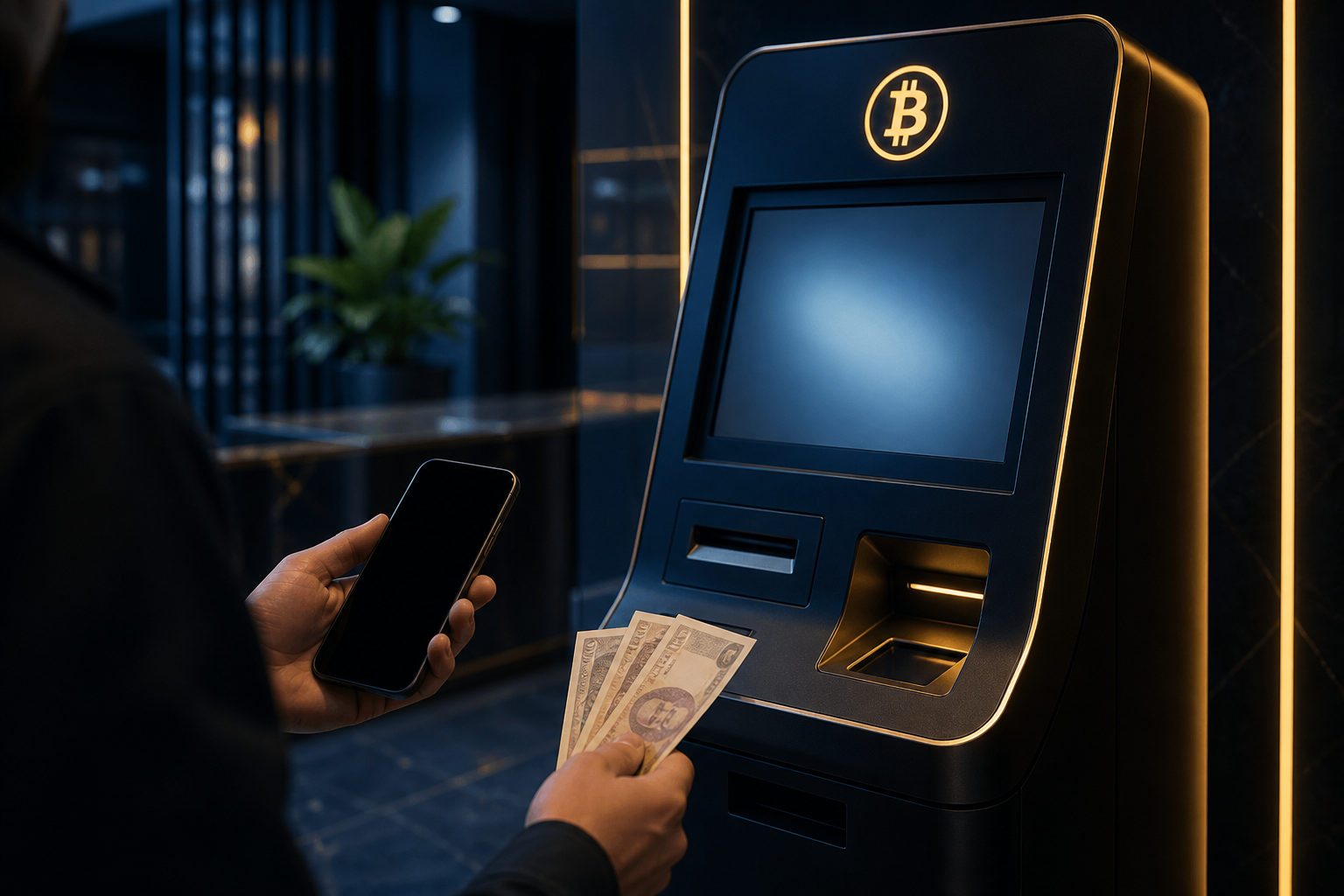
A bitcoin ATM is a self-service machine that lets people buy or sell bitcoin in person. It is not the same as a bank ATM, and the biggest differences are how the transaction works, what checks are required, and how expensive it can be.
What a bitcoin ATM actually does
A bitcoin ATM connects cash handling with blockchain transfers. In simple terms, it gives a user a way to turn cash into bitcoin, or in some cases turn bitcoin into cash, through a machine operated by a private company.
That does not mean every machine offers the same service. Some kiosks only support purchases, some support both buying and selling, and the identity checks can vary a lot from one operator to another.
This is why the phrase “what is a bitcoin ATM” needs a careful answer. The machine may look familiar, but the money movement is completely different from a normal ATM tied to a bank account.
Types of bitcoin ATM machines
The first thing to know is whether the machine is one-way or two-way. That single detail changes the whole process.
One-way machines
A one-way bitcoin ATM usually supports one direction only. In many locations, that means inserting cash to buy bitcoin. The user enters an amount, completes any required verification, scans a wallet address, and then feeds cash into the machine so the bitcoin can be sent out.
Some one-way units may be set up for selling instead, so it is better to read the on-screen instructions than to guess from the hardware.
Two-way machines
A two-way machine supports both buying and selling. Buying often feels more direct. Selling can take longer because the machine or operator may wait for the bitcoin transfer to be processed before releasing cash or completing the order.
That extra delay surprises many first-time users. Cash availability, identity checks, and operator risk controls can all slow down the selling side.
How a bitcoin ATM works in practice
If you are asking “how does a bitcoin ATM work,” the short answer is that the machine guides the user through identity checks, address scanning, and either cash deposit or bitcoin transfer. The exact screens differ, but the basic flow is similar across many operators.
- Check the operator details: Look for the company name, support contact, fee disclosures, and whether the machine supports buying, selling, or both.
- Prepare a wallet: For a purchase, you need a wallet that can receive bitcoin. For a sale, you need a wallet that can send bitcoin. A working QR code reduces the chance of address errors.
- Complete verification: Some machines ask for a phone number, an ID check, a photo, or another step. Requirements are not the same everywhere.
- Select the transaction type: Choose buy or sell, then read the quoted rate, fee language, and any limit notice before going further.
- Scan the right QR code: When buying, the machine often scans your wallet address. When selling, you may need to send bitcoin to an address shown by the machine.
- Deposit cash or send bitcoin: A purchase usually ends with cash going into the machine. A sale usually ends with bitcoin sent from your wallet to the operator’s address.
- Keep the receipt: Save any printed slip, reference number, and support information in case there is a delay or dispute.
For anyone asking “how to use a bitcoin ATM,” the safest rule is simple: verify your own wallet first, verify the address second, and only then move funds. Do not let a stranger handle your phone or scan on your behalf.
Why fees are often high
Bitcoin ATMs are convenient, but convenience often comes with a premium. The total cost may include a visible service fee, a spread between the buy and sell price, and other charges built into the operator’s quote.
Compared with many online methods, a bitcoin ATM often costs more overall. The machine has to be installed, maintained, stocked with cash, monitored for compliance, and managed for fraud risk. Those expenses tend to show up in the final price a user pays.
That is why fee awareness matters so much. A machine can feel fast and simple while still being an expensive way to get bitcoin.
Common scam patterns around bitcoin ATMs
The biggest danger is often not the machine itself but the pressure built around it. Scammers regularly tell victims to go to a nearby bitcoin ATM, insert cash, buy bitcoin, and send it to a wallet address controlled by the scammer.
A common version involves someone pretending to be law enforcement, a court official, a tax agency representative, customer support, or tech support. The caller may claim your account is in trouble, your device has been compromised, or you owe a payment that must be settled right away.
- Fake law enforcement demands: The scammer says you must pay in bitcoin to avoid arrest or clear a case.
- Fake support calls: Someone claims your computer, phone, or account has a serious problem and tells you to follow step-by-step instructions at a machine.
- Urgent payment stories: A fake seller, fake relative, or fake service agent pushes you to buy bitcoin quickly and send it out.
- QR code switching: A person nearby pretends to help and replaces the destination with a wallet they control.
- Fake support stickers: A phone number posted on or near the machine leads to a scammer, not the operator.
A real agency will not tell you to resolve a legal, tax, or security matter by sending bitcoin through an ATM. If anyone is pushing secrecy, urgency, or fear, stop right there.
FAQ
Is a bitcoin ATM the same as a regular cash machine?
No. A bank ATM works with bank accounts, while a bitcoin ATM works with wallet addresses and blockchain transfers. The outside may look similar, but the transaction path is very different.
Do I need my own wallet before using a bitcoin ATM?
In many cases, yes, and it is usually the safer setup because you control the receiving address. If a machine offers a temporary voucher or hosted flow, read the redemption steps before you start.
Why can selling bitcoin at an ATM take longer?
The operator may need to wait for the transfer status and run internal checks before cash is released. That means selling does not always feel as immediate as feeding cash into a machine to buy.
Why are bitcoin ATM fees so expensive?
The cost is often more than one simple line item. You may be paying a service fee plus a spread, along with the operator’s cost of running a physical cash business.
What should I do if someone tells me to pay through a bitcoin ATM?
Stop and verify the situation through an official channel that you find yourself. If the person is ordering you to keep it secret or act fast, treat that as a serious warning sign.
Checks to make before you start
Before touching the machine, confirm the operator name, read the fee display carefully, and make sure your wallet address is correct. During the transaction, keep control of your phone, your wallet app, and your receipt.
If a caller is coaching you live, or someone standing nearby is directing every step, walk away and reassess. For most users, avoiding one bad transaction matters more than finishing a transaction quickly.