
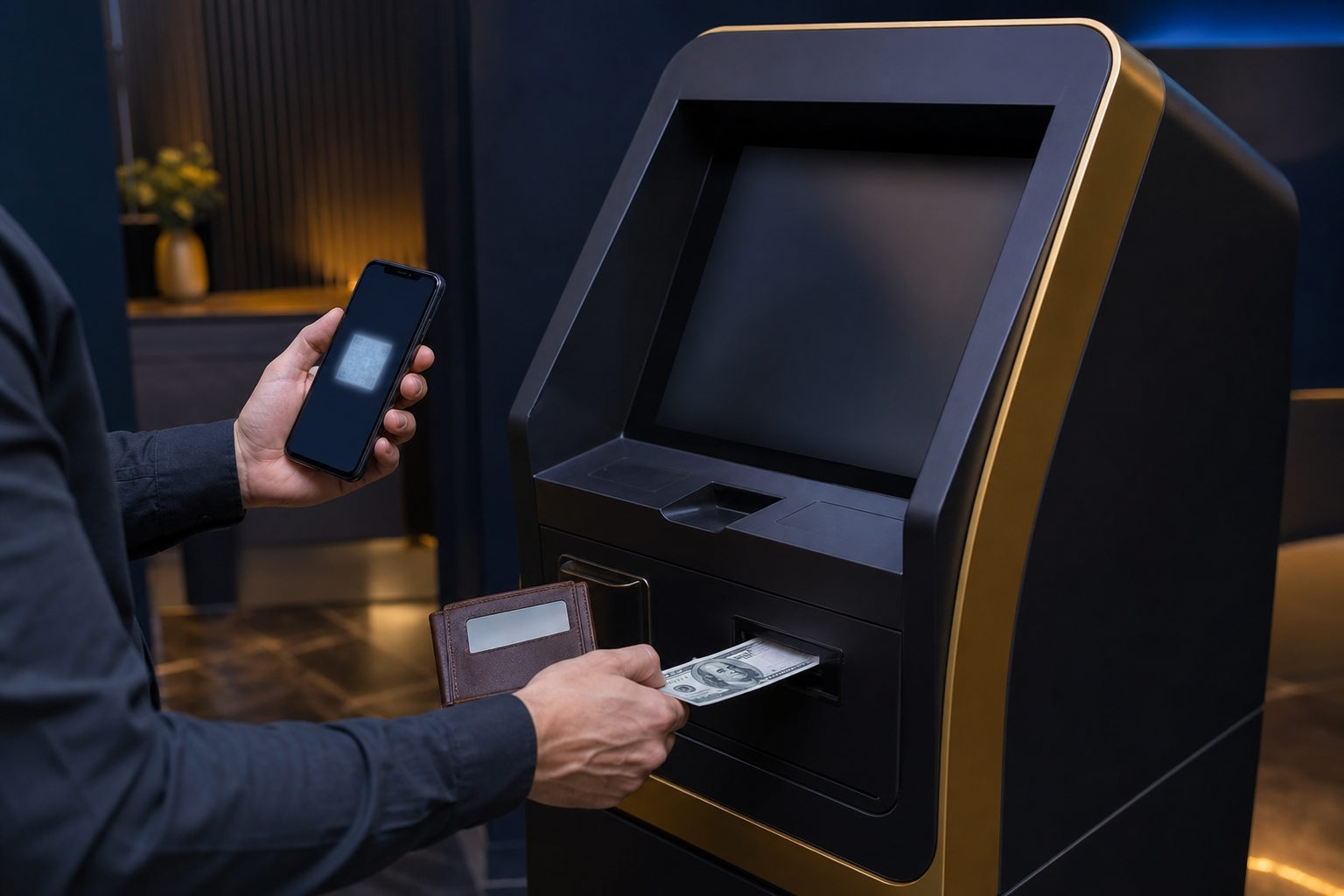
To use a Bitcoin ATM step by step, first confirm whether the machine supports buying or selling, then prepare your wallet, verify the address, review fees, and save the receipt. The biggest mistakes usually happen before the transaction is sent: choosing the wrong asset, scanning the wrong code, or following someone else’s instructions.
Start by checking what the machine actually does
A Bitcoin ATM does not always support both directions of trade. Some machines only let you insert cash to buy bitcoin, while others also let you sell bitcoin and collect cash. Before touching any buttons, read the screen carefully and identify the transaction type, the supported assets, and whether identity verification appears in the process.
This matters because the preparation is different for each use case. If you are buying, you need a valid bitcoin receiving address ready to scan. If you are selling, you need bitcoin in your wallet and a clear understanding of how the machine releases cash, whether immediately or through a later redemption step.
What to prepare before you go
Bring your own bitcoin wallet and make sure you know how to use it without help. Open the wallet in advance, find the bitcoin receive screen, and confirm that you can display the QR code quickly. Doing this at home is safer than trying to install an app or create an account while standing in a public place.
You should also think about payment and collection in practical terms. For a purchase, that means bringing the cash you intend to use and knowing your spending limit before you arrive. For a sale, that means confirming that your wallet can send bitcoin and that you understand how to review the transaction after it is broadcast.
Some Bitcoin ATMs ask for a phone number, ID scan, or a live photo. If you do not want to provide that information, decide that before the transaction begins. Many users only discover the requirement after they have already selected an amount or scanned an address, which creates pressure to continue when they would rather stop.
How to buy bitcoin at a Bitcoin ATM
Step 1: Choose the buy option and confirm the asset
On the main screen, select the option to buy bitcoin and pause for a moment before moving ahead. Some machines list several cryptocurrencies, and the interface can make them appear similar at a glance. A wrong tap here can send your cash into an asset you never meant to buy.
Look for any prompts that describe the rest of the process. The machine may tell you whether verification is required, whether a receipt will be printed, or how the transaction will appear after submission. Reading this screen fully can prevent confusion later, especially if the machine adds a condition halfway through.
Step 2: Let the machine scan your receiving address
Open your own wallet and display your bitcoin receiving QR code for the machine to scan. Use the address generated directly by your wallet app. Do not rely on a forwarded image from a chat, and do not let another person supply a receiving address on your behalf.
After the machine reads the code, it may show part of the address on screen. Stop and compare it with the address shown in your wallet. If you use a custodial account or an exchange deposit screen, make sure it is specifically a bitcoin deposit address and not a page for another asset or network.
Step 3: Review the amount and the fee display
Before you insert cash, the machine often shows an estimate of how much bitcoin you will receive and how fees are handled. Focus on three points: how much money you are putting in, how much bitcoin the machine says you should receive, and whether the displayed result already includes the fee.
If the screen highlights only the output amount and hides the cost details in smaller text, slow down. A Bitcoin ATM can be convenient, but convenience often comes with higher transaction costs. You do not need to memorize every line item; you do need to know the trade terms before you commit.
Step 4: Insert cash and use the final confirmation screen well
Feed the bills into the machine as instructed and watch whether the amount is recognized correctly. If the machine rejects a bill, do not force it back in immediately. Check whether the note is damaged, inserted the wrong way, or outside the accepted range for that machine.
Public settings create another risk here: interruption. If a stranger offers to help, asks to hold your phone, or says they can scan the code faster for you, refuse. The final confirmation screen is the point where your attention matters most, because once the machine processes the order, reversing a blockchain transfer is usually not an option.
Step 5: Save the receipt and check your wallet status
After you confirm, the machine may print a receipt or show a transaction reference on screen. Keep that information. If the bitcoin arrives later than expected or the transaction needs support follow-up, the receipt may be the only clear link between your cash payment and the machine’s record.
Do not assume that a completed message means the bitcoin is instantly spendable in your wallet. The ATM may have finished its side of the process while your wallet still waits for the transaction to appear or move through network confirmation stages.
How selling bitcoin for cash usually works
Selling is the reverse flow, but it requires just as much care. The machine may first generate a bitcoin address, an order QR code, a claim ticket, or a withdrawal code. Before you send anything from your wallet, understand exactly what that code is for. A payment address, an order lookup code, and a cash collection code can all look similar if you rush.
When you are ready to send, confirm that your wallet is sending bitcoin itself and not another asset you hold in the same app. After the transfer is sent, keep both sides of the record: the wallet transaction entry and the machine’s order information. Some ATMs do not release cash the moment you broadcast the transaction. They may wait for a status change on the transaction or require you to return with a code.
If the machine tells you to come back later, read the collection instructions closely. You need to know what proves your right to collect the cash: a printed slip, a text message code, an order number, or something shown on screen. If that evidence is lost, solving the issue later becomes much harder.
The main risk is fraud, not button pressing
Scammers like Bitcoin ATMs because they turn cash into a blockchain payment quickly. If someone contacts you by phone, social media message, pop-up warning, or fake support chat and tells you to go to a nearby machine, deposit cash, and send bitcoin to a given address, stop right there. Legitimate refunds, account recovery steps, and government notices do not work that way.
There is another version of the same problem in person. A stranger may stand nearby and act helpful, telling you which buttons to press, offering to scan a code, or claiming they can speed things up. Once another person controls the address, the phone, or the redemption details, you lose the ability to verify where the funds are going.
It also helps to separate the different QR codes you may see. Your own receiving code is for getting bitcoin. The ATM’s payment code may be where you send bitcoin during a sale. An order code may exist only to retrieve transaction details or cash later. Treating all QR codes as interchangeable is one of the easiest ways to make a costly error.
FAQ
Do I need an account before using a Bitcoin ATM?
Not always. Some machines let you begin right away, while others ask for a phone number or identity check during the process. If you are unwilling to provide personal information, check that point early instead of discovering it after you have already started.
Can I use a Bitcoin ATM without my own wallet?
It is better to have one. Your own wallet lets you verify the receiving address and watch the transaction status directly. If someone else controls the address, you are trusting them with the final destination of the bitcoin.
Why has my bitcoin not shown up right after I bought it?
A completed screen at the machine does not always mean your wallet will show usable bitcoin at once. Check the receipt or transaction reference, then look in your wallet for a pending or incoming transaction entry. The machine and the wallet do not always update at the same moment.
Why can’t I get cash instantly when I sell bitcoin?
Some machines wait for the transaction to reach a certain processing state, while others use a later cash pickup flow. What matters most is understanding the redemption method before you send the bitcoin, not assuming the machine will pay out on the spot.
What is the single most important safety check at the machine?
Verify the address and keep control of your phone. If the address is wrong, the funds can go to the wrong destination. If another person handles your device or scans on your behalf, you may not know what was actually submitted.
If you decide to use a Bitcoin ATM, prepare your wallet before leaving home, decide in advance what information you are willing to provide, and complete only the steps you can verify yourself. Any situation that pushes you to send bitcoin under someone else’s direction is a reason to walk away.