
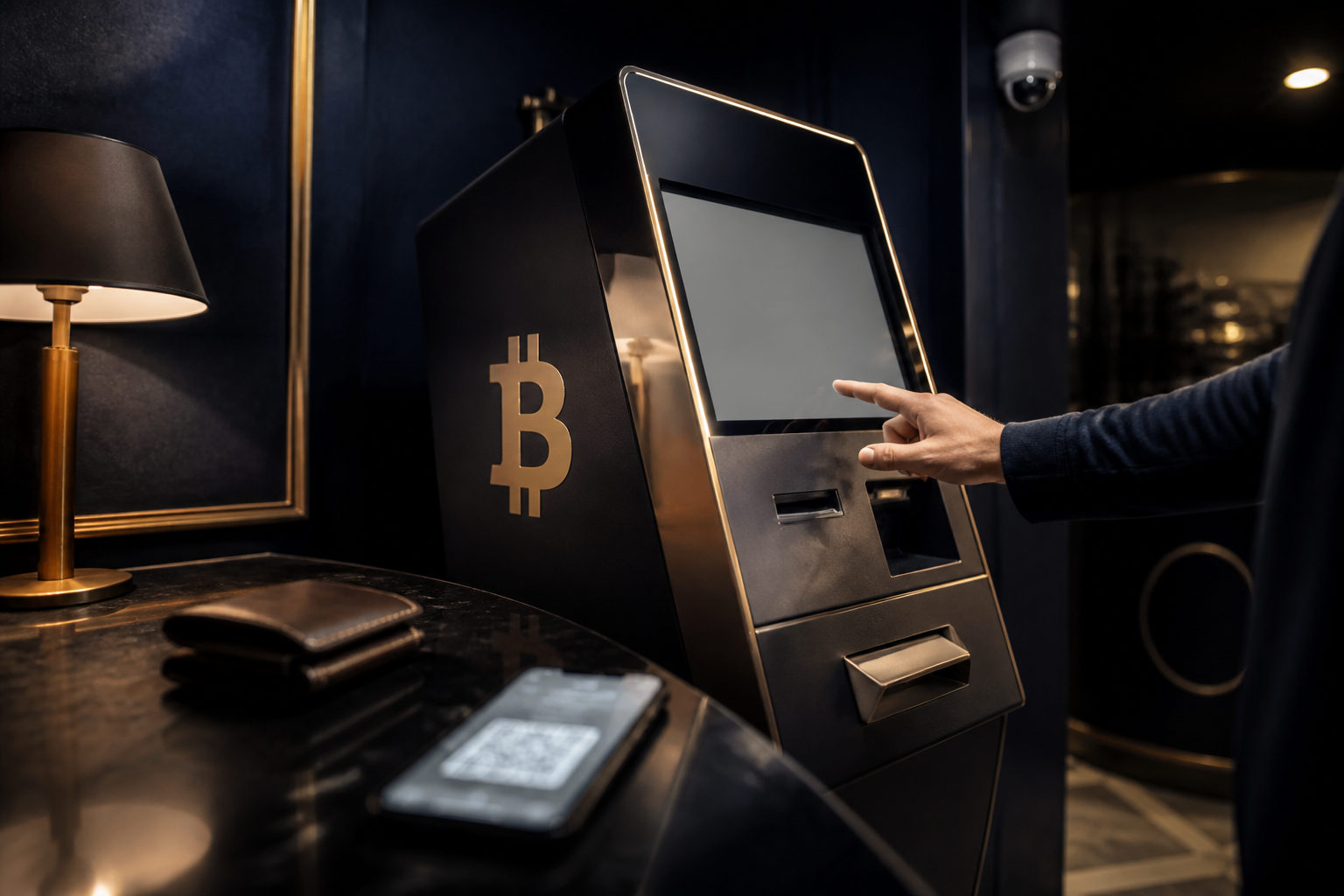
To use a Bitcoin ATM safely, confirm what the machine actually does, prepare your own wallet, and verify every address before you scan, pay, or send Bitcoin. The biggest mistakes usually happen before the transaction is submitted: picking the wrong function, trusting a stranger nearby, or sending coins to an address you do not control.
Start by checking what the machine supports
People often assume every Bitcoin ATM works the same way. That is a bad assumption. Some machines let you insert cash and receive Bitcoin in your wallet. Others are built for selling Bitcoin and collecting cash. Some support both directions, while others stop the flow early and ask for phone verification or ID before showing the full process.
Before you tap anything, read the screen and any clear instructions on the machine. You want to know three things first: whether it handles buying, selling, or both; what form of payment it accepts; and whether identity checks appear in the process. This matters because many problems begin when a user arrives unprepared, opens the wrong wallet page, or realizes too late that the machine asks for information they do not want to provide in a public place.
If the screen language is vague or the machine does not clearly show what service you are selecting, stop there. Confusion at the first step is already a warning sign.
What to prepare before you walk up to the ATM
The most useful preparation is your own Bitcoin wallet on your phone. When you buy Bitcoin, the machine will usually scan your receiving QR code. When you sell Bitcoin, the machine may create an order and display a destination address or QR code that you must send Bitcoin to from your wallet before cash can be collected.
Your wallet should be one you control. In practical terms, that means you can access the recovery phrase or private keys, or you clearly control the account that holds the receiving address. Do not let a stranger provide a wallet for you, and do not send Bitcoin straight to a so-called support agent, tax officer, investment mentor, refund desk, or account recovery contact. If someone is directing you to use a Bitcoin ATM while staying on the phone with you, treat that as a serious scam signal.
Think about the amount in advance as well. A first-time user often benefits from starting with a small test transaction. That gives you room to confirm that your wallet is displaying the right Bitcoin receiving address, that the machine can scan the code, and that you understand how the machine presents charges and final transaction details.
Also handle the basics that people forget: phone battery, mobile data or Wi-Fi, and screen brightness. A dim QR code, a locked phone, or a dropped connection can leave you standing in front of the machine longer than necessary, which is exactly what you want to avoid when money and personal information are involved.
How to buy Bitcoin at a Bitcoin ATM
Check your surroundings before you begin
Look behind you. If someone is standing too close, watching your screen, or trying to strike up a conversation right as you begin, pause the process. You may need to view a wallet address, a phone number field, a text verification code, or other details that should stay private.
A stranger who offers to walk you through the transaction is not harmless by default. In this setting, unwanted help can turn into address substitution, shoulder surfing, or pressure to rush.
Select the buy option carefully
Once the screen gives you choices, confirm that you are entering a buy-Bitcoin flow and not another service. Machines can present multiple coins or several actions on the same screen, and the wording is not always consistent across operators.
If any term on the display is unclear, do not tap through it just to keep moving. A rushed click can put you into a transaction path you did not intend to use.
Open your own wallet and show the correct receiving QR code
In your wallet app, go to the receive section for Bitcoin and display the QR code for that address. Before the machine scans it, take a moment to confirm that the page is for Bitcoin and not for another asset or network in the same wallet app.
This check is easy to skip because the QR code screen can look similar across assets. That similarity is exactly why mistakes happen. You should also reject any suggestion that you use a different address sent by someone else for convenience. The receiving address should belong to you.
Review the address preview and fee information on the machine
After the QR code is scanned, the ATM may show part of the destination address, the transaction summary, and some fee or exchange-rate information. At minimum, compare the visible beginning and ending characters of the address on the ATM screen with the address in your wallet.
Then read how the machine explains cost. Users sometimes focus on feeding cash into the machine and fail to notice how the final amount of Bitcoin is calculated. If the fee display or transaction summary is too unclear for you to understand, cancel the process and step away.
Insert cash and verify the updated order details
As you insert cash, watch the screen to see whether the machine recognizes each amount properly. If one bill is rejected, do not force it repeatedly. Follow the on-screen prompt, retrieve it if necessary, and decide whether to continue.
Right before final confirmation, read the transaction summary again. That short pause has real value. People make expensive errors when they feel hurried, when others are waiting behind them, or when they are trying to finish without looking slow.
Save the receipt or transaction record
When the order is submitted, the machine may print a receipt or show a transaction reference on the screen. Keep that information until the Bitcoin shows up in your wallet and the status looks normal there.
If the Bitcoin does not appear immediately, do not assume something is broken and do not place the same order again. First compare the wallet address you used with the receipt or order details you saved. A duplicate transaction caused by panic is harder to fix than waiting a little and checking your records properly.
How selling Bitcoin at an ATM differs
Selling Bitcoin through an ATM introduces a different set of checks. When buying, your focus is on your own receiving address. When selling, your attention should shift to the destination address shown by the machine, the conditions attached to the order, and the exact steps required to collect cash.
A common flow works like this: the ATM creates a sell order, shows you a QR code or address, and asks you to send Bitcoin from your wallet. Only after that transfer meets the machine's conditions does the cash part move forward. Before you send anything, verify that the address and asset type match what the machine is asking for, and read the screen carefully for instructions about where, when, and how cash is collected.
This is also where scam pressure often shows up. Someone may tell you by phone or message to go to a nearby Bitcoin ATM to complete a refund, release a frozen account, pay a bill, secure an investment, or solve an urgent problem. That instruction alone should put you on guard. A legitimate business does not need a stranger to coach you through a Bitcoin ATM transaction in real time.
Another risk is blind trust in a large QR code on the screen. A QR code is only a container for transaction data; it is not proof of safety. Check the details in your own wallet before sending. If anyone nearby tries to hand you a different code and says it will be faster, leave.
FAQ
Do all Bitcoin ATMs require identity verification?
No. Requirements can vary from one machine to another. Some flows may ask for a phone number, text verification, or an ID step, so it is better to confirm that before you get deep into the transaction.
Can I use a Bitcoin ATM without my own wallet?
Some machines may offer temporary ways to proceed, but using your own wallet is the safer setup. It keeps control of the receiving address with you and makes it easier to track the transaction afterward.
Why will the machine not scan my QR code?
The code may be too dim, your connection may be unstable, or you may be showing the wrong receive page. Go back to your wallet, confirm that the page is specifically for receiving Bitcoin, and then try again with a brighter screen.
What is the most dangerous Bitcoin ATM scam pattern?
The highest-risk pattern is remote instruction. Someone tells you to stay on the phone, follow directions, and send Bitcoin for a refund, account fix, payment issue, or investment step. Once Bitcoin is sent to their address, recovery is usually very difficult.
What should I do first if the Bitcoin does not appear right away?
Keep your receipt or transaction reference, then compare it with the wallet address you used and the status shown in your wallet. Do not place a second order while the first one is still unclear, and never give your recovery phrase, private key, or full verification code to anyone claiming to help.
What to do when something feels wrong
If the machine freezes, fails to print a complete receipt, rejects cash in a confusing way, or shows a summary you do not understand, stop adding new actions. Save what information you can, collect your belongings, and move away from the machine before you decide what to do next.
When checking the issue later, use only records you control: your wallet history, the receipt, the visible transaction summary, and your own notes about what happened. Be very cautious with any contact point that asks for your recovery phrase, private key, or a full verification code. That request is a threat, not support.
One final habit reduces a surprising number of mistakes: before confirming any Bitcoin ATM transaction, ask yourself three direct questions. Is this address mine or clearly the machine's required order address? Do I understand what the screen says about the transaction? Is anyone pushing me to act quickly? If any answer is uncertain, do not continue.