
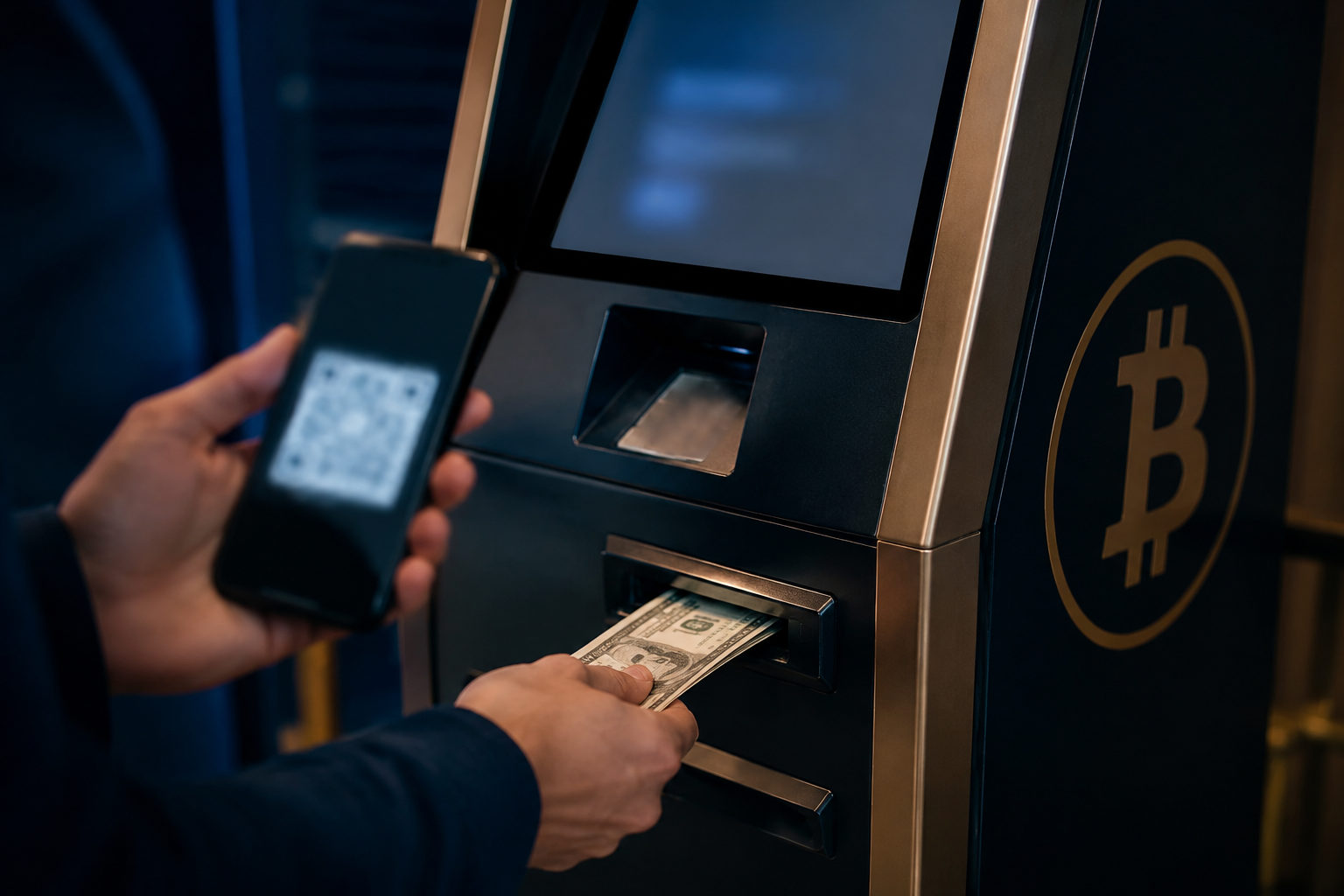
To deposit cash into a Bitcoin ATM, you are usually using paper money to buy bitcoin and send it to a wallet address. The safest way to do it is to prepare your own wallet first, read the machine’s fee screen carefully, and refuse any instruction coming from a stranger.
What “deposit cash” usually means at a Bitcoin ATM
The phrase can mislead first-time users. In this setting, it often does not mean putting money into a bank-style account. It usually means inserting cash, accepting the machine’s quoted terms, and receiving bitcoin at the wallet address you provide.
That distinction matters because the destination controls the outcome. If the address belongs to you, you can check receipt inside your own wallet. If the address came from someone else, the machine may work exactly as intended while you still lose control of the funds.
You should also expect the screen to show fees, exchange terms, or a quoted amount of bitcoin you will receive. You do not need a market forecast to use the machine, but you do need to understand what the machine says it will send before you approve anything.
Step 1: Set up your wallet before you leave home
Go to the machine with a wallet that you can already open and use. If your app needs a password, device unlock, backup restore, or extra verification, handle that in advance. Trying to solve access problems while standing in front of the machine is how people rush through the wrong screen.
In most cases, the machine needs your receiving address. A QR code from your own wallet is usually the cleanest option because it cuts down on typing mistakes.
Be clear about what the machine is allowed to see. A receiving address is fine. Your seed phrase, private key, login code, and backup words are never part of a normal Bitcoin ATM cash purchase. If anyone asks for those items, stop immediately.
Some wallets generate a fresh receiving address from time to time. That can be normal. The real check is whether the address is being shown inside your wallet and whether you will still be able to access that wallet later to confirm receipt.
Step 2: Read the machine before you insert any cash
When you arrive, pause and study the screen. You want to know what asset the machine supports, what identity checks it may request, how it presents fees, and what kind of receipt or record it provides after the transaction.
The physical setting matters too. If someone nearby offers to “help,” wants to scan your code for you, or says they can guide you through the process more quickly, there is no reason to accept. They do not need to see your wallet screen, your phone number, or your receipt.
Take a second look at the hardware as well. If the scanner area, outer casing, or attached labels seem unusual or tampered with, walking away is a reasonable choice. You are under no obligation to force a transaction when the setup does not feel right.
Step 3: Understand the quote, the fees, and any verification request
At some point, the machine will usually show the terms of the trade. Focus on the final result: after you insert cash, how much bitcoin is the machine saying it will send to your address? That is more useful than staring at one line item in isolation.
Some machines break costs into separate charges. Others fold them into the quoted rate. If the display leaves you unsure about the final amount of bitcoin to be delivered, do not confirm yet. Unclear pricing is a reason to pause, not a reason to hope for the best.
You may also see an identity check such as a phone number prompt, ID capture, or a camera-based step. Whether you proceed is your decision. The key point is that these requests should appear as part of the machine’s own on-screen flow. A stranger telling you to scan an outside code, install an app, or call a number they provide is taking you outside the normal path.
Step 4: Scan only a wallet address that you control
When the machine asks for a destination address, open your own wallet and display your receiving QR code. If scanning fails, try raising screen brightness, cleaning the camera area, or reopening the code. Avoid switching straight to manual entry unless you have no better option.
If the machine shows the address after scanning, compare the beginning and the end with what your wallet displays. You do not need to memorize the whole string, but you do need to confirm that it matches your wallet and did not come from a chat message or screenshot sent by someone else.
This is where many scams do their damage. One pattern is simple social engineering: a fake support agent, fake refund specialist, fake investment contact, or online acquaintance gives you an address and tells you to use the machine to send funds there. Another pattern involves malware that changes copied wallet addresses on a device. Pulling the QR code directly from your wallet reduces the chance of both errors.
If you intend to send bitcoin onward to another person after the purchase, it is safer to receive it in your own wallet first. That gives you one clean checkpoint before any second transfer.
Step 5: Insert cash slowly and watch each update
As you feed in bills, check that the machine accepts each one properly and updates the running total correctly. If a bill is rejected, returned, or counted in a way that does not make sense, stop and read the prompt before inserting more cash.
This part seems simple, but stress causes mistakes. People who feel rushed often keep feeding bills without noticing that the display no longer matches what they inserted. A quick glance after each accepted bill is a practical control, not an extra step.
Before final submission, many machines show a review screen. Use it. Confirm that the destination is still your address, the inserted amount matches your expectation, and you understand that the transfer is generally not something you can reverse later like a card dispute.
Step 6: Keep the receipt and check your wallet status
After the transaction is submitted, the machine may print a receipt, show a reference number, or provide another way to track the transfer. Keep that record until you have verified that the bitcoin reached your wallet.
While still on site, open your wallet and make sure the destination address belongs to you. Some wallets show a pending or incoming state before the transaction is reflected more fully. Others update later. A delay on the app screen does not automatically mean the transaction failed, which is why your receipt matters.
Before you leave, clear any sensitive screen on your phone and do not leave paper records behind. A receipt can contain enough detail to expose your transaction history or contact information to the next person nearby.
Where the biggest scam risk actually comes from
The machine itself is only one piece of the story. A large share of harm starts earlier, when someone convinces the victim to use the machine for their benefit. If a caller, text sender, romantic contact, recruiter, refund agent, supposed government representative, or investment group tells you to go to a Bitcoin ATM and deposit cash, stop and reassess the entire situation.
Scammers often add urgency. They may say you must act right away to protect an account, release a refund, avoid a penalty, secure an investment slot, or help someone in distress. If they also tell you to keep the purpose secret, avoid discussing it with family, or hide the real reason from staff, that is a major warning sign.
Another pattern is remote control by voice or message. If someone wants you on speakerphone while using the machine, asks to see your screen, or tells you exactly which buttons to press, the process is no longer meaningfully under your control.
Situations where you should stop on the spot
- You are being pushed to finish quickly and not given time to think.
- The wallet address came from a text, chat, or image sent by someone else.
- Anyone asks for your seed phrase, private key, verification code, or wallet login details.
- You do not understand the fee display or the final bitcoin amount, yet the machine is asking for confirmation.
- A stranger is hovering nearby, offering to operate the machine for you, or asking to hold your receipt.
- The original issue was a refund, a payment dispute, support contact, a fee demand, or an investment pitch, and it somehow turned into buying bitcoin with cash.
Quick pre-use checklist
| Check | What to confirm |
|---|---|
| Wallet | You can open it, and the receiving address comes from a wallet you control |
| Address | After scanning, the beginning and ending characters match your wallet display |
| Fees | You understand how much bitcoin the machine says it will send |
| Verification | You only follow prompts shown in the machine’s own interface |
| Receipt | You keep the record until your wallet reflects the transfer |
| Environment | You decline outside help, screen peeking, and remote instructions |
FAQ
When I put cash into a Bitcoin ATM, where does the money go?
In most cases, the machine uses your cash to buy bitcoin under the displayed terms and then sends that bitcoin to the wallet address you entered. If the address belongs to someone else, they receive the bitcoin, even if you inserted the cash.
Can I use a Bitcoin ATM without setting up my own wallet first?
That is a bad idea for a first-time user. The address step is the most sensitive part of the process, and making that decision on the spot raises the chance of sending funds to the wrong destination.
Why are Bitcoin ATMs often mentioned in scam warnings?
They can turn cash into transferable bitcoin quickly, which makes them useful to criminals directing victims from a distance. The machine may be functioning normally while the victim is being manipulated into sending funds to the wrong place.
How should I read the machine’s fees?
Focus on the end result rather than one fee line by itself. The practical question is how much bitcoin the machine says it will deliver after you insert your cash.
If I enter the wrong address, can the operator reverse the transaction?
These transfers are generally treated as final once sent, so the protective work happens before confirmation. That is why checking the destination address matters more than trying to fix the problem later.
What if my wallet does not show the bitcoin right away?
A delayed display does not automatically mean the transaction failed. Use the receipt or reference record to track what happened, and if needed, contact the operator through its official support channel rather than any number given by a stranger.
If this is your first time using a Bitcoin ATM, keep the goal narrow: prepare your own wallet, use cash to buy bitcoin, and send it only to an address you control. Any extra instruction that pulls you away from that simple path is a reason to stop.