
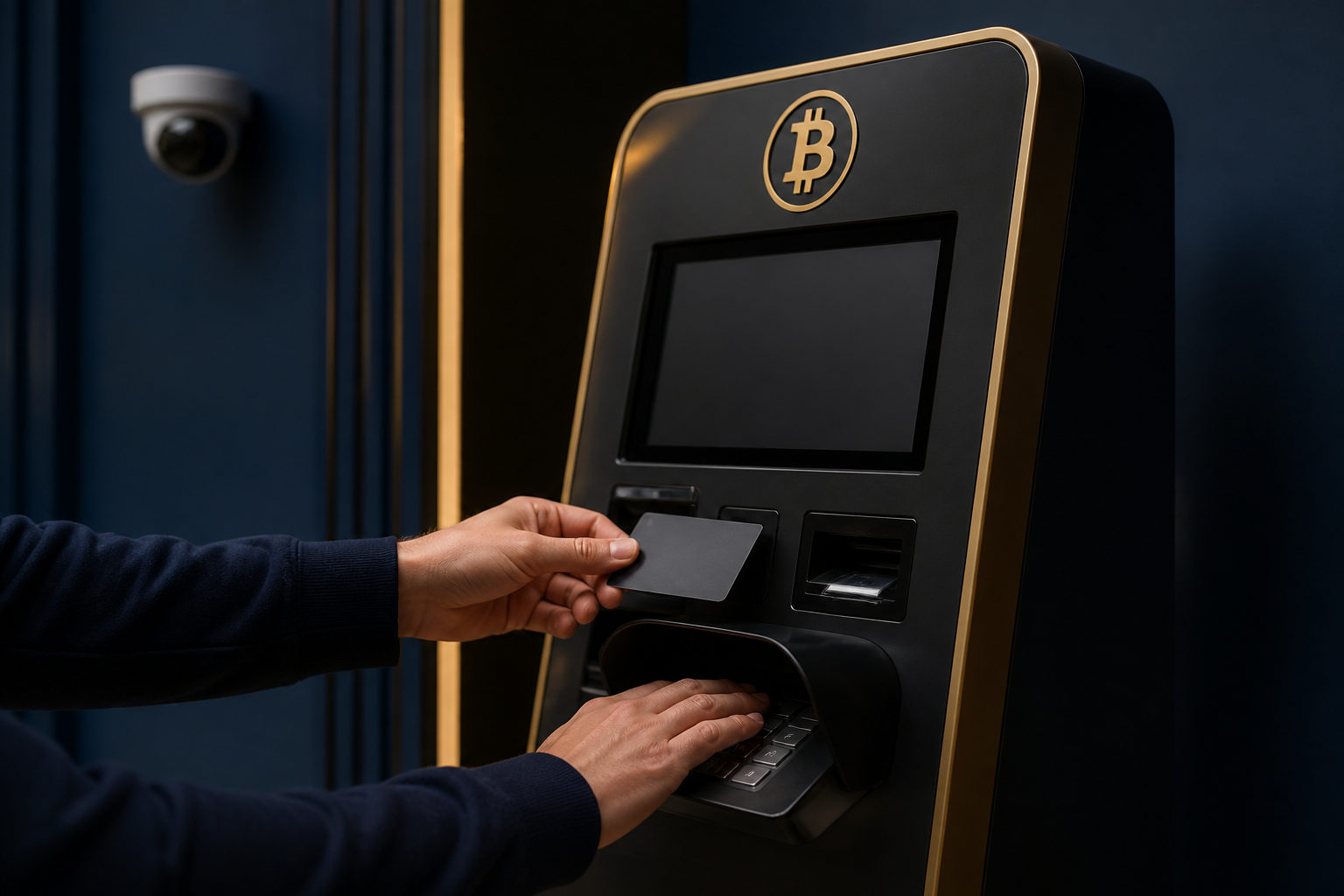
Can you swipe a credit card at a Bitcoin ATM and walk away with bitcoin? Yes, on some machines — but with more restrictions than most people expect. This guide covers the steps, the cost structure, and the scams to watch for.
What a Bitcoin ATM Actually Is
A Bitcoin ATM is a physical terminal connected to a crypto exchange. You can use it to buy bitcoin with cash or a payment card; a smaller number of machines also support selling. The machines come in two forms:
- Buy-only machines: simple interface, usually found in convenience stores and shopping malls.
- Two-way machines: support both buying and selling, typically located in dedicated crypto shops and require stricter identity verification.
Despite the name, these terminals are not bank cash machines. They are retail service points run by independent operators.
How to Buy Bitcoin at an ATM with a Credit Card
Paying with a credit card changes the flow compared to cash. Here is the general process, step by step.
1. Select “Buy Bitcoin” and Check the Fee Screen
The home screen shows the current bitcoin price, the fee rate, and the payment methods available. Stop before tapping the credit card option and read the fee schedule carefully — on the same machine, card payments can carry a noticeably higher fee than cash, and some terminals add a flat surcharge for card transactions. Take a photo of the fee screen; it is your only proof if a dispute arises later.
2. Complete Identity Verification
Credit card purchases almost always trigger full KYC (know-your-customer) checks. Expect to enter your phone number for an SMS code, upload an ID document, and possibly pose for a live photo. The process takes several minutes, so plan accordingly. Make sure the ID photo is sharp — blurry documents get rejected by automated systems.
3. Enter the Amount and Swipe Your Card
Type in how much you want to buy and check whether the display shows the fiat amount or the bitcoin amount. After you confirm the exchange rate and total, the machine asks you to swipe or insert the card. One thing to keep in mind: your card issuer may classify the transaction as a cash advance, which means interest accrues from day one with no grace period. Check your issuer's policy before you travel to the machine.
4. Confirm the Receiving Address
The machine displays a bitcoin address or QR code. Scan it with your own wallet and verify that the first and last few characters match what is on screen. If the machine asks you to type the address manually, scan the QR code instead — typing long addresses by hand is how mistakes happen.
5. Wait for the Transaction and Keep the Receipt
After you confirm, the machine prints a receipt or sends an electronic voucher. Some operators credit bitcoin instantly; others wait for network confirmations before releasing funds. Hold onto the receipt and use the reference number if you need to contact support. Avoid the “delayed send” option unless you fully understand its purpose — it is a feature that can hold your funds indefinitely.
The Hidden Costs of Buying Bitcoin with a Credit Card at an ATM
The fee on the screen is never the full story. Several costs stack on top of each other:
- ATM operator fee: usually a percentage of the transaction, and it varies widely between operators.
- Credit card surcharge: some machines charge extra because processing cards costs more than handling cash.
- Issuer fees: a cash advance fee and immediate interest if the bank classifies the purchase that way.
- Spread: the bitcoin price shown on the machine is typically higher than the price on major exchanges, which is an invisible cost.
Limits are another consideration. Credit card transactions at Bitcoin ATMs are usually capped lower than cash transactions, and the exact limits depend on the operator's anti-money-laundering policies. The machine displays its limits before you start; check them rather than assuming.
How to Spot a Bitcoin ATM Scam
Bitcoin ATMs are legitimate tools, but fraudsters use them to move money fast. One rule beats every other tip: anyone who tells you to send money through a Bitcoin ATM to a “government agency,” “police,” or “tax office” is a scammer. Common patterns include:
- Impersonating officials: a caller claims to be law enforcement or bank security and demands you move funds to a “safe account” that is actually the scammer's wallet.
- Fake investment platforms: they steer you to a Bitcoin ATM, ask you to deposit into a “high-yield” address, pay small returns at first, then block withdrawals once your balance grows.
- Fake prizes or refunds: you are told you won something or are owed a refund, but first you must pay a “fee” or “verify identity” by scanning a QR code at the ATM.
- Tampered machines: unofficial terminals in out-of-the-way locations may run modified firmware that swaps wallet addresses or harvests card data.
Vet the machine before using it: legitimate operators brand their terminals and publish customer support lines. Check the operator name on screen against the company's official website, and inspect the card reader for any attached skimming device.
FAQ
How long does it take to receive bitcoin from an ATM credit card purchase?
It depends on the operator and network confirmations. Some machines credit instantly, others wait for blockchain confirmations. The receipt usually states an expected time — if the funds have not arrived by then, contact the operator with the receipt number.
Will my credit card transaction at a Bitcoin ATM be declined?
It can be. Banks decline these purchases for several reasons: the issuer blocks crypto-related merchants, your daily limit is too low, or identity verification fails. If the card is declined, no bitcoin order is created and any hold on the card is released, but you will not get the bitcoin.
Can I reverse a credit card purchase made at a Bitcoin ATM?
Once a blockchain transaction is confirmed, it cannot be undone. If the order was never sent to the network, some operators may freeze or refund it, but that is rare. The only reliable safeguard is checking the amount and address before you confirm.
Before You Go
Do three things before leaving home: verify that the machine belongs to a known operator, ask your card issuer whether crypto purchases are allowed and how they are classified, and prepare a receiving address in your own wallet app so you are not fumbling at the terminal. Once those are done, simply follow the prompts.
Disclaimer: This article is for informational and educational purposes only and is not investment, financial, or legal advice. Crypto assets are highly volatile and you could lose your entire investment. Do your own research and decide carefully.