
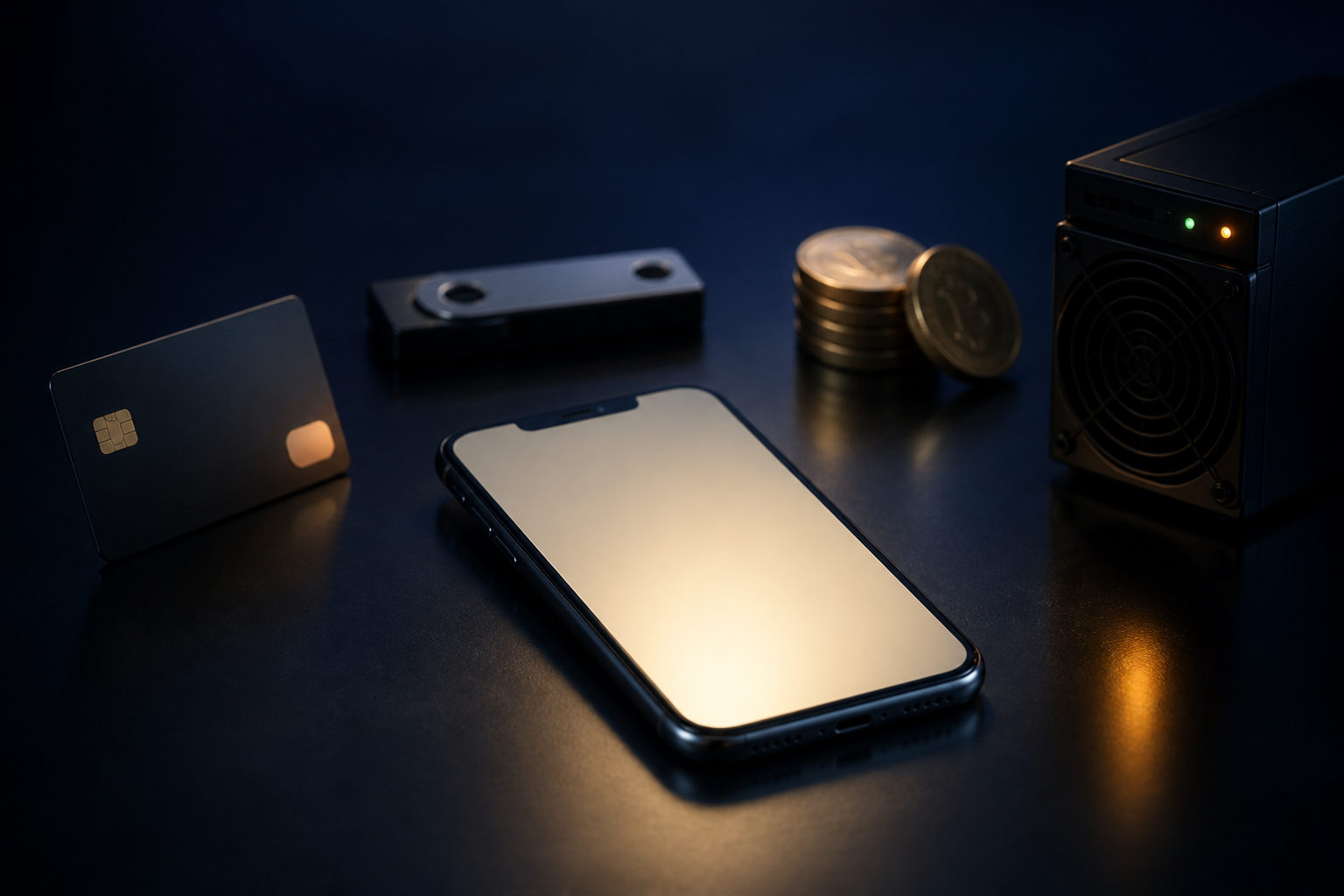
If you want to know where to get bitcoin, the usual answer is simple: most people buy it through a trading service, while others receive it from someone else, accept it as payment, or take part in mining.
The better question is which route fits your goal, risk tolerance, and skill level. The easiest path to start with is not always the best one for storage, privacy, or long-term control.
Main ways to get bitcoin
Buy bitcoin through a trading service
This is the most common starting point for new users. You open an account, complete the required checks, fund it, place an order, and then decide whether to keep the bitcoin on the service or move it to your own wallet.
The advantage is convenience. The trade flow is usually clear, and it is easier to track purchases, withdrawals, and account activity. The downside is that beginners often focus on the buy button and ignore withdrawal rules, fees, and account security.
Receive bitcoin from another person
You can also get bitcoin by having someone send it to your wallet address. This often happens between friends, family members, business partners, or between wallets that belong to the same person.
That sounds easy, but details matter. A wrong address, a network mix-up, or poor communication about fees can turn a small transfer into a real problem. Bitcoin transfers are not something you should treat like a casual message in an app.
Earn bitcoin as payment
Some freelancers, merchants, and creators accept bitcoin for goods or services. In that setup, you are not buying bitcoin first. You are receiving it as part of your normal work or sales activity.
This route can make sense if you already deal with online clients or want an extra payment option. It does come with trade-offs, though. You need a wallet setup, a process for confirming payment, and a plan for what to do if you later want to convert it into cash.
Get bitcoin through mining participation
Bitcoin can also be obtained through mining. The network began with the genesis block in January 2009, new blocks are produced about every 10 minutes, and the issuance schedule changes through halvings about every 4 years, or every 210,000 blocks.
Still, mining is rarely the practical answer for a beginner asking where to get bitcoin. It involves hardware, power costs, maintenance, and heavy competition. For most people, buying or receiving bitcoin is far more realistic.
How to choose the right route
If your goal is to get a small amount of bitcoin quickly and learn the basics, buying through a trading service is often the most straightforward option. The steps are easier to follow, and support material is usually easier to find.
If you already run a side business, work with international clients, or want to accept digital payments, earning bitcoin may fit better. It removes one conversion step, but it also gives you more responsibility from day one.
Receiving bitcoin from another person works well when both sides know what they are doing. For a first transfer, a small test transaction is usually smarter than trying to move everything at once.
Mining is different. It makes more sense as a specialized activity than as a quick answer to where can you get bitcoins in everyday use.
Risks to understand before you get bitcoin
An exchange account is not the same as a wallet you control
Many people first get bitcoin on a custodial account. That can be fine for convenience, but control stays with the service to a large extent. If you move bitcoin to a self-custody wallet, you take on the responsibility of protecting your private keys or recovery phrase.
Neither option is automatically right for everyone. What matters is whether you understand the trade-off between ease of use and direct control.
Cheap offers and private deals can be dangerous
Be careful with anyone promising discounted bitcoin, instant giveaways, or coins released after an upfront deposit. The real risk is not only overpaying. It is failing to receive anything at all, or getting trapped in a setup where withdrawals become difficult.
That is why informal chat groups and unknown sites can be risky places to start. A clear process is usually more important than a deal that looks unusually attractive.
Fees and withdrawal limits matter
Where to get bitcoin is only part of the decision. You also need to know what it costs to buy, what the spread looks like, whether there is a minimum withdrawal rule, and how the service handles transfers out.
Beginners often compare purchase screens and forget to check the next step. In practice, getting bitcoin into your control is just as important as getting access to it in the first place.
Practical steps for beginners
- Decide why you want bitcoin: to hold it, learn how it works, send it, or accept it as payment.
- Choose a method with clear rules rather than following advice from strangers in direct messages.
- Learn the basics of wallet addresses, withdrawals, and account protection before making a move.
- Start with a small test so you can confirm each step without unnecessary pressure.
- Keep records of transfers, account actions, and security settings for future checks.
None of these steps is flashy. They do reduce avoidable mistakes, which is what most new users need first.
FAQ
What is the easiest way for a beginner to get bitcoin?
For most beginners, buying through a trading service is the easiest place to start because the process is structured. Even so, you should review fees, identity checks, and withdrawal rules before using it.
Can someone send bitcoin directly to me?
Yes, as long as you have a valid wallet address or a supported receiving account. Before sharing it, double-check that you understand how your wallet shows incoming transactions and confirmations.
Can I get bitcoin without buying it?
Yes. You can earn bitcoin by selling goods, offering services, or accepting payment from another person. Free coin offers online deserve extra caution, especially when they ask for deposits or account access.
Is mining a good way to get bitcoin today?
It is possible, but it is not the simplest route for most people. Mining requires equipment, ongoing management, and a willingness to deal with a competitive environment.
Where should I keep bitcoin after I get it?
That depends on whether you care more about convenience or direct control. A custodial account may feel simpler at first, while a self-custody wallet gives you more responsibility along with more control.
When deciding where to get bitcoin, sort the options into buying, receiving, earning, and mining. Then choose based on how you plan to use it, how much control you want, and whether you are ready to handle the security side yourself.
Disclaimer: This article is for informational and educational purposes only and is not investment, financial, or legal advice. Crypto assets are highly volatile and you could lose your entire investment. Do your own research and decide carefully.