
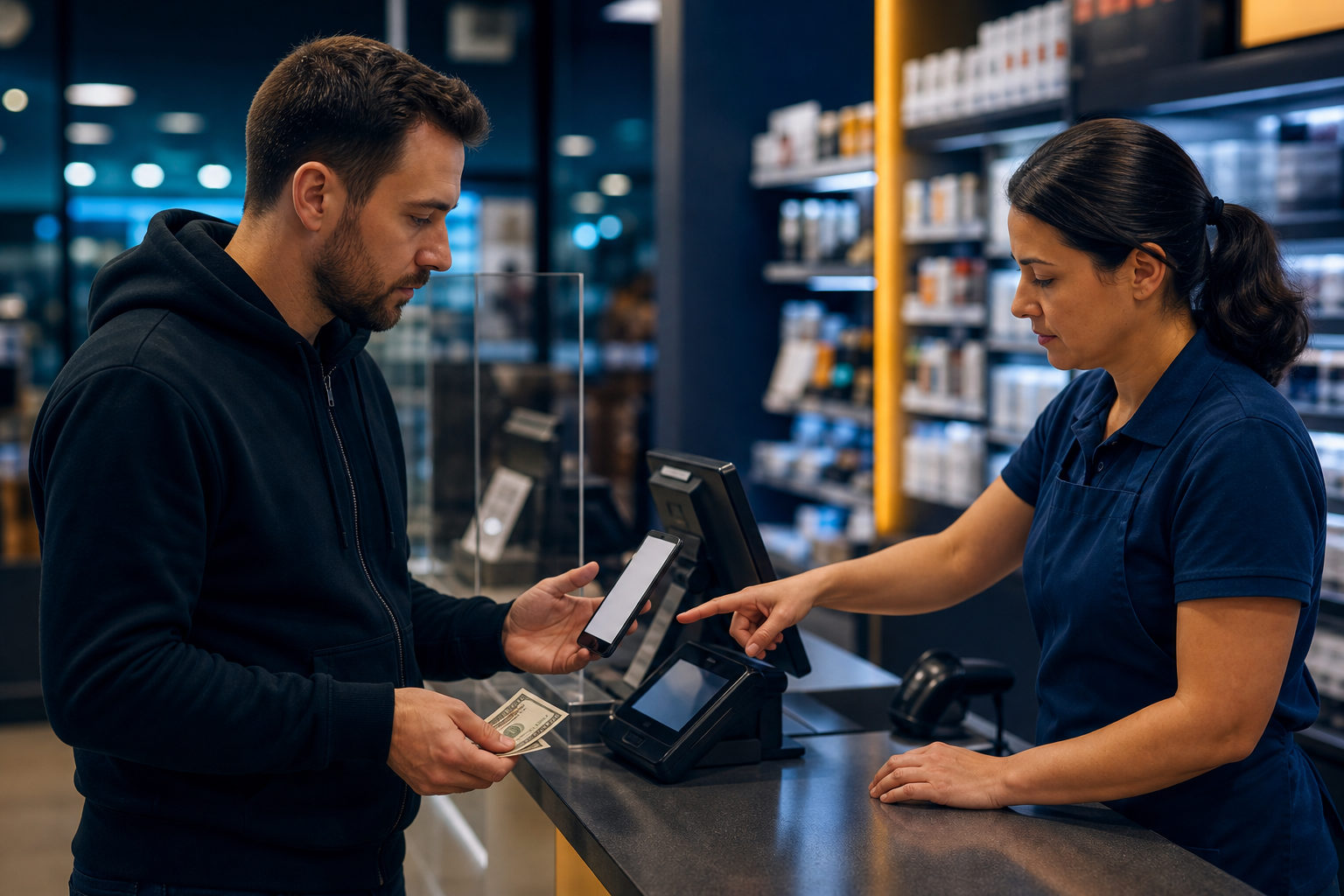
Before you walk into a CVS with cash expecting to buy Bitcoin, it helps to know which of two very different services you might actually be dealing with. If the store has a Coinstar kiosk with a touchscreen and a “Cryptocurrency” option on it, that machine is running on Coinme's infrastructure, with some coins processed through a partner called Zero Hash. If instead you're handing cash to a cashier who rings up a Bitcoin purchase at the register, that's typically a separate, unrelated program, historically branded LibertyX, which NCR agreed to acquire in 2021 and completed acquiring in early 2022, and which has never been part of Coinstar or Coinme. Both models have existed at CVS locations at various points, but any single store might have one, the other, or neither. Check before you drive over instead of assuming.
Figure Out Which Model You're Actually Dealing With
Coinstar is upfront about this on its own site: not every Coinstar machine supports crypto, and even where the hardware is capable, you're supposed to confirm through the kiosk locator that a specific unit is flagged as “crypto-enabled” before you go. In practice, crypto-enabled Coinstar kiosks show up more often in large grocery chains — Coinstar has run a pilot with roughly 200 machines inside Walmart stores, for example — and coverage inside pharmacy chains varies a lot by market. Don't assume the CVS three blocks from you has one just because a directory listed CVS as a Coinstar host location somewhere.
The cashier-assisted model works completely differently. There's no dedicated machine — an employee processes the cash-to-Bitcoin transaction through the point-of-sale system. This kind of service has, at different times, been advertised across roughly 20,000 retail locations including CVS and Rite Aid stores nationwide. Whether your particular store still offers it today is something you'll need to confirm on the spot or by calling ahead, not something to assume from an old press release.
Fees: Neither Path Is Cheap, and the Kiosk Route Is Especially Pricey
If you're using a crypto-enabled Coinstar kiosk, the fee structure has two layers stacked on top of each other. There's a base transaction fee that Coinme puts at around 4%, and then a separate spread or cash-exchange fee on top of that, charged by Coinme or its processing partner Zero Hash. In Coinme's own published example, the combined cost worked out to roughly 16.5% of the cash you put in, and the company is explicit that this varies by state — its own examples cite something like 15% for California and 18% for Illinois. Put plainly: feed $100 into the machine, and the Bitcoin you actually receive might be worth somewhere in the low-to-mid $80s once fees are backed out. That's a meaningfully bigger bite than what you'd pay on a typical online exchange, where all-in costs are usually well under 5%.
The cashier-based model has historically used a different structure. Older promotional material advertised a flat fee per transaction rather than a percentage, paired with a daily purchase cap. That pricing information is a few years old at this point, though, and terms like this tend to shift over time, so treat any specific old number as a rough historical reference rather than what you'll actually be quoted at the register today. Ask the cashier to show you the fee and the exact BTC amount you'll receive before you hand over cash.
Limits and ID Verification
Under Coinme's published rules, customers who haven't completed full identity verification face additional restrictions tied to the laws of their state. Once you've gone through phone number verification, government ID verification, and a selfie-based liveness check, daily purchase limits typically land somewhere in the $3,000–$5,000 range, with a monthly ceiling around $30,000, and a minimum purchase as low as $1. You need to be at least 18, and you'll need a valid form of ID — a driver's license, state ID card, passport, or residency document all qualify. Expect the kiosk or app to prompt you for this at some point in the flow; it's a compliance requirement tied to Coinme's status as a licensed money transmitter, not the platform being difficult for no reason.
How the Coinstar Kiosk Process Actually Works
On the machine's main screen, you'll select the cryptocurrency option, then pick which wallet provider you want to use — CINQ by Coinstar or Coinme, depending on what the kiosk offers — and then choose the specific coin. Beyond Bitcoin, some of these kiosks also support Ethereum, Litecoin, Dogecoin, Chainlink, Polygon, and Stellar, though exactly which coins are available on any given machine, and whether that list changes, is something the screen will tell you in real time rather than something you should assume ahead of your visit.
After that, the machine asks for the phone number tied to your wallet account, and then you feed in paper currency — bills only, no coins accepted for the crypto option. Once the machine confirms your cash, the crypto gets credited to your Coinme or CINQ account balance, not directly to an external wallet address you might already have set up. If you want the coins moved into a wallet you control independently, that's usually a separate step you complete afterward inside the account. This trips people up constantly: putting cash into the machine buys the crypto and parks it in a hosted account, it doesn't hand you self-custodied coins on the spot.
Side-by-Side Comparison
| What matters | Cashier cash-to-Bitcoin (historically LibertyX, now part of NCR) | In-store Coinstar kiosk (crypto powered by Coinme/Zero Hash) |
|---|---|---|
| How it works | Employee processes it at the register | Fully self-serve touchscreen |
| Historical limits | Older promotional material cited daily caps in the low hundreds of dollars; confirm current terms in-store | Roughly $3,000–$5,000/day once verified, ~$30,000/month, $1 minimum |
| Fee structure | Historically a flat fee per transaction; ask the cashier for the current rate | ~4% base fee plus up to ~16–18.5% spread fee; Coinme's own example totals ~16.5%, varying by state |
| Coins supported | Historically Bitcoin-focused | Bitcoin plus, at some kiosks, ETH, LTC, DOGE, LINK, MATIC, XLM — check the screen |
| Who actually runs it | The LibertyX brand, acquired by NCR (deal announced 2021, closed January 2022) — a separate company from Coinme | Coinme, a FinCEN-registered money services business with state money-transmitter licenses; not available in New York, Vermont, and possibly other states |
| Reversible? | No, once cash is handed over | No — Coinstar states it currently has no option to sell Bitcoin back for cash through the kiosk |
| Is it at your store? | Confirm by calling or asking in person | Check the official kiosk locator for a “crypto-enabled” flag on that specific machine |
Once the Cash Is Gone, There's Usually No Getting It Back
Whichever route you take, handing over cash is close to a one-way door. Coinstar says plainly on its own help pages that it currently has no plan to let customers sell Bitcoin back through the kiosk, which means if you buy and change your mind, your only real option is to sell on a different platform later, not reverse the original purchase. Read the order screen carefully before you pay: the amount, the fee, and the exact crypto quantity you'll receive. Catching a mistake before you insert cash is far easier than trying to fix it afterward.
If your coins sit in a Coinme or CINQ account for the long haul, you're functionally trusting a third party to hold them for you, which isn't meaningfully different from leaving money in someone else's custody. If you actually want control over the asset, move it to a wallet where you hold the keys, and double- and triple-check the receiving address and network before you send anything. One wrong character in an address and the funds are effectively gone.
These Scam Patterns Are Documented, Not Hypothetical
California's Department of Financial Protection and Innovation has publicly disclosed an enforcement action against Coinme tied to compliance issues around its kiosk operations — including allowing transactions above the state's daily limit and incomplete receipt disclosures — resulting in a $300,000 penalty and an order to repay $51,700 to the victim. News coverage of that same case identified the victim as an elderly woman who was told her grandson had been arrested and needed cash for bail; she was walked through feeding roughly $50,000 into a Coinstar machine at a nearby grocery store over the course of many hours. This is the specific case behind the DFPI action, not a separate incident.
These aren't isolated incidents. Media reporting citing federal data put crypto-kiosk-related fraud losses at around $333.5 million nationwide between January and November of 2025, following roughly $250 million in losses over the full year of 2024. The problem has gotten visible enough that Rhode Island's governor signed a law in June 2025 (H5121/S0016) capping per-transaction amounts on crypto kiosks and requiring visible warning labels on the machines, and lawmakers in other states have introduced similar bills.
Translate that into something you can actually use: if someone on the phone tells you a family member is in trouble and needs cash urgently, if a caller claiming to be from a government agency or “tech support” tells you to go feed cash into a machine at a pharmacy or convenience store, or if anyone asks you to read them a confirmation code or transaction receipt over the phone — that's the scam, full stop. A legitimate cash-to-crypto purchase never requires a stranger on the line walking you through each step.
A Quick Word on Taxes
In the US, the IRS treats cryptocurrency as property rather than currency. Simply buying and holding isn't usually a taxable event on its own, but when you eventually sell, spend, or trade it, you'll need your original purchase price, including fees, to figure out your gain or loss. That makes the receipt from your kiosk or cashier transaction worth holding onto. Several tax-guidance sources note that starting with the 2026 tax year, more centralized exchanges are required to report digital asset transactions to the IRS on Form 1099-DA, part of a broader push toward stricter reporting. Whether and how any of this applies to your specific situation depends on your income, how long you hold the asset, and where you live, so treat this as background rather than personalized advice — a tax professional or the IRS's own site is the right place for specifics.
Frequently Asked Questions
Does every CVS let you buy Bitcoin with cash?
No. Neither the cashier-assisted service nor an in-store Coinstar crypto kiosk is standard equipment at every CVS location, and even locations that had one in the past may no longer offer it. Check the relevant company's store or kiosk locator before you make a trip, rather than assuming based on what a friend or an old article said.
If I buy Bitcoin at a Coinstar kiosk, does it go straight into my own wallet?
Not automatically. Cash purchases through a Coinstar kiosk are credited to a hosted account with Coinme or CINQ by Coinstar first. Moving the coins into an external wallet you control is a separate step you do afterward, and you should verify the receiving address and network carefully before sending.
Why do the fees at a Coinstar kiosk feel so high?
Because the pricing stacks a base transaction fee on top of a separate spread fee, and Coinme's own worked example lands around 16.5% combined, varying by state. That's substantially higher than what most online exchanges charge, and it's a general characteristic of cash-based crypto kiosks rather than a sign you did something wrong.
Someone on the phone asked me to read them my wallet's recovery phrase. Is that normal?
No. Stop the call and don't share it. No legitimate purchase process requires your seed phrase, private keys, or verification codes. If anyone, claiming to be support staff, law enforcement, or even a relative, asks for that information, treat it as fraud.
I think I got overcharged. Can I get a refund after the cash is in the machine?
Generally, no. Cash transactions are effectively final, and Coinstar has stated it currently offers no way to sell Bitcoin back for cash through its kiosks. The only real protection is double-checking the amount, fee, and expected crypto quantity on screen before you insert any money — fixing a mistake after the fact is much harder than catching it beforehand.
Disclaimer: This article is for general informational and educational purposes only and does not constitute investment, financial, legal, or tax advice. Fees, limits, and regulatory details mentioned here can change over time and by location or store, so confirm current terms directly with Coinstar, Coinme, or the relevant retailer before transacting. Cryptocurrency prices are highly volatile and you could lose your entire investment — do your own research and use caution.