
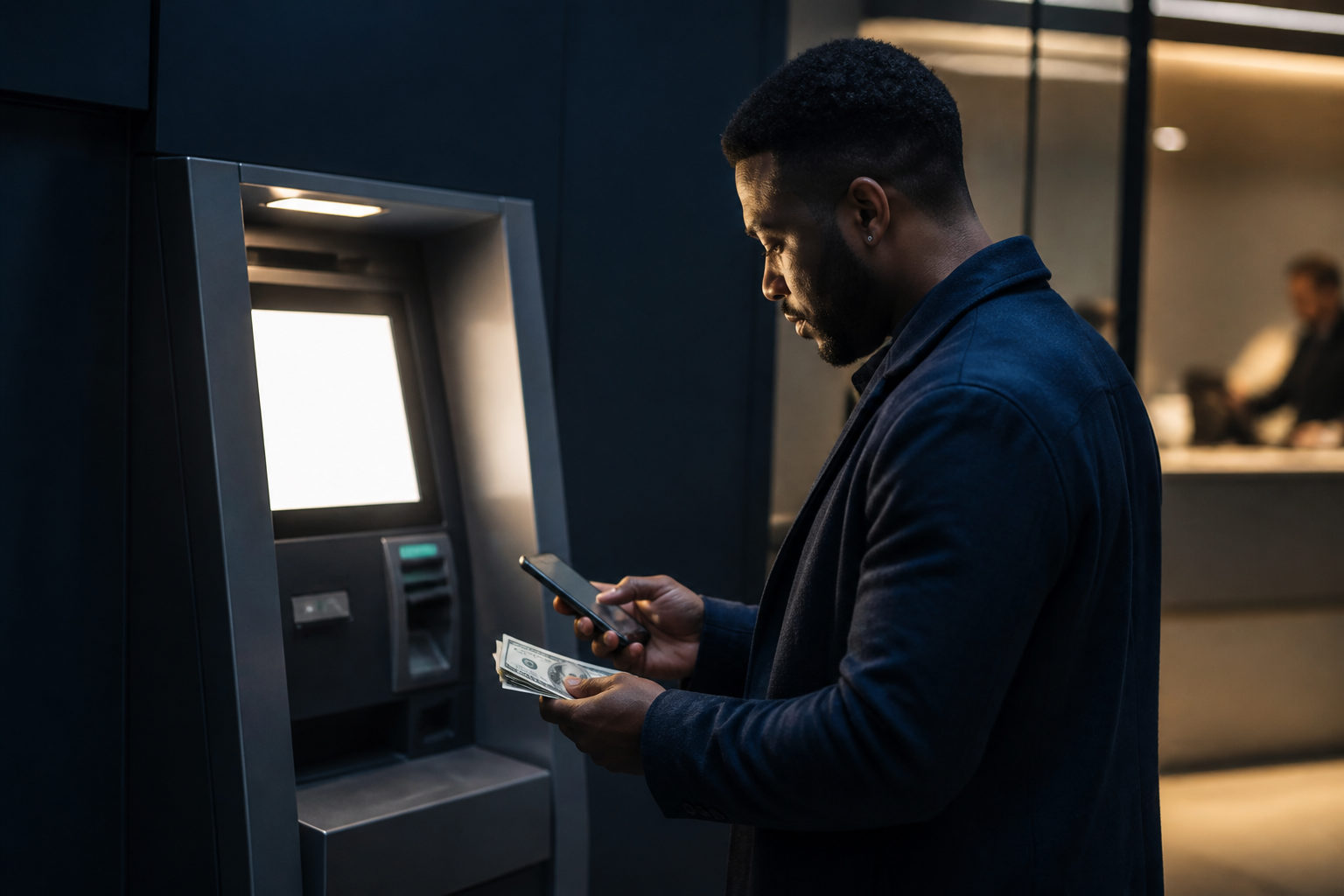
Yes, you can cash out Bitcoin for real money in the USA. In practice, that usually means selling BTC for US dollars through a compliant service and withdrawing the proceeds to your own bank account, with fraud prevention built into every stage.
Start by deciding what “cash out” means for you
Many people ask this question when they really want spendable money, not Bitcoin sitting in a wallet. For most users in the USA, the safer end point is dollars in a personal bank account rather than meeting someone in person for paper cash. A bank deposit leaves a clearer record, makes reconciliation easier, and gives you a better trail if a payment is delayed or reviewed.
Physical cash is still possible in some situations, but it brings a different risk profile. You may have to judge whether the other party is real, whether a transfer screenshot is fake, whether cash is genuine, and whether the meeting itself is safe. If you choose the exit point first, the rest of the process becomes easier to evaluate.
Step 1: Make sure you actually control the Bitcoin
If your BTC is in a self-custody wallet, confirm that you can access it, send from it, and read the receiving address format correctly. If the coins are held in an account managed by someone else, slow down and verify who controls the login, withdrawal permissions, and security checks.
A surprising number of failed cash-out attempts have little to do with selling Bitcoin. The real issue is that the person trying to sell does not fully control the asset. If a friend, trading group, remote “mentor,” or outside operator holds the keys, codes, or access path, you may not be in a position to move the funds at all.
This is also where many scams begin. If someone tells you to install software, share a seed phrase, send a private key, or forward a one-time code so they can “help release your funds,” stop there. A legitimate cash-out process does not require support staff to know those secrets.
Step 2: Choose a service that can do the full job
In the USA, the usual route is a regulated crypto service or brokerage-style app that can receive BTC, convert it to US dollars, and send those dollars to your bank account. Some tools may support Bitcoin deposits but not selling. Others may allow selling but offer limited withdrawal paths. You need the full chain to work before moving any meaningful amount.
That means checking three points in plain terms. Can the service accept your Bitcoin? Can it convert that Bitcoin into dollars? Can it send those dollars to an account in your own name? If any one of those answers is unclear, the process can stall after your BTC has already been moved.
Name matching matters too. If your service account and bank account do not align, or if you plan to withdraw to someone else’s account, you may face a review. That review is not automatically a problem, but it is far easier to avoid confusion by keeping the ownership path simple from the start.
Step 3: Complete verification, then run a small test
Once your account is ready, follow the identity verification steps shown in the service interface. After approval, resist the urge to send all your Bitcoin at once. A small test transfer is one of the most useful habits in crypto, especially when the final goal is turning BTC into real money.
The value of a test is simple. Blockchain transfers are usually irreversible after broadcast. If you copy the wrong address, misunderstand the network instructions, or discover that selling or withdrawals are still restricted, a small transfer limits the damage. It also confirms that the account can receive funds, that the sale function is active, and that the dollar withdrawal path is available.
Scammers often target this moment. They may pretend to be support agents and say your account needs “manual review,” then send you a new address and call it a secure holding wallet. The only deposit address you should trust is the one shown inside your own account on the service you chose.
Step 4: Sell the BTC, but read the status carefully
After the test succeeds, you can transfer the remaining Bitcoin using the same method. Once the funds arrive, do not focus only on the sell button. Look at how the service labels the result of the sale. Some interfaces show a dollar balance that is ready to withdraw. Others may show a pending amount, a settlement state, or an extra review step before cash can leave the platform.
This part matters because many users treat “sold” and “withdrawable” as if they were the same thing. They are not always identical in the interface flow. Before you continue, make sure you understand where the funds are now, what action is required next, and whether the dollars are already available for transfer to your bank.
Private buyers create another layer of risk. A person may offer a better rate, ask you to move the conversation to a chat app, send a screenshot that appears to show payment, and pressure you to release the BTC before funds are final. Once the process leaves a formal system, you carry more of the verification burden yourself.
Step 5: Withdraw the dollars to your own bank account
When the sale is complete, submit the withdrawal to your personal bank account. Before confirming, review the account name, banking details, and withdrawal method carefully. A mismatch can lead to delays, reversals, or compliance questions that are harder to solve after the request has already been sent.
Your bank may also review the incoming transfer, especially if this is your first transaction of this type, if the account has little recent activity, or if the pattern looks unusual compared with your normal use. If that happens, keep your transfer records, sale confirmations, account notices, and transaction history organized. Clear records help far more than trying to find a third party who claims they can “speed up” the release.
If your true goal is physical cash from an in-person deal, think through safety before the meeting happens. You need a secure location, a way to verify payment or inspect bills, and a reasonable way to identify the other party. The problem with many cash meetings is that the risk becomes obvious only after you have already handed over access to the Bitcoin.
Common scam patterns during a Bitcoin cash-out
- Fake support messages: Someone claims your withdrawal is frozen and asks you to transfer BTC to a different address.
- Off-platform pressure: A buyer pushes you into private chat so there is less visible transaction history.
- Payment screenshots: The other side sends an image that looks like proof of payment and urges immediate release.
- Third-party bank accounts: You are told to withdraw to another person’s account for “faster processing.”
- Remote access requests: A supposed helper asks to control your device to complete the sale for you.
- Urgency tactics: The buyer says the price or payment window will disappear unless you act right away.
Each of these tactics tries to separate you from normal verification steps. If the process becomes harder to document, harder to explain, or more dependent on trust in a stranger, your risk is going up.
A practical risk-check table
| Stage | What can go wrong | Safer response |
|---|---|---|
| Choosing a service | You pick a tool that accepts BTC but cannot complete a dollar withdrawal | Confirm receiving, selling, and bank withdrawal before sending funds |
| Sending BTC | You copy the wrong address or follow a fake support message | Use only the deposit address shown inside your own account and test first |
| Selling | You assume the sale means dollars are ready to leave immediately | Read the account status and check whether the balance is withdrawable |
| Bank withdrawal | The destination account name does not match | Send dollars only to a bank account in your own name |
| Private deal | The buyer uses a reversible payment or fake proof of payment | Avoid releasing BTC until you can verify funds independently |
| Recordkeeping | You cannot explain the movement of funds later | Keep deposit, sale, withdrawal, and account notices together |
What USA users should keep in mind
Banking rules and internal review standards vary. A crypto service may allow you to sell BTC without issue, while a bank may still review the incoming dollars based on its own controls. That does not mean anything is wrong, but it does mean your cash-out path includes more than one gatekeeper.
You should also expect the sale of Bitcoin to leave a record. Keeping your transfer history and sale documentation is useful for account questions and for your own files later. A clean paper trail is one of the few things that helps in both routine reviews and dispute situations.
Be wary of anyone offering “fast cash-out assistance” or “managed withdrawal service.” Those offers often sound attractive when you are worried about delays, but they usually add a new point of failure. If a stranger needs your coins, login details, or device access to help you, the cost of that help may be the loss of the asset itself.
FAQ
Do I need ID verification to cash out Bitcoin in the USA?
In many cases, yes. If you want to sell BTC for dollars and move those dollars into the banking system, identity checks are common and often central to the process.
Does cashing out Bitcoin always mean getting physical cash?
No. For many users, cashing out simply means converting Bitcoin into US dollars that arrive in a bank account. That route is often easier to document and safer than meeting someone for paper money.
Can I just sell Bitcoin to another person and take a bank transfer?
You can, but the risk is higher because you must verify the buyer, the payment, and the finality of the funds yourself. A screenshot or verbal promise should never be treated as settled payment.
Why did I sell my BTC but not see money in my bank right away?
The sale and the bank deposit are separate steps. Check whether the dollars are already available for withdrawal inside the service, then review any notices from your bank about incoming transfers.
Should I trust someone who says they can cash out my Bitcoin faster?
That is usually a bad idea. Real bottlenecks tend to involve verification, account ownership, and payment review, and a stranger cannot remove those safely for you.
If you plan to cash out Bitcoin for real money in the USA, make one move before anything else: confirm that your own bank account is active and usable, then test the full path with a small transfer. Once you know the route works, your main job is to keep records and refuse any shortcut that depends on trust in a stranger.