
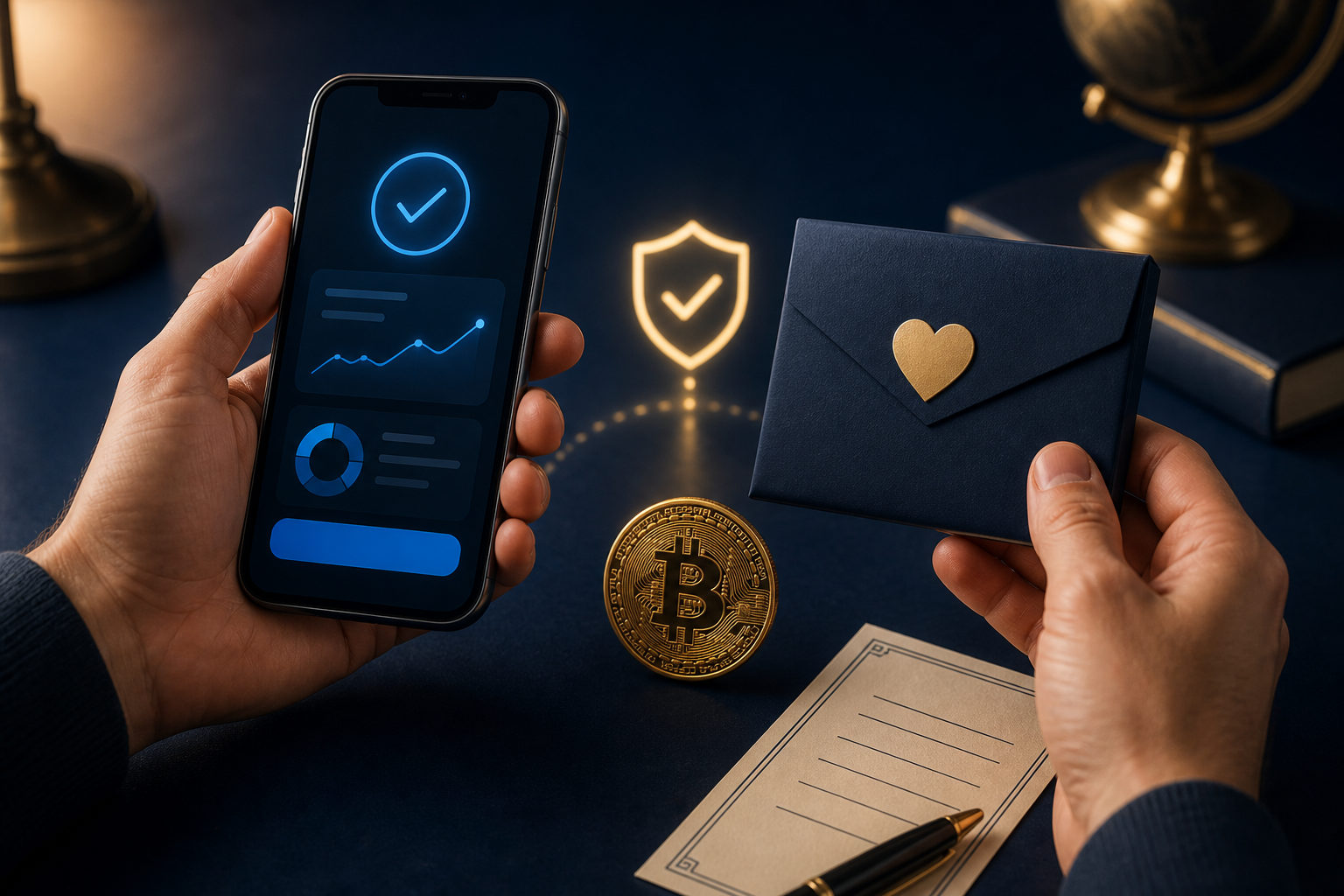
How to donate bitcoin comes down to a few practical steps: make sure the recipient accepts BTC, verify the wallet address through an official source, send a small test transaction first, and keep your records.
Start with the recipient, not your wallet
Many people who look up how to donate bitcoin are really asking a broader question: how do I send BTC without making a costly mistake? The answer starts before you open your wallet app. You need to know who is receiving the donation, how they collect it, and whether they can confirm receipt afterward.
Bitcoin transfers are generally not reversible in the way bank payments sometimes are. Once a transaction is broadcast and confirmed, getting funds back is usually not a matter of clicking a cancel button. That is why recipient verification matters more than the transfer screen itself.
Common recipients include charities, open-source developers, independent creators, community funds, research groups, and people raising money for a personal cause. Some publish a BTC address directly on their website. Others use a crypto donation service. Some accept digital assets in theory but prefer to receive fiat after conversion. Before sending anything, check the recipient's official website, public statements, or direct replies from verified channels.
If your real intent is closer to asking "how to donate bitcoin to charity," there are a few extra checks. Look for a clear statement that the organization accepts BTC, whether the address is permanent or campaign-specific, whether donation receipts are available, and whether the group gives any guidance on tax documentation.
Common ways to donate bitcoin
There is no single best method for every donor. The right path depends on what you care about most: simplicity, privacy, recordkeeping, or making things easier for the recipient.
Send BTC directly to the recipient's wallet
This is the most straightforward option. The recipient provides a wallet address or QR code, and you send BTC from your wallet. The process is short and keeps control in your hands until the transfer is made.
The drawback is obvious. If the address is wrong, outdated, or replaced by a scammer, the transaction may be impossible to recover. For that reason, do not copy a wallet address from random reposts, screenshots, or direct messages from unknown accounts.
Use a crypto donation platform
Some organizations rely on a third-party donation service instead of managing on-chain payments themselves. These pages can be easier for donors to use because they may include forms, donation notes, and confirmation flows.
Still, convenience does not remove the need for verification. You should confirm that the donation page is linked from the recipient's official site and understand who provides the receipt or donation confirmation. That detail matters if you need records later.
Sell bitcoin first, then donate cash
Sometimes a person searching for how to donate bitcoin really means, "I hold BTC, but the group I want to support does not accept it." In that case, you may need to convert bitcoin into fiat and make a regular donation.
This is not the same as a direct bitcoin donation, but it can be the simplest way to support a cause that has no crypto setup. It also may make accounting easier for the recipient. The tradeoff is that you now have an extra step and your own tax and transaction records to manage.
A practical step-by-step process
If this is your first time, a checklist helps more than general advice. A careful process lowers the chance of sending funds to the wrong place or ending up with poor documentation.
- Confirm that the recipient accepts BTC. Check the official website or ask through a verified contact channel.
- Verify the wallet address source. Use the organization's site, public announcement, or another trusted official page.
- Ask whether any identifying information is required. Some recipients want an email address, name, or note about the purpose of the donation.
- Prepare your wallet. Make sure you have enough BTC available and understand the network fee shown before sending.
- Send a small test transaction first. This is especially useful when donating to a new address or sending a larger amount.
- Save the transaction ID. The transaction hash is your clearest on-chain record.
- Keep screenshots and messages. Save the donation page, wallet address display, emails, and any replies from the recipient.
- Follow up if needed. Not every recipient sends an automatic confirmation.
A common mistake is assuming that once the blockchain shows the transfer, everything is done. In reality, the recipient may still need to match the incoming payment to a donor, a campaign, or an internal accounting category. If you leave no contact details at all, getting a later confirmation can be difficult.
Security, privacy, and transfer details that matter
Bitcoin donation guides often make the process sound effortless. The transfer itself is simple. The risk sits in the details.
Address replacement scams
One of the biggest threats is a substituted wallet address. That can happen through phishing sites, fake social accounts, malicious browser behavior, or malware that swaps copied addresses in your clipboard. Seeing a familiar logo or organization name is not enough.
Use official sources only, and if the donation is meaningful to you, verify the address through more than one channel. Some donors contact the organization directly before sending. That extra minute can prevent a permanent loss.
Make sure you are sending BTC, not something else
This sounds basic, yet people still get caught by confusing interfaces. Wallets and exchanges may display asset names, networks, and withdrawal settings in different ways. If the recipient says they accept bitcoin, confirm that they mean BTC and not a different asset with a similar presentation.
If anything on the transfer page looks unclear, stop and verify before you continue. Guessing is a poor strategy when a blockchain transfer cannot easily be reversed.
Network fees affect the final result
Sending bitcoin usually involves a network fee. From your side, total cost may be the donation amount plus that fee. From the recipient's side, what matters is what arrives. If you want the recipient to receive a precise amount, think about fees before you press send.
Privacy is not the same as total anonymity
Some donors prefer bitcoin because they want less exposure of personal information. That can be a valid reason, but it should not be confused with complete anonymity. Bitcoin transactions are visible on-chain, and wallet activity may be examined by anyone using public tools.
If you also submit your name, email, or social profile in a donation form, the on-chain transfer can become linked to your offline identity. Before donating, decide whether you want a public donation, a private donation known to the recipient, or a donation with as little personal disclosure as possible.
Exchange accounts are not the same as self-custody wallets
Some people keep their BTC on an exchange and plan to withdraw directly to the recipient. That can work, but there may be delays, withdrawal checks, account review steps, or other restrictions. If timing matters, do not wait until the last minute.
A self-custody wallet gives you direct control over the transaction flow, while an exchange adds another party to the process. Neither is automatically right for every donor, but you should know which setup you are using before you try to donate.
Records, receipts, and tax questions
Tax treatment for a bitcoin donation depends on your jurisdiction, the legal status of the recipient, and the documentation you keep. There is no universal answer that applies everywhere. A broad online claim that crypto donations are always deductible or never deductible is not enough.
At a minimum, keep the recipient's name, the purpose of the donation if one is given, the date of the transfer, the wallet address used, the transaction hash, and any screenshots or email confirmations. If the recipient can provide a formal acknowledgment, save that as well.
For individuals, good records may help with personal accounting or later review. For companies, funds, or organized groups, internal approval and bookkeeping can matter just as much as the transfer itself. In those situations, it is usually better to settle process questions before sending BTC rather than trying to rebuild a paper trail later.
FAQ
What should I check before sending bitcoin to a charity?
Confirm that the charity publicly states it accepts BTC and that the wallet address comes from an official source. Also check whether it offers a receipt or acknowledgment and whether it asks donors to include contact details.
Can I reverse a bitcoin donation after I send it?
In most cases, no practical reversal process exists once the transaction is confirmed. That is why address verification is one of the most important parts of donating bitcoin.
Is a QR code enough, or do I need the full wallet address too?
A QR code can be enough for the transfer itself, but you should still verify where it came from. If possible, ask for the text version of the address too so you can cross-check it.
Can I donate bitcoin without revealing my identity?
You may limit how much personal information you share, but that is not the same as being fully anonymous. Your wallet activity is visible on-chain, and any information you submit in forms or emails may connect the donation to you.
What if the recipient does not confirm receipt?
Start by checking the transaction hash in a block explorer to see whether the transfer is confirmed. Then contact the recipient through an official channel, especially if you did not include identifying details with the donation.
Use this final checklist before you donate
- Get the BTC address or QR code only from an official source
- Confirm the recipient accepts bitcoin, not a different asset
- Send a small test transaction first when the amount matters
- Save the transaction hash, screenshots, and communication records
- Ask about receipts, acknowledgments, and tax documentation in advance
- If withdrawing from an exchange, check for delays or withdrawal limits first
If you are ready to donate today, the safest move is to verify the address, purpose, receipt requirements, and your own privacy preference before making the first test transfer.