
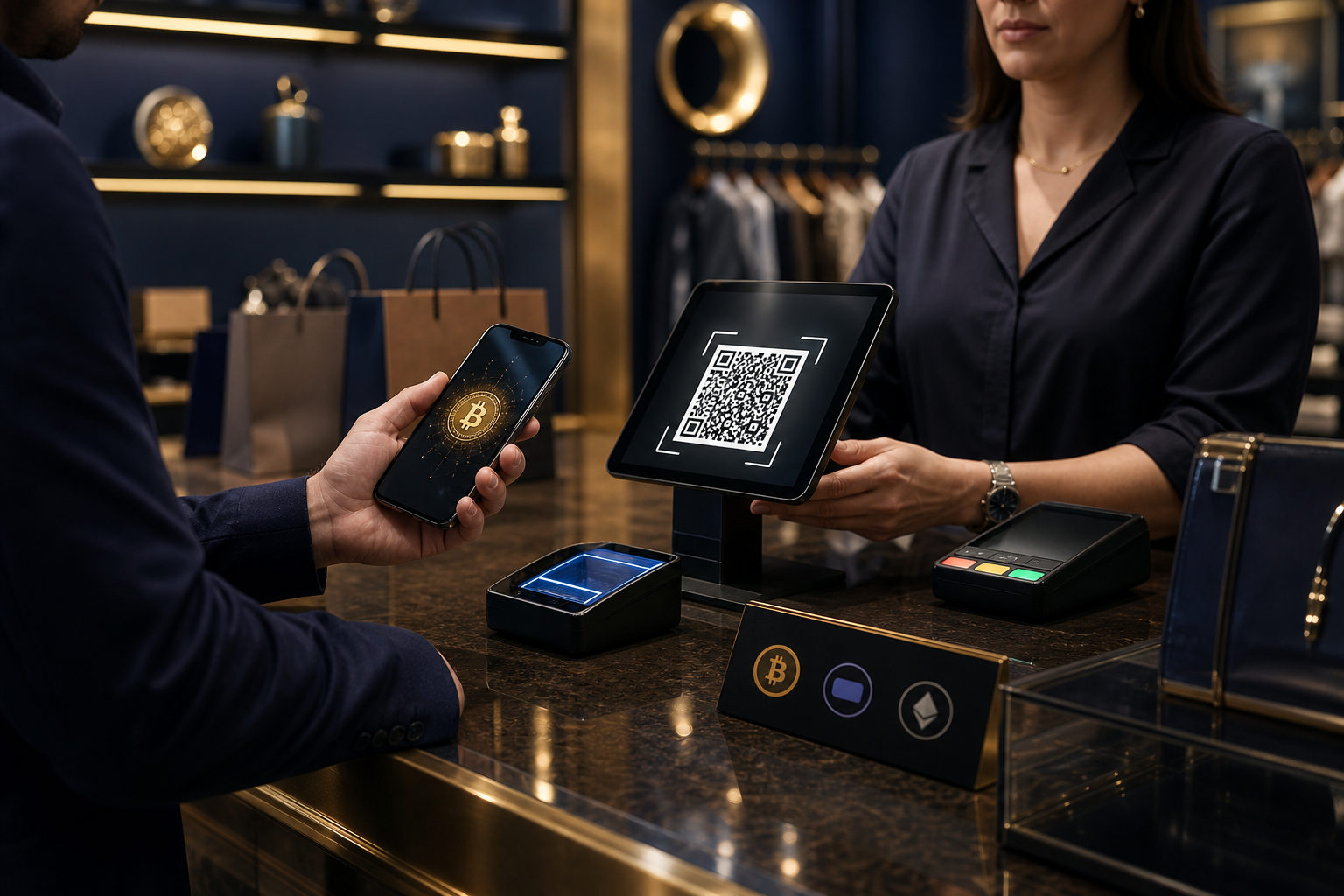
If you want to know what retailer accepts bitcoins, the safest answer is this: do not rely on old lists. Check the retailer's live checkout flow, confirm the payment method, read the refund terms, and verify the payment details before you send anything.
Why a fixed retailer list is less useful than it sounds
People often search for what retailer accepts bitcoins because they want a quick yes-or-no answer. The problem is that merchant support can change by region, product type, payment processor, and internal risk rules. A store may accept Bitcoin for one order type and not for another. It may also show a crypto option one day and remove it later.
That is why a static list is a weak tool. A better approach is to learn how to verify support on the spot. If you can read a checkout page, confirm a payment request, and review a store's refund policy, you can answer the question yourself with much more confidence.
This matters for safety as much as convenience. Many payment scams do not begin with fake technology. They begin with a fake store page, a copied logo, or a support message that asks you to transfer funds outside the normal order system.
Step 1: Check the actual checkout page, not the homepage
Start by adding the item to your cart and moving into checkout. Look for a payment section that clearly lists Bitcoin, BTC, or a crypto payment option. If the store only shows card payments, bank transfer, gift card, or other standard methods, do not assume Bitcoin is available just because you saw a logo elsewhere on the site.
The reason is simple. Promotional pages often use broad language such as crypto accepted or digital asset payments supported. Those claims may only apply to certain locations, limited products, or a processor that handles some coins but not Bitcoin. The only part that counts is the payment step attached to your current order.
Be careful with footer icons and old help pages. A Bitcoin symbol on a banner is not proof that the merchant still accepts it. In some cases, scammers copy those visual elements to make a fake store look convincing.
“Crypto” does not always mean Bitcoin
If checkout shows a generic crypto option, open it and read the details before doing anything else. Some merchants use a processor that supports a group of assets, while the exact coins available depend on the order or the buyer's location.
The reason to check this closely is that crypto is a category, while Bitcoin is a specific asset. If the payment page does not clearly show BTC, do not guess. Sending the wrong asset to the wrong destination can create a hard-to-fix problem.
Step 2: Find out whether the merchant accepts Bitcoin directly or through a processor
Once you see a Bitcoin-related payment option, pause before paying. Your next task is to understand how the payment is being handled. In practice, there are two common models. The merchant may present its own payment address or QR code, or it may route you to a third-party processor that creates a payment request and then reports the result back to the store.
This distinction matters because it affects what you should expect from the order flow. A processor page often shows the merchant name, the order reference, the amount due, the payment window, and status updates. Direct merchant collection may offer fewer automatic safeguards, which means issues such as underpayment, expiration, or refunds may need manual support.
Watch for warning signs. If clicking the payment option sends you to an unfamiliar domain with poor formatting, browser security warnings, or vague instructions, stop there. The same applies if customer support tells you to ignore the checkout page and send Bitcoin to an address in chat or email.
Why order binding matters
A safe payment page should be tied to your exact purchase. Look for the store name, an order identifier, and some reference to the item or cart total. That is what allows the merchant system to match your payment to your order.
Do not pay to a QR code that someone forwarded to you. Do not reuse an address from an old order either. Many payment requests are generated for a single transaction, and an expired request may not be credited automatically.
Step 3: Confirm the asset, network, and payment rules before sending
A retailer accepting Bitcoin does not mean any transfer method will work. Before you send funds, confirm at least three things: the payment page is requesting BTC, the network instructions match your wallet action, and the order terms explain when the payment counts as complete.
This step exists for one reason. Blockchain payments usually do not work like card payments. Once sent, they are not easy to reverse. If you send the wrong asset, use the wrong network, or pay in a way the merchant system cannot match to the order, support may be limited.
Slow down here. Check the first and last characters of the address. Make sure your wallet displays the same asset the merchant asks for. Read whether the merchant treats the order as paid after full receipt, after confirmation, or only within the stated payment window.
Why an order may still fail after you paid
Failure does not always mean the merchant is dishonest. Common causes include an expired payment request, an incorrect amount, a mismatch between the required asset and the one sent, or a transfer that did not meet the page instructions.
Do not keep sending small top-up amounts unless the payment page says partial payments are supported. Some systems only track the original request properly, and extra transfers can make reconciliation harder.
Step 4: Read the refund, cancellation, and dispute policy before you pay
When people ask what retailers accept bitcoins, they often focus only on payment acceptance. That is only half the decision. The practical question is what happens if the item is unavailable, the order is canceled, the goods arrive damaged, or the merchant needs to issue a refund.
Bitcoin payments can involve different refund handling from card payments. A merchant may ask you to provide a receiving address, transaction record, order evidence, or identity details before processing a refund. Some stores may use store credit or account balance depending on their rules. If the policy is missing or unclear, treat that as a risk signal.
This is especially important for digital goods, subscription products, codes, downloadable content, or gift-like items. These categories often have stricter cancellation rules. If a merchant accepts Bitcoin but does not explain how exceptions are handled, think twice before paying.
Should you trust a support agent who sends a wallet address in chat?
In normal retail flow, no. If a store truly accepts Bitcoin, the payment request should appear inside the official checkout process or on a payment page linked to your order.
The reason is accountability. A chat message is easier to fake, easier to alter, and harder to verify later. If payment instructions are pushed outside the order system, the chance of error or fraud goes up fast.
Step 5: Learn the common scam patterns before your first purchase
Most Bitcoin shopping scams are not sophisticated in a technical sense. They rely on pressure, confusion, and visual imitation. If you know the usual patterns, you can avoid many of them without needing deep technical knowledge.
- Urgency through a special discount: The store claims you get a much better deal if you pay with Bitcoin right now. The goal is to make you rush. If the discount is not shown in the final order summary, do not rely on it.
- Fake store pages: The site looks almost identical to a real merchant, but the domain is different. A copied design does not mean the checkout is genuine. Type the site address yourself instead of following random promotional links.
- Address replacement: Malware or clipboard attacks can replace a copied address. Always recheck the beginning and end of the destination before you confirm the transfer.
- Expired invoice tricks: A payment page times out, but someone tells you to send funds anyway. Once the request has expired, the merchant system may no longer match the payment automatically. Create a fresh order instead.
- Fake refund fee demands: Someone says you must send another payment first to receive your refund. That is a classic trap. A proper refund process should not begin with a new transfer from the buyer.
If this is your first time using Bitcoin for shopping, start with a smaller purchase where the order details are clear and the policy pages are easy to read. The point is not to test your luck. The point is to learn what a normal payment request, order screen, and support path look like.
Step 6: Use a repeatable checklist when you are unsure
If you are not sure whether a retailer accepts Bitcoin, run through the same checks every time. A repeatable process is better than guessing from a logo or a social media post.
- Check checkout: Is Bitcoin or BTC shown as a live payment option on your current order?
- Check order linkage: Does the payment page show the merchant name and your order reference?
- Check the asset: Does the page clearly request BTC rather than a generic crypto payment?
- Check the rules: Is there a payment window, expiration notice, or confirmation rule?
- Check refunds: Does the store explain cancellation, returns, and refund handling?
- Check support behavior: Are instructions kept inside the official order flow instead of private chat?
- Keep records: Save your order page, payment request, wallet record, and support messages.
This checklist turns a vague question into concrete verification. If any part of the process is unclear, that alone may be enough reason not to pay yet.
FAQ
How can I tell if a store really takes Bitcoin?
Go to the live checkout page and see whether Bitcoin or BTC appears as an active payment option for your order. A logo on a homepage or help article is not enough.
Does “crypto accepted” always include Bitcoin?
No. Some stores use a broad label while the actual payment page supports only certain assets or settings. Open the option and confirm that BTC is explicitly available.
Can I get a refund after paying with Bitcoin?
Possibly, but it depends on the merchant's written policy and the product type. Read the cancellation and refund terms before payment, not after something goes wrong.
Why did my order not update after I sent payment?
Common reasons include an expired request, an incorrect amount, a mismatch in payment details, or a system still waiting for the required status. Check the order page and your wallet record before sending anything else.
What is the safest habit for a first Bitcoin purchase?
Use only the official checkout flow, verify the payment details carefully, and keep screenshots or records of each step. If anyone asks you to leave the order system and pay manually, treat that as a danger sign.
If your goal is to find out whether a retailer accepts Bitcoin, the fastest reliable move is to open checkout, verify the payment option attached to your order, read the policy pages, and keep records before sending funds.