
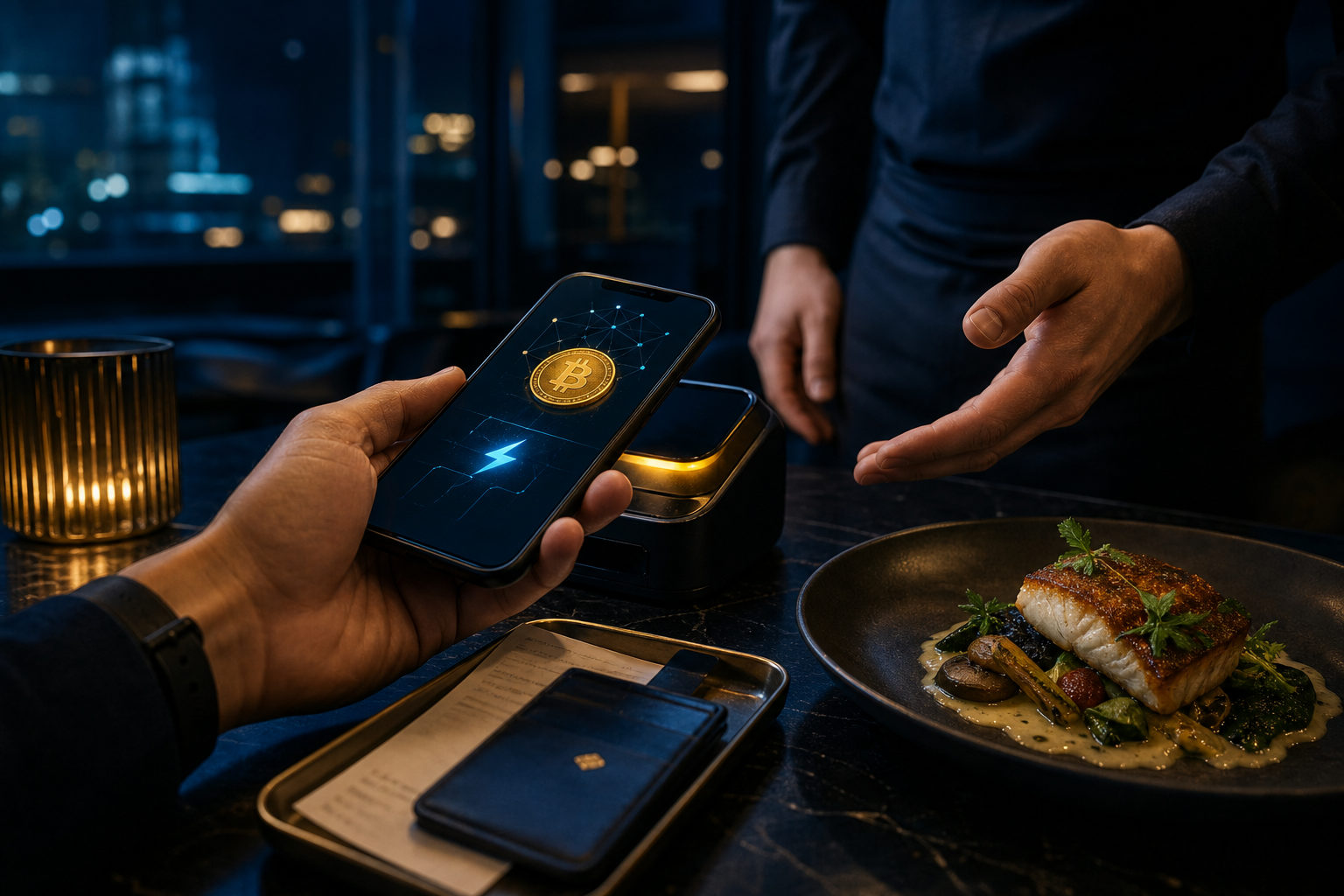
Yes, you can buy food with bitcoin if the merchant actually accepts BTC. The real issue is not whether it is possible, but whether you can complete the payment safely, avoid mistakes, and handle refunds or failed orders without losing money.
Start by identifying the kind of food purchase you are making
Buying coffee at a counter, ordering delivery, paying for a restaurant meal, and checking out on an online grocery site may all count as buying food, but the payment flow can be very different. Some merchants take direct bitcoin payments at checkout. Others use a payment processor, and some only offer indirect options rather than true BTC settlement.
This matters because the risk points change by setting. In person, the main question is whether the cashier has a clear payment flow and can confirm the order on the spot. Online, you need to know how the merchant matches payment to your order, how long you have to pay, and what happens if the item is unavailable or the order is canceled.
Step 1: Confirm that the merchant really accepts bitcoin
What to do before paying with bitcoin for food
Check the merchant's checkout page, payment instructions, help section, or in-store signage before you place the order. Look for clear language about BTC acceptance, the payment network used, and what counts as a successful payment. If the only evidence is a social post, a chat message, or an old screenshot, treat that as unconfirmed.
Why this step matters
People often confuse crypto branding with actual bitcoin acceptance. A business may talk about digital assets, promote a limited-time campaign, or let customers buy gift-like credit, yet still not accept direct BTC payments for food orders. If you send bitcoin before confirming the rules, you may end up paying into a flow that is not tied to a valid order.
What to watch out for
- Do not send first and ask later. Payment should come after confirmation, not before it.
- Do not rely on screenshots alone. Payment methods can change, and fake pages are common.
- Check the network type. A merchant may expect an on-chain payment or a Lightning payment, and those are not interchangeable.
Step 2: Use a wallet you can control and understand
How to prepare your bitcoin wallet
Set up a wallet that you understand well enough to use without rushing. You should know how to view your balance, review outgoing payments, scan a payment request, and confirm the network shown on the payment screen. If your wallet gives fee choices or network-specific prompts, you should be familiar with what those mean before you order food.
Why wallet control matters
Food purchases often happen fast. A cashier may be waiting, an online order may have a timer, or a delivery cart may expire if you pause too long. If you are learning the wallet interface in that moment, errors become much more likely. A wallet you control also reduces confusion tied to third-party account limits or hidden processing rules.
What to watch out for
- Back up your recovery information. If your device fails and a refund later arrives, you need access to the same wallet.
- Do not reuse old payment details. Every order should be paid using the exact information shown for that order.
- Do not let someone else guide you through a rushed payment. If a stranger is telling you where to tap, slow down.
Step 3: Check whether the merchant wants on-chain BTC or Lightning
How to tell which payment flow you are using
Before you send anything, read the payment screen carefully. If the merchant provides a specific invoice, QR code, or payment request, follow that exact flow. Do not assume that any bitcoin wallet can handle any bitcoin payment request in the same way.
Why this matters for food purchases
Food transactions are often small and time-sensitive. Merchants may want quick confirmation, which can make Lightning a better fit for some setups. Others may still use standard on-chain settlement. You do not need deep technical knowledge to buy food with bitcoin, but you do need to recognize that sending through the wrong route can break the order process.
What to watch out for
- A QR code is not enough by itself. You still need to verify what type of payment it represents.
- Do not switch networks based on guesswork. Use the method requested by the merchant.
- If the payment page is unclear, stop. Taking a minute to verify is easier than trying to recover from a bad transfer.
Step 4: Review the amount, fees, timing, and refund terms before paying
What to check before you send bitcoin
Look at the final amount due, any payment window or lock period, who bears network fees, and how refunds are handled if the order fails. If the site does not explain these points, ask before you pay or choose another payment method. This is especially important for food orders, where substitutions, delivery issues, and stock problems are common.
Why this step is easy to ignore
When people ask whether they can buy food with bitcoin, they often focus only on the transfer itself. In practice, the transfer is just one part of the transaction. Your full experience depends on whether the merchant recognizes the payment quickly, whether the total cost is clear, and whether cancellations are handled in a way you can live with.
What to watch out for
- The displayed item price may not be your full payment cost. Network fees can affect the total.
- Time limits matter. If the merchant locks the invoice for a short period, hesitation can invalidate the order.
- Refunds may not work like card refunds. Read the merchant's rules before you commit.
Step 5: Follow a three-check routine when you pay
What to do at the moment of payment
Run three checks in order. First, confirm the merchant name and order details. Second, confirm the amount and network. Third, confirm that the payment request came from the current order page and not from a separate chat or message thread. Only then should you send the payment.
Why this routine helps
Bitcoin transactions usually cannot be reversed in the same way as ordinary card purchases. Food orders create pressure because you may be in line, at a restaurant table, or racing a countdown clock online. That pressure makes people skip basic verification. A simple routine lowers the chance of sending funds to the wrong place.
What to watch out for
- Beware of address replacement and fake QR codes. If the code comes through an unofficial channel, pause.
- Do not trust urgency. “Pay now, do not inspect, we will sort it out later” is a bad sign.
- Save useful records. Keep the order number, payment status, and timestamp without oversharing wallet details.
Step 6: After payment, confirm the order status before leaving
What to do right after sending BTC
Stay on the payment or order page until you see a clear status update such as paid, processing, or an equivalent confirmation. In a physical store, wait for the staff member to verify the order before you walk away. Online, keep the order confirmation and any status notification.
Why this matters
A payment broadcast from your wallet does not always mean the merchant has matched it to your order. Systems can lag, multiple orders can be processed at once, and internal verification may take time. If you leave too early, it becomes much harder to prove what happened if the merchant later says the order was incomplete.
What to watch out for
- “Sent” in your wallet is not the same as “order confirmed.” Those are different things.
- Get a clear acknowledgment in person. A nod from the cashier is better than an assumption.
- Save the order ID online. That record is central if support is needed later.
Step 7: If something goes wrong, stop before you send again
What to do when a food order does not update
If the merchant says payment was not received, the page does not refresh, or support asks you to try again, do not send a second payment right away. Gather the order number, the payment time, your transaction record, and screenshots of the payment page. Then ask the merchant to investigate the original order through an official support channel.
Why this is a major anti-scam step
One common trick is to exploit panic. A user is told to top up, resend, or switch to a new address because the first attempt supposedly failed. The right response is to determine where the first payment went and whether the issue is with the blockchain transfer, the merchant's system, or the order-matching process. Until that is clear, a second transfer only adds risk.
What to watch out for
- Be suspicious if support asks for payment to a personal address. Legitimate handling should stay tied to the original order.
- Use traceable support channels. Scattered chat apps make disputes harder.
- Food orders are time-sensitive. If the merchant cannot fulfill the order, refund terms become the real issue.
Why “you can” does not mean “you always should”
You can buy food with bitcoin, but that does not mean it is the best choice every time. If the merchant has a clean payment flow, clear instructions, and workable refund policies, BTC can function just fine. If the business has vague rules, confusing support, or frequent order changes, another payment method may create less friction.
Food purchases are not just about payment completion. They involve substitutions, missing items, delayed preparation, delivery problems, and cancellations. In those cases, the quality of the merchant's operational process matters as much as the payment method. If the bitcoin rules are unclear, there is no prize for forcing the transaction through.
Common scams and mistakes
- Fake merchant pages. They look like real restaurant or grocery checkouts, but the payment request is unrelated to any valid order.
- Community middlemen. Someone says they can buy food for you if you send BTC first, then stalls or disappears.
- Support-channel switching. You start on a real site, then get pushed into a private chat where a different QR code appears.
- Confusing account top-ups with direct payment. If you have to preload value into a system with weak refund rules, your risk rises.
- Assuming all BTC payments work the same way. Ignoring network type and order-matching rules is a common user error.
When you judge a payment flow, do not focus only on how polished the page looks. Ask whether the sequence makes sense. A legitimate setup should begin with a real order, then generate a matching payment request, then provide a trackable confirmation path. If the process skips the order and pushes only for a transfer, step away.
FAQ
Can you really use bitcoin to order takeout?
Yes, if the restaurant or ordering service formally accepts BTC. If the payment depends on an informal middleman, social chat, or private arrangement, the risk of payment disputes and failed delivery is much higher.
Should I use on-chain bitcoin or Lightning for food payments?
Follow the merchant's requested method rather than choosing based on habit. Your job is to confirm that your wallet supports the required payment flow and then complete the order exactly as instructed.
If the merchant says they did not get the bitcoin, should I pay again?
Usually no, not until the first payment has been checked. Review the original order, the transaction record, and the payment request first, then ask support to trace the order through the proper channel.
Can I get a refund after paying for food with bitcoin?
That depends on the merchant's refund policy, not just on bitcoin itself. Before paying, read how cancellations, unavailable items, and failed deliveries are handled so you know what to expect.
What is the biggest risk when buying food with bitcoin?
The main risk is not bitcoin by itself but bad payment flow: fake pages, fake support, and pressure to send funds to a new address. If a payment request breaks away from the original order, stop and verify before doing anything else.
A practical pre-payment checklist
- Confirm that the merchant actually accepts bitcoin for food orders.
- Confirm whether the payment is on-chain BTC or Lightning.
- Check the final amount, timing window, and any fee details.
- Read the cancellation and refund rules before you pay.
- Verify the merchant name, order details, network, and payment request.
- Wait for the order status to update after payment.
- If anything looks wrong, save evidence and do not send again.
If your goal is simply to get your meal without turning it into a support problem, the smartest move is to review the payment route, the order confirmation process, and the refund rules first, then decide whether bitcoin is the right way to pay for that order.
Disclaimer: This article is for informational and educational purposes only and is not investment, financial, or legal advice. Crypto assets are highly volatile and you could lose your entire investment. Do your own research and decide carefully.