
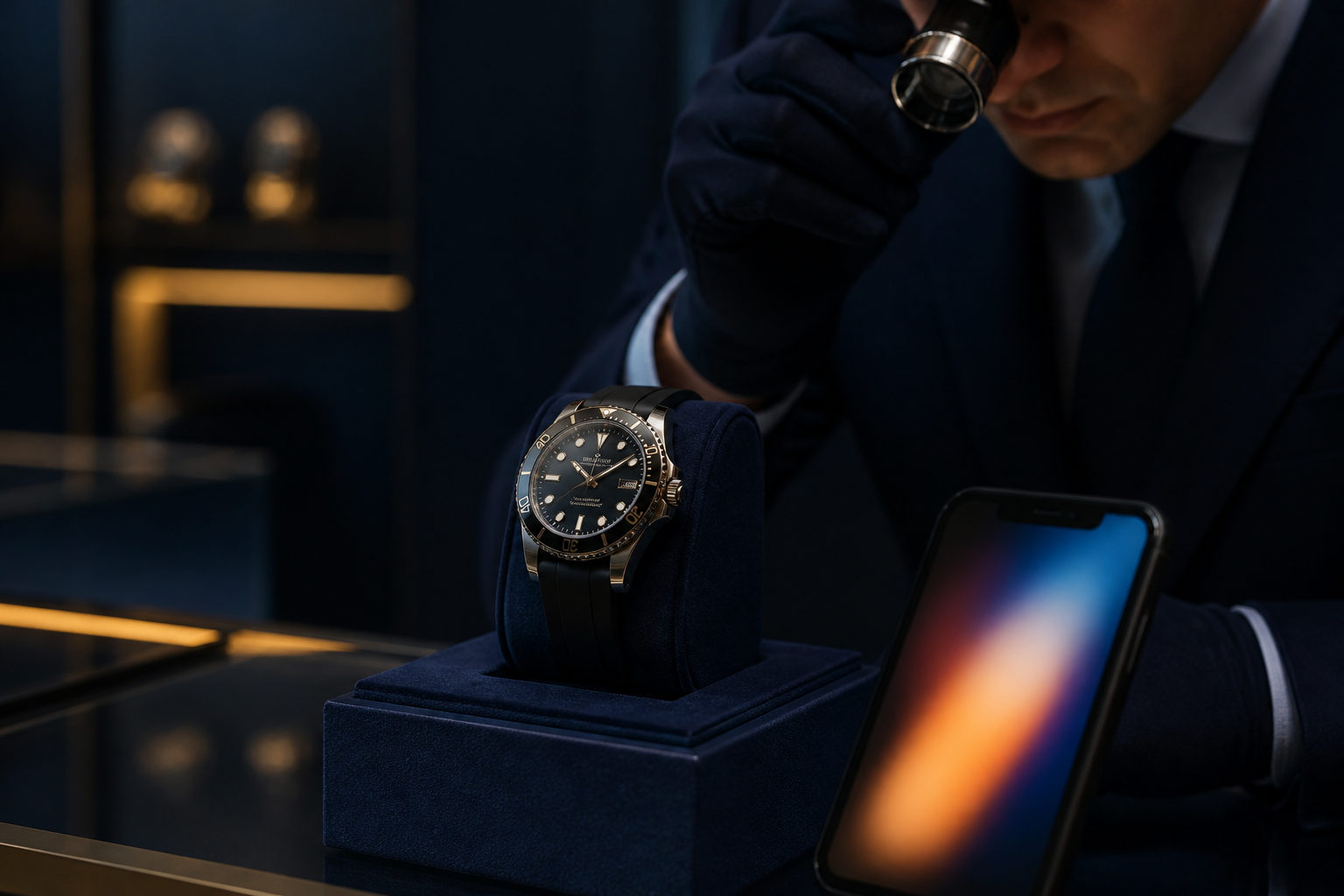
If you want to know where to buy watches with bitcoin, the short answer is this: look for sellers with clear crypto payment rules, strong watch descriptions, and written after-sales terms. The best place is the one that lets you verify the watch and the transaction before you send BTC.
Main channel types for buying watches with bitcoin
People usually buy watches with bitcoin through specialist watch dealers, luxury resale marketplaces, general ecommerce sellers with crypto checkout, brick-and-mortar stores that accept remote payment, and sourcing intermediaries. All of them can work, but they do not offer the same level of protection or transparency.
Specialist watch dealers are often the easiest starting point for buyers who already know the model they want. These sellers tend to include more useful detail on reference, accessories, warranty card status, visible wear, service history, and condition notes. That extra detail matters because the payment method tells you nothing about whether the watch matches the listing.
Luxury resale marketplaces give you broader inventory. You may find discontinued models, older production runs, uncommon configurations, and complete sets in one place. The trade-off is that the marketplace may only facilitate the listing while the actual watch comes from a third-party merchant. In that setup, you need to know who is responsible if the watch arrives with issues.
Some ecommerce sellers make crypto checkout feel simple. A cart page may display bitcoin as one of several payment methods, with a timed invoice and automatic amount conversion. Convenience helps, but it can hide important details if the seller does not explain who processes the payment, when the amount is locked, and what happens if network confirmation takes longer than expected.
Physical stores can also be an option, especially for buyers who want direct communication before shipping. A store may inspect the watch, resize the bracelet, confirm accessories, and then complete the sale remotely. This route can feel more concrete than a purely online listing, though it still requires clear written terms for shipping, refunds, and proof of delivery.
Intermediaries and sourcing agents appeal to buyers who do not want to search inventory themselves. The risk is that every added layer weakens your direct claim against the original seller. If the watch arrives in a different condition than expected, responsibility can become blurry very quickly.
How to judge whether a seller is suitable for BTC payment
Start with the payment path. You should know whether the bitcoin goes to the merchant directly or through a payment processor. This affects how you match the blockchain transfer to the order, how the merchant recognizes the payment, and how any dispute would be documented later.
Next, inspect the listing quality. A serious watch listing should do more than show polished marketing photos. It should explain the reference or model, what comes in the box, whether the watch has signs of polishing, whether service history is known, whether there are replaced parts, and whether the seller is willing to provide more pictures on request. Sparse listings create uncertainty, and uncertainty becomes expensive when crypto payments are hard to reverse.
Return and cancellation terms deserve special attention. Many sellers treat crypto orders differently from card or bank transfer orders. Some make them final. Others allow limited remedies only if the item is materially different from the description. Before paying, you need to know what counts as a valid complaint, what form any refund would take, and whether shipping costs are included or excluded under the merchant's policy.
Documentation quality matters just as much as reputation. A seller may have a polished storefront and still handle disputes poorly. What protects you is a clean record: order confirmation, item description, chat logs, payment hash, invoice details, shipping notice, and delivery evidence. If important promises only exist in a phone call, your position weakens right away.
Finally, look at how the seller talks about delivery. High-value watches need thoughtful shipping arrangements. Ask who carries transit risk, whether signature confirmation is required, whether packaging is discreet, and what the inspection window looks like after delivery. A seller who handles these points clearly is usually easier to work with if anything goes wrong.
Risks buyers often miss when paying with bitcoin
The most common mistake is treating bitcoin acceptance as a trust signal by itself. A seller can accept BTC and still provide weak descriptions, poor packing, vague policies, or no useful after-sales support. Crypto payment capability says something about payment preference, not product quality.
Another frequent issue is the timing of price conversion. Some merchants generate a payment request that stays valid for a short period. If the invoice expires before the transaction is recognized, the seller may recalculate the amount due. Without clear rules on timing and confirmation, a buyer can end up believing the order was fully paid while the merchant claims there is still a shortfall.
Secondary-market watch purchases carry an extra layer of risk. Condition is not just about scratches visible in photos. It can involve polishing, replaced components, stretched bracelets, missing accessories, or prior maintenance that affects value and collectibility. If the seller avoids detailed answers or refuses third-party inspection, that is a stronger warning sign than any discount.
Refund mechanics are another blind spot. If a merchant agrees to unwind a sale, the refund may not come back in bitcoin. Some sellers return store credit, some use a different crypto asset, and some follow internal rules at the time the refund is processed. You do not want to learn that only after a problem appears.
Shipping can create disputes even when the watch itself was described accurately. A luxury watch may be damaged in transit, delayed in customs, or delivered with packaging that makes inspection difficult. If you do not know the shipping method and the evidence expected at delivery, proving what happened becomes much harder.
What to verify before placing the order
Confirm the seller's business identity first. Look for a real customer service path, written policies, and a consistent order flow. If the entire transaction depends on a social media account sending you a wallet address in chat, you are taking on avoidable risk.
Then verify the watch details with intent. Ask for additional photos from angles that show the lugs, clasp, caseback, crystal edge, lume, bracelet condition, and included accessories. If the seller blurs or withholds identifying details for privacy reasons, that can be understandable, but the rest of the listing still needs to be specific enough for you to judge condition honestly.
Discuss inspection standards before payment. If the watch arrives and you believe it does not match the listing, what evidence must you provide? Are you expected to record an unboxing video? Is there a short window to report issues after delivery? Those rules are far easier to follow when they are agreed in advance.
Set shipping expectations in writing. Clarify insurance, signature requirements, any import paperwork, and whether the parcel branding will be discreet. High-value goods should not be shipped under vague terms, especially when the payment itself is hard to reverse.
A small test transfer can also help. It confirms that the wallet address, order reference, and communication channel all match before you send the main amount. That simple step reduces the chance of copied-address errors, fake support messages, or mismatched payment records.
FAQ
What kind of seller is best for buying a watch with bitcoin?
The best fit is usually a seller with detailed watch listings, written crypto payment terms, and a clear process for delivery and complaints. Specialist dealers often make these details easier to review, but any channel can work if the documentation is strong.
Is it safer to buy a new watch or a pre-owned watch with BTC?
The risk profile is different. New watches raise questions about source and warranty coverage, while pre-owned watches demand closer attention to condition, replaced parts, and service history.
Can I return a watch if I paid in bitcoin?
Sometimes, but you cannot assume the policy will match card purchases. Read the seller's rules before paying and check what form a refund would take if one is approved.
How do I know a BTC watch listing is credible?
Look for detailed item information, consistent answers from the seller, and written terms that explain payment, shipping, and complaints. A clean structure is more useful than polished branding alone.
Should I use a marketplace, a dealer, or a middleman?
Choose based on who holds responsibility after payment. Dealers may offer tighter product detail, marketplaces can offer more choice, and middlemen may save time, but the clearest route is usually the one with the shortest chain between your payment and the actual seller.
Before you buy a watch with bitcoin, narrow the field to sellers who explain payment handling, watch condition, and delivery terms in writing. If those three pieces are vague, sending BTC turns a normal retail risk into a harder problem to fix.
Disclaimer: This article is for informational and educational purposes only and is not investment, financial, or legal advice. Crypto assets are highly volatile and you could lose your entire investment. Do your own research and decide carefully.