
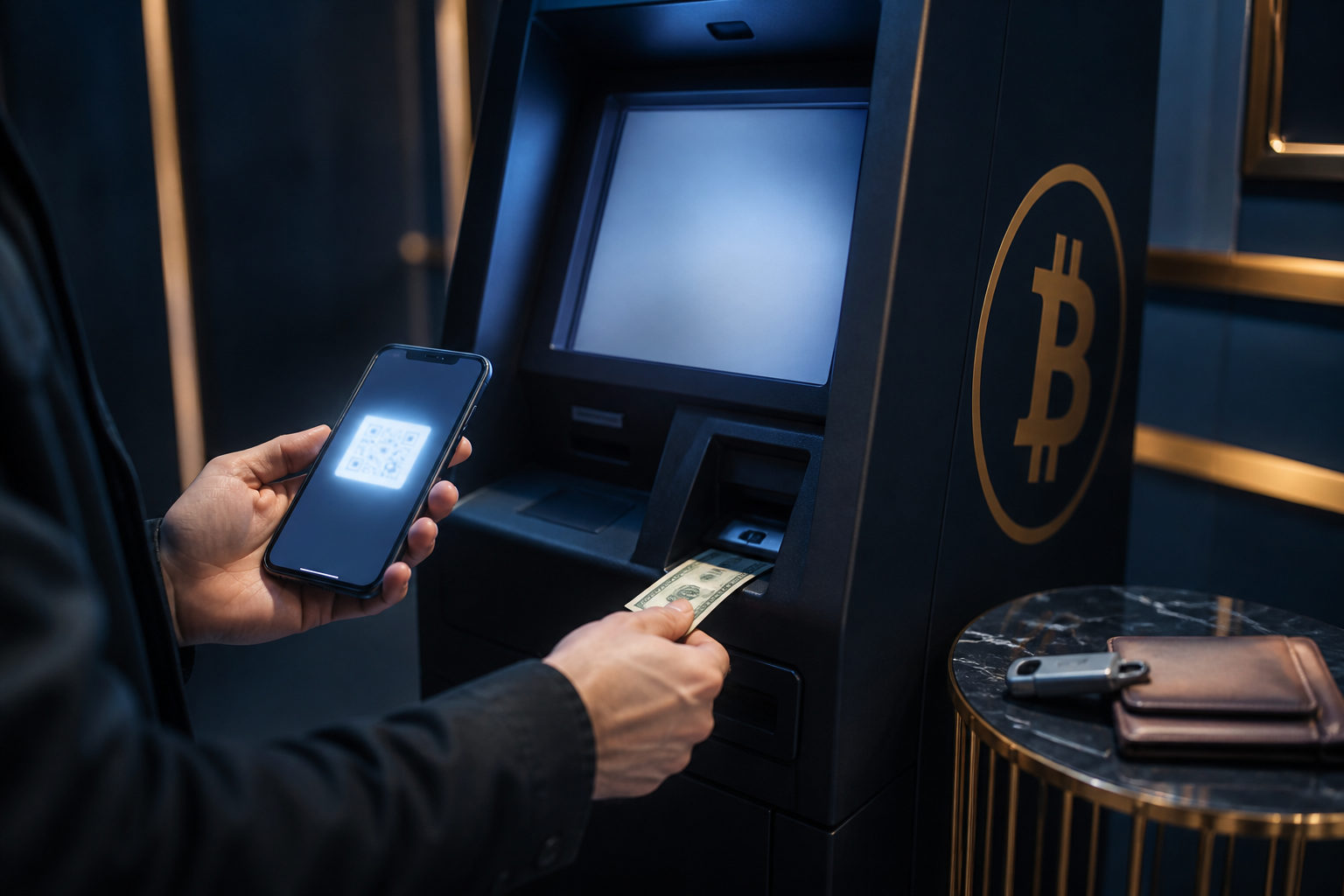
In the USA, sending money through a bitcoin machine usually means using a bitcoin ATM to buy bitcoin and send it to a recipient’s wallet address. The key warning comes first: once a blockchain transaction is sent, it usually cannot be reversed.
What “send money through a bitcoin machine” usually means
People often expect a bitcoin ATM to work like a bank transfer terminal. In most cases, that is not what happens. The machine typically lets you insert cash or use another supported payment method, converts that value into bitcoin, and then sends the bitcoin to a wallet address.
That detail changes the whole risk profile. The machine does not know the recipient by name. It follows the address you scan or enter. If the wrong address is used, or if the recipient gave you an address that does not properly receive bitcoin, fixing the mistake later can be very hard.
What to prepare before you go to the machine
The safest time to solve problems is before you are standing in front of the screen. If you wait until then to download an app, ask the recipient for a QR code, or figure out what wallet they use, you raise the chance of a bad transaction.
| Item to prepare | What to do | Why it matters |
|---|---|---|
| Recipient wallet address | Get a bitcoin address or QR code from the recipient | The ATM sends to an address, not to a personal name |
| Wallet compatibility | Confirm the recipient can receive bitcoin in that wallet | This helps avoid sending to the wrong type of destination |
| Phone or verification method | Bring what you may need for identity checks | Some machines require verification before use |
| Fee expectations | Be ready for service fees and network-related costs | The amount paid is not always the amount received |
| Recordkeeping plan | Decide how you will save the receipt or transaction details | You may need those details to track the transfer later |
It also helps if the recipient opens their wallet before you go and confirms they can receive bitcoin. If they are unsure how their own wallet works, you may complete the transaction only to find that they cannot tell whether the funds arrived.
Step-by-step: how to use a bitcoin machine to send money in the USA
Machine menus differ by operator, but the process is usually similar. Focus less on button names and more on the checkpoints that matter.
1. Confirm the machine supports sending to an external wallet
Some bitcoin ATMs focus on buying and selling. Some let you buy bitcoin and send it out immediately to another wallet. Before inserting money, make sure the machine clearly supports sending to a bitcoin address you provide.
2. Complete the required verification
You may be asked for a phone number, a code, or other identity details. Follow the on-screen process, but do not share verification codes, wallet recovery details, or any sensitive screen information with people nearby.
3. Scan the recipient’s bitcoin address
Using a QR code is usually safer than typing the address by hand. After scanning, still verify the first and last characters shown on screen, and ask the recipient to confirm that it is the correct bitcoin address.
4. Review fees and the final amount being sent
This is where many users move too fast. Look at the total you are paying, then look at the bitcoin amount that will actually be sent to the recipient. Those are not always the same because fees can affect the result.
5. Pay, send, and keep the receipt
After confirmation, the machine may print a receipt or show transaction details on screen. Save that information before you leave. If the recipient later says the transfer is missing, your receipt is the first thing you will need.
| Step | Main action | Common mistake |
|---|---|---|
| Check machine function | Verify it can send to an external wallet | Assuming every buy screen is a transfer screen |
| Finish verification | Complete the required checks privately | Exposing codes or personal details in public |
| Scan address | Use QR code and verify key characters | Scanning an old code or entering the wrong address |
| Review fees | Compare total cost with final send amount | Looking only at what you pay |
| Save proof | Keep the receipt or visible transaction details | Leaving without anything to track the transfer |
Private key responsibility starts when the machine stops helping
If you are sending directly from the ATM to another person, your main responsibility is making sure the destination address is correct. If you send bitcoin first to your own wallet and then forward it later, you take on a second responsibility: securing that wallet.
The real control point in a bitcoin wallet is the private key or wallet recovery information. Whoever holds it can usually control the bitcoin tied to that wallet. A bitcoin machine can help you buy and broadcast a transaction, but it does not protect your wallet for you after the transaction is done.
| Situation | Your responsibility | Main risk |
|---|---|---|
| Directly send from ATM to recipient | Verify the recipient address | Wrong destination can be very hard to recover |
| Send first to your own wallet | Protect your private key and recovery details | Loss or exposure can lead to loss of control |
| Ask another person to help | Keep control of scanning, payment, and confirmation | Address swapping or viewing sensitive information |
If you do not already have your own wallet, set it up in advance and test that you can receive bitcoin before trying to use it in a live transaction. Doing first-time wallet setup while standing at the ATM is one of the easiest ways to make a preventable error.
High-risk points where users make irreversible mistakes
Most serious problems happen before pressing confirm. Once the transaction is sent to the bitcoin network, the room for correction is limited.
- Wrong address: This is the biggest risk. A copied address, an old QR code, or a bad scan can send funds somewhere else.
- Wrong asset or unsupported destination: If the recipient expects bitcoin, make sure the machine is actually sending bitcoin to a bitcoin address.
- Fee confusion: The cash you insert or the amount you authorize is not always the same as the amount the recipient receives.
- Misunderstanding custody: The ATM may process the transaction, but it does not become your long-term vault.
- Pressure from another person: If anyone is pushing you to scan quickly or skip review steps, stop and verify everything first.
For a first transaction, a small test transfer is often the cleanest way to reduce uncertainty. It can confirm that the address works, that the recipient can see incoming funds, and that you understand the machine’s receipt and send flow before using a larger amount.
Action checklist before and after using the machine
A short checklist is often more useful than general advice. Use this table before you leave home and again before you tap the final confirmation.
| Timing | Checkpoint | What done looks like |
|---|---|---|
| Before leaving | Get the correct recipient address | The recipient confirms it can receive bitcoin |
| Before leaving | Know the purpose and amount | You know who you are paying and why |
| At the machine | Check machine capability | It supports sending to an external bitcoin address |
| Before confirming | Verify the address again | You checked the scanned address twice |
| Before confirming | Review fees and final send amount | You know total cost and expected amount sent |
| After sending | Save the receipt | You kept the transaction details for tracking |
| After sending | Ask the recipient to check | They review the correct wallet for the transfer |
FAQ
Can I send money to someone else with a bitcoin ATM in the USA?
Often yes, but it usually works by buying bitcoin at the machine and sending it to the other person’s wallet address. Whether you can do that depends on the machine’s features and any verification it requires.
Do I need my own wallet to use a bitcoin machine for a transfer?
Not always. If the machine supports sending directly to the recipient’s address, you may not need your own wallet for that transaction. Still, direct sending leaves less room to catch an address mistake before the funds go out.
Can a bitcoin ATM transaction be canceled after I send it?
Usually no. Once the transaction has been broadcast and starts moving through the bitcoin network, recovery is rarely something the ATM operator can simply reverse for you.
Why is the amount I paid different from what the recipient gets?
Service charges and network-related fees can affect the final amount sent. The important screen to read is the one showing how much bitcoin will actually go to the recipient address.
What should I check if the recipient says the bitcoin has not arrived?
Start with your receipt or transaction details. Confirm that the destination address was correct, then ask the recipient to check the correct bitcoin wallet rather than another asset tab or another app.
What is the single most important thing for a first-time user?
Verify the address before you confirm. If you are also using your own wallet as part of the process, protect the private key or recovery information with the same level of care.
Check the address, read the fee screen, and keep the receipt. If any part of the transaction still feels unclear, stop before final confirmation rather than trying to figure it out after the bitcoin is already sent.