
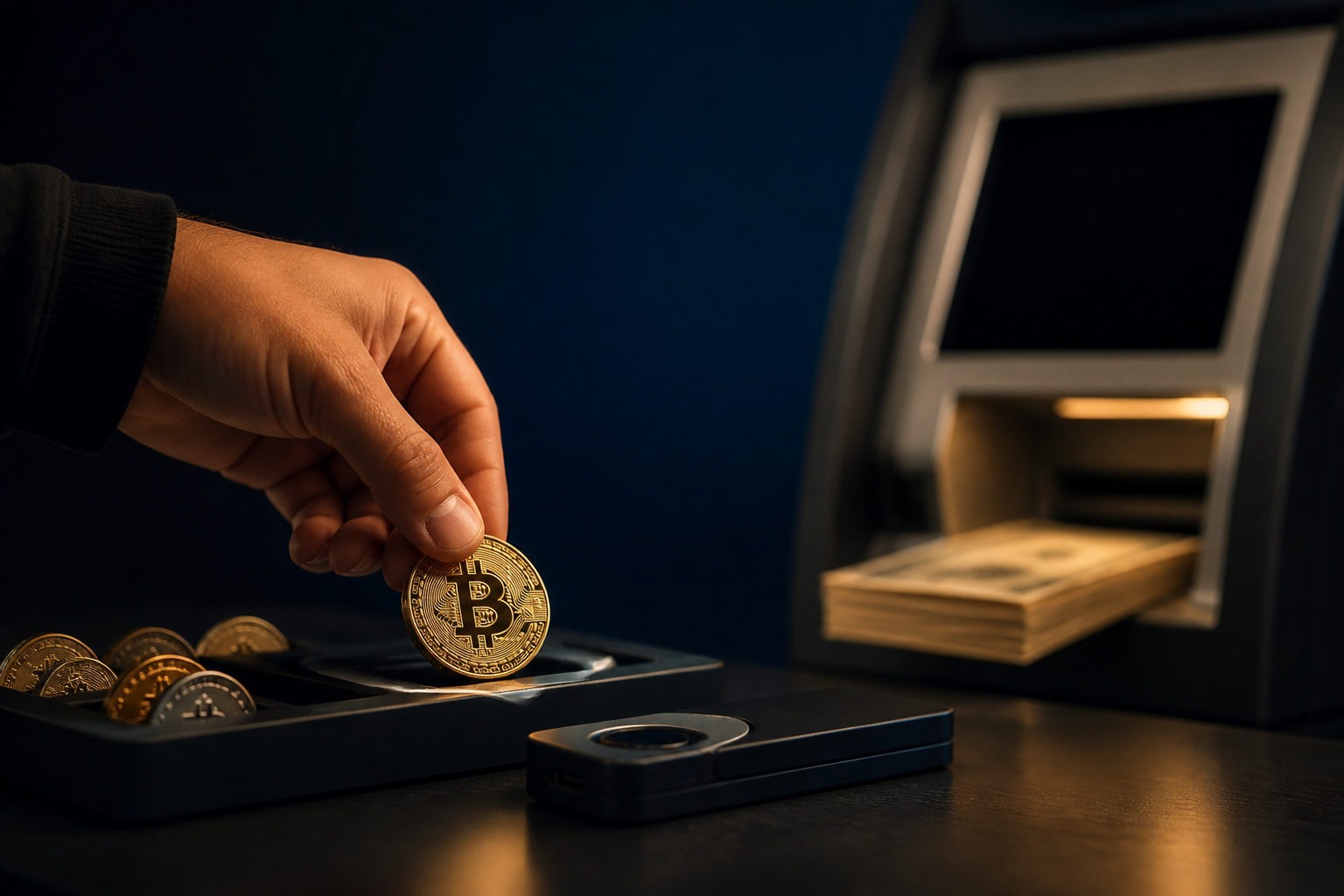
How to take out bitcoin depends on what you want to end up with. If you want BTC in your own wallet, you need an on-chain withdrawal. If you want spendable dollars, you usually need to sell BTC first and then request a fiat withdrawal. If you only want to move bitcoin from one platform to another, that is a transfer, not a cash-out.
Start by defining what “take out bitcoin” means for you
People use the same phrase for very different actions. One person wants to move coins off an exchange for self-custody. Another wants to convert bitcoin into dollars and send the funds to a bank account. Someone else simply wants to move BTC to a different exchange for trading. The right steps only become clear once the goal is clear.
| Situation | What you are actually doing | What you receive | Main thing to verify |
|---|---|---|---|
| Withdraw to your own wallet | Send BTC on-chain | Bitcoin | Receiving address and wallet support for BTC |
| Sell and cash out | Sell BTC, then request a fiat withdrawal | US dollars | Available withdrawal method and account name match |
| Move to another platform | Withdraw from platform A to platform B | Bitcoin | Deposit address and asset match exactly |
This distinction matters because the risks are different. A wallet withdrawal can fail in practice if the destination address is wrong or unsupported. A fiat cash-out can stall even after the sale is complete if the platform places the withdrawal under review. A transfer between platforms can get stuck when the receiving side has asset-specific deposit rules that the sender did not check.
If your real concern is platform risk, your next step may be self-custody rather than selling. Bitcoin is divisible down to 1 satoshi, which equals 0.00000001 BTC, so even a small balance can usually be moved if the platform and wallet both support the withdrawal.
How to withdraw bitcoin to your own wallet
The basic flow is simple. Open a wallet that supports BTC, generate a receiving address, copy that address, go back to the exchange, enter the address and amount, complete security checks, and submit the withdrawal. The process sounds short because the interface is short. The part that deserves patience is verification.
A bitcoin transaction is not like moving numbers inside one company database. Once a platform broadcasts the withdrawal to the Bitcoin network, reversal is usually not available in the ordinary sense. That is why people often do a small test withdrawal first, confirm that it arrives, and only then move the main amount.
| Step | What to do | Why it matters |
|---|---|---|
| Prepare a wallet | Create or open a wallet that supports BTC and store the recovery phrase safely offline | You will control the assets after withdrawal |
| Get a receiving address | Use the wallet’s receive function to copy a BTC address | A wrong address can send funds somewhere else permanently |
| Make a test transfer | Send a small amount first | This catches address or workflow mistakes early |
| Submit the full withdrawal | Enter the destination and amount, then pass security checks | The platform uses this information to create the transaction |
| Wait for confirmation | Track the withdrawal status and wallet balance | Funds can appear as pending before final confirmation |
Bitcoin targets a new block roughly every 10 minutes, so a completed withdrawal request does not mean immediate final settlement. First, the platform has to approve and broadcast the transaction. After that, the network has to confirm it. Some wallets credit incoming funds quickly but mark them as pending. Others wait for more confirmation before showing the balance as spendable.
Wallet choice matters too. Software wallets are convenient for frequent access. Hardware wallets are often preferred for long-term storage because the keys can stay isolated from general-purpose devices. The better option depends on what you plan to do after taking the bitcoin out. Convenience and custody are not the same priority.
How to cash out bitcoin into dollars
If your goal is money in a bank account, the process usually has two separate parts. First, you sell BTC for dollars on the platform. Second, you request a fiat withdrawal using a supported banking or payment method. Many beginners expect “withdraw bitcoin” to send BTC directly into a bank account, but banks generally receive fiat, not native bitcoin on the blockchain.
The sale itself can be quick, yet the cash-out can still take longer because the platform has to handle compliance checks, payout rails, and account verification. A completed trade only gives you a dollar balance inside that platform. It does not guarantee that the cash has already left the platform.
| Stage | What happens | What to watch |
|---|---|---|
| Sell BTC | You exchange bitcoin for a dollar balance | Order type, liquidity, and execution quality |
| Add a withdrawal method | You connect a bank account or other supported payout method | Name matching and any required verification |
| Request payout | You enter the amount and confirm the withdrawal | Fees, limits, and review status |
| Wait for receipt | The platform processes the payout and the receiving side posts it | Possible delay from reviews or payment processing |
It helps to separate the cost layers. Selling BTC may involve a trading fee. Sending BTC on-chain involves a network fee. Cashing out dollars may add a fiat withdrawal fee. If you blend all of that into one mental bucket, it becomes hard to understand where the cost is really coming from.
Platforms may also place withdrawals on hold when something about the account changes sharply. New devices, unusual login patterns, fresh security changes, or a first-time withdrawal method can all trigger extra checks. That does not automatically mean there is a problem with your funds. It means the platform wants more confidence before releasing them.
Where withdrawals go wrong most often
The biggest mistakes are repetitive and avoidable. A copied address may be altered by malware. A user may send BTC to a destination that does not support it. A person may finish a sale and assume the job is done, without noticing that the fiat withdrawal still needs a separate step. Security issues also matter: if someone controls your email account, they may control your withdrawal confirmations too.
| Problem | What it looks like | What to do next |
|---|---|---|
| Wrong address | The platform shows the withdrawal as sent, but the intended wallet never receives it | Check the transaction record and compare the destination carefully; recovery is often difficult |
| Wrong asset or incompatible destination | Funds leave the sending side but do not post on the receiving side | Contact the receiving service and ask whether recovery is possible |
| Review in progress | The withdrawal stays in processing status | Look for identity, email, or security prompts from the platform |
| Account compromise | You see a withdrawal you did not request | Lock down the account, change credentials, and revoke device access at once |
Good security habits matter before the withdrawal, not after the damage. Use two-factor authentication. Protect the email account attached to the exchange. Avoid handling withdrawals on public networks or unfamiliar devices. When you paste an address, compare the beginning and end with the intended destination before confirming.
Some background facts help explain the timing. Bitcoin has a hard supply cap of 21,000,000 BTC, expected to be fully issued around 2140. The block subsidy is currently 3.125 BTC after the 2024-04-19 halving, and halvings occur every 210,000 blocks, roughly every 4 years. Daily new issuance across the whole network is about 450 BTC. These facts do not tell you whether you should withdraw or sell, but they do explain why block confirmation and miner fee conditions matter when funds move on-chain.
FAQ
Can I withdraw bitcoin from an exchange to my own wallet?
Usually yes, if the exchange supports BTC withdrawals and your account meets its verification requirements. Before sending anything, confirm that the destination wallet supports bitcoin and that you copied the receiving address correctly.
How long does it take for a bitcoin withdrawal to arrive?
There are two waiting periods: the platform’s internal approval process and the network confirmation process. Because Bitcoin targets a block about every 10 minutes, arrival time is not fixed, and your wallet may wait for confirmations before marking the funds as fully available.
Why can’t I withdraw money after selling my bitcoin?
Selling BTC and withdrawing dollars are separate actions. If the sale is done but the cash-out is blocked, the cause is often an issue with the payout method, identity review, or account security checks.
Can I cancel a bitcoin withdrawal after sending it?
In most ordinary cases, no. Once the transaction has been broadcast to the Bitcoin network, reversal is usually not available, which is why a small test withdrawal is a practical safeguard.
Should I keep bitcoin on an exchange or move it to self-custody?
An exchange can be easier for active trading. A self-custody wallet gives you direct control over the keys and puts the responsibility for storage on you. The right choice depends on whether convenience or control is your main priority.
Before you click withdraw, decide whether you are moving BTC or cashing out into dollars. Then verify the destination, the asset, the withdrawal method, and your account details, and run a small test first. That short checklist prevents more problems than any advanced tactic.
Disclaimer: This article is for informational and educational purposes only and is not investment, financial, or legal advice. Crypto assets are highly volatile and you could lose your entire investment. Do your own research and decide carefully.