
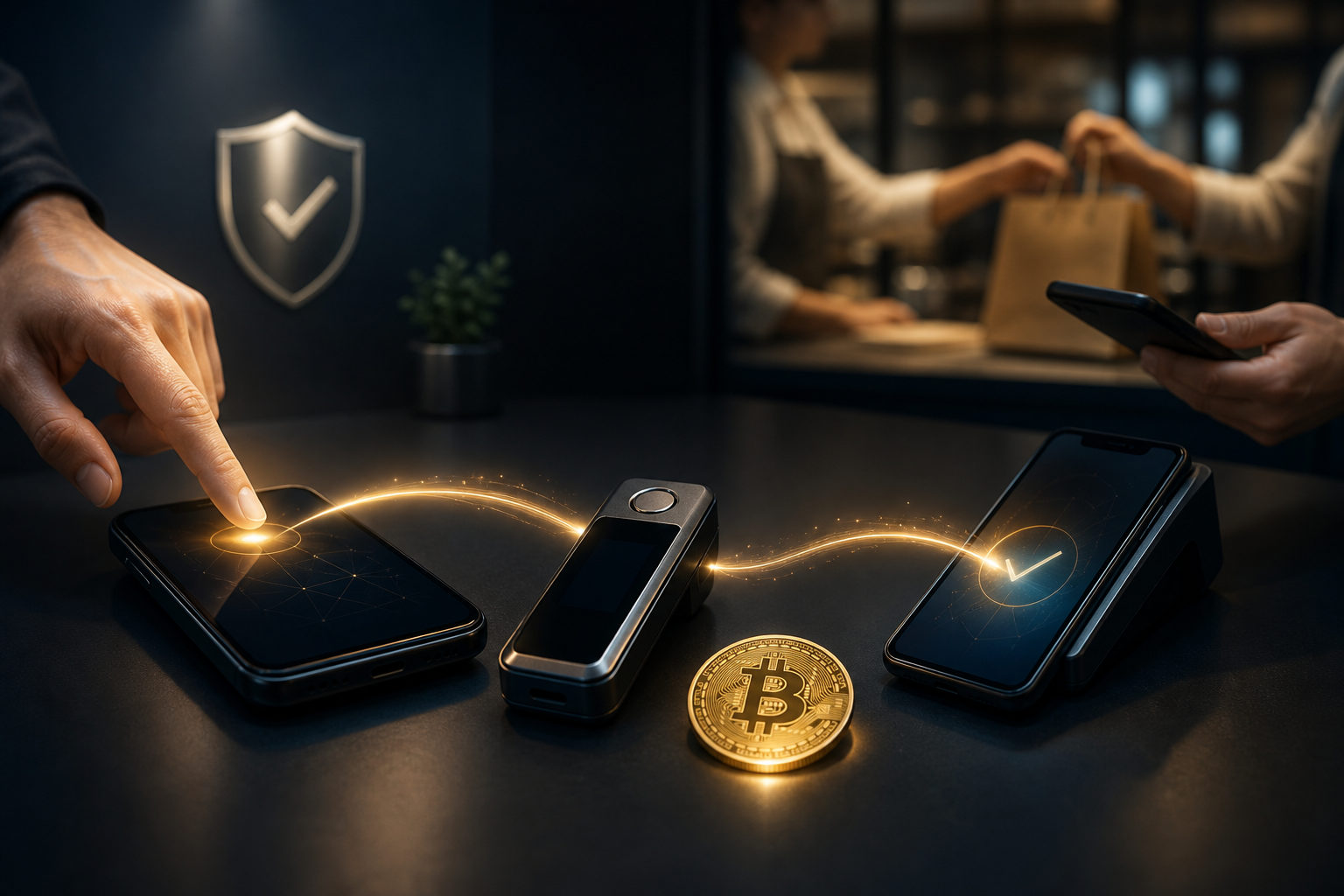
How is bitcoin used? In practice, people use bitcoin to buy and hold it, send it to someone else, receive payments, store it in a personal wallet, and in some cases pay for goods or services. The hard part is usually not the button clicks. It is knowing why each step matters and how to avoid common scams and mistakes.
Start with the use case, not the app
Many beginners ask how bitcoin is used when what they really mean is simpler: what can I actually do with it? The answer depends on the goal. Some people want to make a first purchase and keep it for a while. Some want to move funds to another person. Others want to accept bitcoin as payment or learn how self-custody works.
Those goals sound similar, but they lead to different choices. A person making a first test transfer does not need the same setup as someone planning to keep bitcoin for the long term. If you skip this first decision, it becomes easy to mix up buying, storage, transfers, and security.
It also helps to separate the Bitcoin network from the tools used to access it. The network records and processes transfers. Your wallet app, exchange account, backup method, and device security are separate layers. Learning how are bitcoins used means learning how those layers fit together in real life.
Step 1: Decide whether you care more about convenience or control
Action: define your main purpose before doing anything else
Before you sign up anywhere or install a wallet, write down what you want bitcoin for. Are you trying to learn basic sending and receiving? Are you buying a small amount for personal use? Are you planning to hold it for a long time? Do you need quick access, or do you care more about controlling your own funds?
That short exercise prevents a lot of confusion. Someone who just wants to understand the basic flow may start with the simplest setup possible. Someone who wants direct control over funds needs to learn wallet backup, recovery, and device hygiene from the beginning.
Reason: different goals create different risks
People often treat bitcoin use as a single task. It is not. Buying, storing, sending, receiving, and paying are related, but they involve different failure points. If you do not separate them, you may end up leaving funds in a place that was only meant for short-term access, or using a random wallet app for a task that needs stronger security habits.
In other words, the right tool depends on the job. If you know what you are trying to do, the rest of the process becomes easier to evaluate. If you do not, you are more likely to follow someone else's sales pitch instead of your own needs.
Caution: never trust a stranger who starts with "help"
One of the most common traps is fake support. A stranger sends a message, joins a group chat, or posts a comment offering to help you set up bitcoin use. The next step is often a request for a recovery phrase, a private key, a verification code, or screen sharing. That is the point where you should stop.
A simple rule works well here: you can take your time choosing a tool, but you cannot casually hand over access. If someone can restore your wallet or approve a transfer, they can often move your funds without asking again.
Step 2: Learn the difference between an exchange account and a personal wallet
Action: treat buying and storing as two separate jobs
New users often assume that buying bitcoin and storing bitcoin are the same thing. They are not. An exchange account is usually built for buying, selling, and temporary access. A personal wallet is built for receiving, sending, and in many cases holding your own keys or recovery data.
You do not need to turn this into a theory lesson. Just remember one practical idea: seeing a balance is not the same as having full control over it. Control depends on who can authorize transfers and who holds the recovery path if something goes wrong.
Reason: convenience and direct control usually come with trade-offs
Third-party services can be easier for a beginner because the interface is familiar and the steps are grouped in one place. Personal wallets can offer more direct control because you manage your own receiving addresses and recovery setup. Neither approach is automatically right for every user.
The key is to understand the kind of risk you are taking. If you leave everything in a third-party environment, you depend on that service's policies, systems, and operating rules. If you move to self-custody, the burden shifts to your own backups, your own device security, and your own ability to recover access later.
Caution: backup does not mean a screenshot in your phone gallery
When a wallet gives you recovery information, that step is not cosmetic. It is the path back to your funds if your phone fails, your app is deleted, or your device is lost. A safer habit is to store that information offline, keep it private, and avoid any place that syncs automatically across devices.
Do not send it to yourself in chat. Do not store it in cloud notes. Do not assume your email is a vault. A lot of losses happen because a person understood bitcoin transfers but treated wallet recovery data too casually.
Step 3: After buying bitcoin, do a small test before doing anything larger
Action: run a complete small-value practice cycle
The safest first move is not a large transfer. It is a small test that covers the full process: buy a small amount, move it to the wallet you plan to use, confirm that it arrived, and if needed send a small amount back or onward. That one exercise teaches more than a long list of tips.
It helps you understand address handling, the waiting period for confirmation, balance display, and the difference between a transfer being sent and a transfer being treated as final by the other side. Bitcoin blocks are produced about every 10 minutes, so patience is part of normal use.
Reason: most errors happen in the details
On paper, bitcoin use sounds easy. Enter an address, choose an amount, confirm, and send. In real use, beginners make mistakes when copying addresses, switching between screens, overlooking warnings, or rushing because someone is waiting on the other side.
A small test lowers the cost of those mistakes. It also gives you proof that your process works before you commit more funds. This matters even more when moving bitcoin from a trading account to a personal wallet for the first time.
Caution: do not verify an address by looking only at the first and last characters
Many people compare only the start and end of a receiving address. That is better than no check at all, but it is not always enough. Clipboard tampering and look-alike text tricks are real concerns. A safer habit is to recheck the full receiving details and confirm that the address came from the intended person or wallet.
Also avoid making transfers when you are distracted, under pressure, or on a call with someone you do not know. Scammers like urgency because urgency makes people skip checks they would normally do.
Step 4: Use bitcoin by scenario: sending, receiving, and paying are not the same task
Sending bitcoin to another person
To send bitcoin, you need the recipient's receiving information and a wallet or account that lets you authorize the transfer. Before you confirm, check three things: the destination details, the amount, and whether anything on the screen looks unfamiliar or inconsistent with what you expected.
The reason is simple. Once a bitcoin transaction is broadcast to the network, you should not think of it as a normal app message that can be taken back on demand. Prevention matters more than recovery here.
The caution point is just as simple: never let another person rush you. If someone says you must send first to unlock, verify, test, secure, or activate something, treat that as a warning sign.
Receiving bitcoin from someone else
To receive bitcoin, you usually provide a receiving address or a payment code generated by your wallet. The action itself is straightforward, but good record-keeping makes a big difference. If you expect more than one payment, note what each one is for.
Why does this matter? Because receiving a transfer is only part of the process. You may still need to link that transfer to an order, a service, or a conversation. If there is a dispute later, vague memory is not a good system.
The caution point is that a screenshot from the sender is not proof of arrival. The reliable check is your own wallet or account status, not a picture in a chat window.
Paying for goods or services with bitcoin
Some merchants accept bitcoin payments. In those cases, the flow is often simple: the merchant presents payment details, you send the required amount, and the order is processed according to the merchant's rules. What you need to understand before paying is how that merchant decides a payment has been completed.
This matters because bitcoin can move in price and because merchants may have time limits or confirmation rules for crypto payments. You do not need a technical deep dive. You do need to read the payment instructions carefully and understand what the merchant expects.
The caution point is to avoid unclear offers. Anonymous sellers, discount payment schemes, gift-card resale setups, and vague "agent payment" deals are common places for disputes and fraud.
Step 5: Build a fraud-resistant routine before you use bitcoin often
Action: use the same security checklist every time
If you plan to use bitcoin more than once, create a simple repeatable routine. Check that your device is the one you trust. Confirm the receiving details. Start with a small test when appropriate. Record what the payment was for. Save the transaction reference if you may need it later.
This may sound basic, but routines reduce mistakes. People usually lose focus when they are excited, distracted, or under time pressure. A fixed checklist gives you a way to slow yourself down before a costly error.
Reason: many losses come from social engineering, not from Bitcoin itself
Beginners often assume the biggest risk is not understanding blockchain mechanics. In reality, many losses come from fake support, fake investment groups, phishing pages, remote access tools, fake airdrops, and pressure tactics. The scammer does not need to break Bitcoin. They only need to persuade you to approve the wrong action.
That is why the most useful rules are human rules. Never share a recovery phrase. Never upload a private key. Never install software just because someone in a chat told you to. Never move funds to a so-called safe wallet or verification wallet because a stranger asked you to.
Caution: educational language is often used to hide a sales funnel
Some scams begin with what looks like a lesson on how bitcoin is used. The "teacher" explains wallets, transfers, or payments, then slowly pushes you toward deposits, copy trading, private groups, signature approvals, or account upgrades. At that point, the lesson is not really a lesson anymore.
If the next step requires you to send funds, grant permissions, share your screen, or follow a stranger's trade instructions, pause. If you do not understand the request, do not continue just because the person sounds confident.
FAQ
What should a beginner learn first before using bitcoin?
Start with the difference between buying bitcoin and storing bitcoin. Then learn what a receiving address is, how transaction confirmation works, and why wallet backup matters before you move more than a small amount.
Can a bitcoin transfer be reversed after I send it?
You should not assume it works like canceling a message or disputing a card payment. Once a transaction is sent into network processing, your room to fix a mistake is often very limited, which is why checking before you send matters so much.
Where should I keep bitcoin for normal use?
That depends on whether you value convenience or direct control more. Some users prefer a third-party account for easier access, while others prefer a personal wallet because they want to manage their own funds more directly.
What should I check before sending bitcoin to someone?
Confirm that the receiving details came from the intended person, recheck the address carefully, and make sure you are not being rushed. Pressure, urgency, and live guidance from strangers are common warning signs.
How can I check the live bitcoin price if I need it?
If your question is really about price, use a mainstream market data page or a widely used price tracker and compare information carefully. Without live data in front of you, do not rely on screenshots, chat quotes, or pages sent by strangers.
Before your next transfer, make one rule non-negotiable: if a request involves your recovery phrase, private key, verification code, screen sharing, or an unfamiliar download, stop and verify everything first. That habit protects bitcoin better than speed ever will.
Disclaimer: This article is for informational and educational purposes only and is not investment, financial, or legal advice. Crypto assets are highly volatile and you could lose your entire investment. Do your own research and decide carefully.