
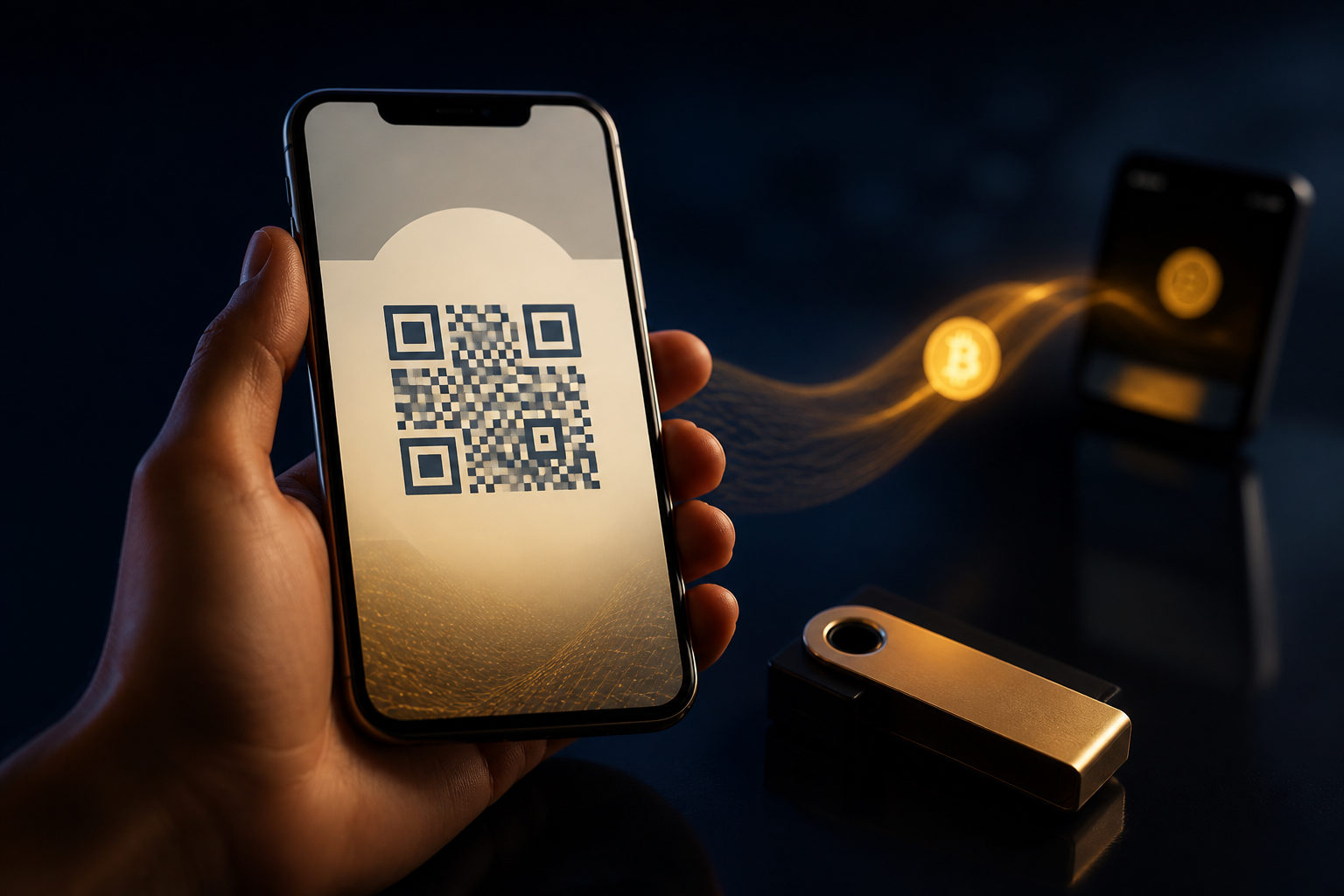
To receive money from Bitcoin, you usually receive BTC into a wallet or exchange deposit page, share the correct address, and confirm that the transfer is actually completed before you treat it as paid.
What “receiving money from Bitcoin” usually means
In practice, this phrase often means receiving a Bitcoin payment from someone else. The sender does not need your bank details for an on-chain BTC transfer. They need your Bitcoin receiving address or a QR code generated from that address.
You can receive BTC in two broad ways: through an exchange deposit page or through a self-custody wallet. Both can accept incoming Bitcoin, but they do not give you the same level of control. With an exchange, the platform holds the assets for you. With self-custody, control sits with your private key and recovery phrase.
Put this warning first: Bitcoin transfers are commonly irreversible. If the sender uses the wrong destination, if you share the wrong address, or if funds go to a place that does not support that deposit flow, recovery may be difficult or impossible. Treat address checks as part of the payment itself.
Choose the right receiving setup before anyone sends BTC
The easiest method is not always the best one for your situation. If you only need a one-off payment, a simple wallet may be enough. If you receive payments often, you may want a setup that makes tracking and reconciliation easier.
| Option | Who controls the assets | Best for | Main point to check |
|---|---|---|---|
| Exchange deposit page | The platform holds custody | People who want a familiar interface | Whether the page clearly supports BTC deposits |
| Self-custody wallet | You control the private key | People who want direct control | How you will back up the recovery phrase safely |
| Merchant payment tool | Depends on the provider design | Frequent business payments | How settlement and records are handled |
That difference matters later. If you receive BTC into an exchange account, account access, withdrawal rules, and internal reviews depend on the platform. If you receive BTC into a self-custody wallet, you gain direct control, but you also take full responsibility for keeping the private key and recovery phrase secure.
Step by step: how to receive a Bitcoin payment
The core flow is short, but each step deserves attention. A small test payment can help you confirm that your process works before you rely on it for a larger transaction.
| Step | What to do | Why it matters |
|---|---|---|
| Open the receiving screen | Go to the wallet or exchange section labeled receive, deposit, or similar | This is where your BTC address or QR code is generated |
| Confirm the asset | Make sure the page is for Bitcoin, not a different coin | Similar names can cause expensive mistakes |
| Read the page notice | Check for any deposit instructions or restrictions | Some pages have specific requirements you should not ignore |
| Share the address or QR code | Send it to the payer or let them scan it directly | Scanning often reduces typing errors |
| Wait for status updates | Watch the incoming transfer record in your interface | “Sent” by the payer does not always mean “received” by you |
| Verify final availability | Confirm that the record and balance show completion | This is the point where you can treat the payment as settled |
If possible, let the sender scan your QR code instead of typing the address manually. If you copy and paste the address, review the full string before sharing it. Some forms of malware replace copied wallet addresses with different ones, and the mistake may look ordinary unless you check carefully.
You may also notice that some wallets generate a new receiving address from time to time. That is often normal. Wallets do this for privacy and account management reasons, and an address created by your legitimate wallet interface is generally acceptable for receiving BTC.
Private key responsibility starts the moment you choose where to receive
The biggest issue is not where to click. It is who can actually move the coins after they arrive. Seeing a balance on screen is not the same as having direct control over the asset.
With self-custody, the private key and recovery phrase are effectively the keys to the funds. If you lose them, access may be lost. If someone else gets them, that person may be able to move the BTC without asking you. Store recovery information offline, keep it out of cloud notes and chat apps, and do not confuse a screenshot backup with a secure backup.
With an exchange account, the platform handles custody. That can feel simpler at the start, but it also means your access depends on the platform account, its security rules, and its operating policies. Before receiving any payment, know which model you are using.
| Common mistake | What can happen | Safer habit |
|---|---|---|
| Sharing the wrong address | Funds may go to a destination you do not control | Copy the address fresh from the receiving page each time |
| Not checking copied text | A replaced address may go unnoticed | Review the full address before sending it out |
| Saving recovery words in online tools | Unauthorized access risk increases | Keep backups offline and tightly restricted |
| Assuming exchange custody equals wallet ownership | You may misunderstand who controls withdrawals | Separate “platform account” from “self-custody wallet” in your mind |
| Releasing goods before completion | You may deliver before payment is actually settled | Use a clear internal rule for when payment counts as received |
How to check that the Bitcoin payment really arrived
Do not rely on a single visual cue. A better check includes the transaction record, the completion status, the asset type, and your own order or client notes if you use them.
- Look for the incoming entry in your wallet or exchange history.
- Check whether the status changed from pending or processing to a completed state.
- Confirm that the asset shown is BTC.
- Match the payment to your invoice, order, or customer reference if you keep records.
If nothing appears after the sender says the transfer was made, go back to basics. Ask the sender to verify what was sent and where it was sent. Then check whether the address you shared matches your receiving page exactly. Avoid sending multiple replacement addresses while the issue is still unclear, because that can make troubleshooting harder.
FAQ
Do I need to give my bank account details to receive Bitcoin
Usually, no. For a direct BTC transfer, the sender needs your Bitcoin receiving address or QR code, not your bank details.
If the payer asks for traditional banking information, confirm the payment method first. They may be talking about a fiat transfer rather than Bitcoin.
Can I use the same Bitcoin address more than once
Many wallets allow repeated use of the same receiving address, but separate addresses can make records cleaner and may improve privacy. That is often helpful if you receive payments from different people or for different orders.
Your wallet design and your bookkeeping needs should guide the choice.
Why does the sender say it was sent, but I do not see it yet
The transfer may still be processing, the sender may have used the wrong destination, or the funds may have been sent to a page that does not support that deposit flow. Start by comparing the sender’s transfer details with the address you provided.
Until your own interface shows a completed state, do not treat the payment as final.
Is an exchange deposit page good enough for beginners
For many beginners, yes, because the process is simple and the interface is familiar. Still, it is different from holding BTC in a self-custody wallet where you control the private key directly.
The better choice depends on whether you want convenience or direct responsibility for the asset.
Is it safe to send my Bitcoin QR code to someone
In general, yes, because the QR code is usually just a visual form of your receiving address. What must stay private is the private key, the recovery phrase, and any backup material that can restore wallet access.
Before sending a QR code, make sure it comes from the correct receiving screen and matches the address you intend to use.
If you want a practical routine, write one short checklist and use it every time: open the correct BTC receiving screen, copy the address from that screen, verify it before sharing, wait for the payment status you consider final, and store wallet recovery information offline. That process removes many of the most common receiving mistakes.