
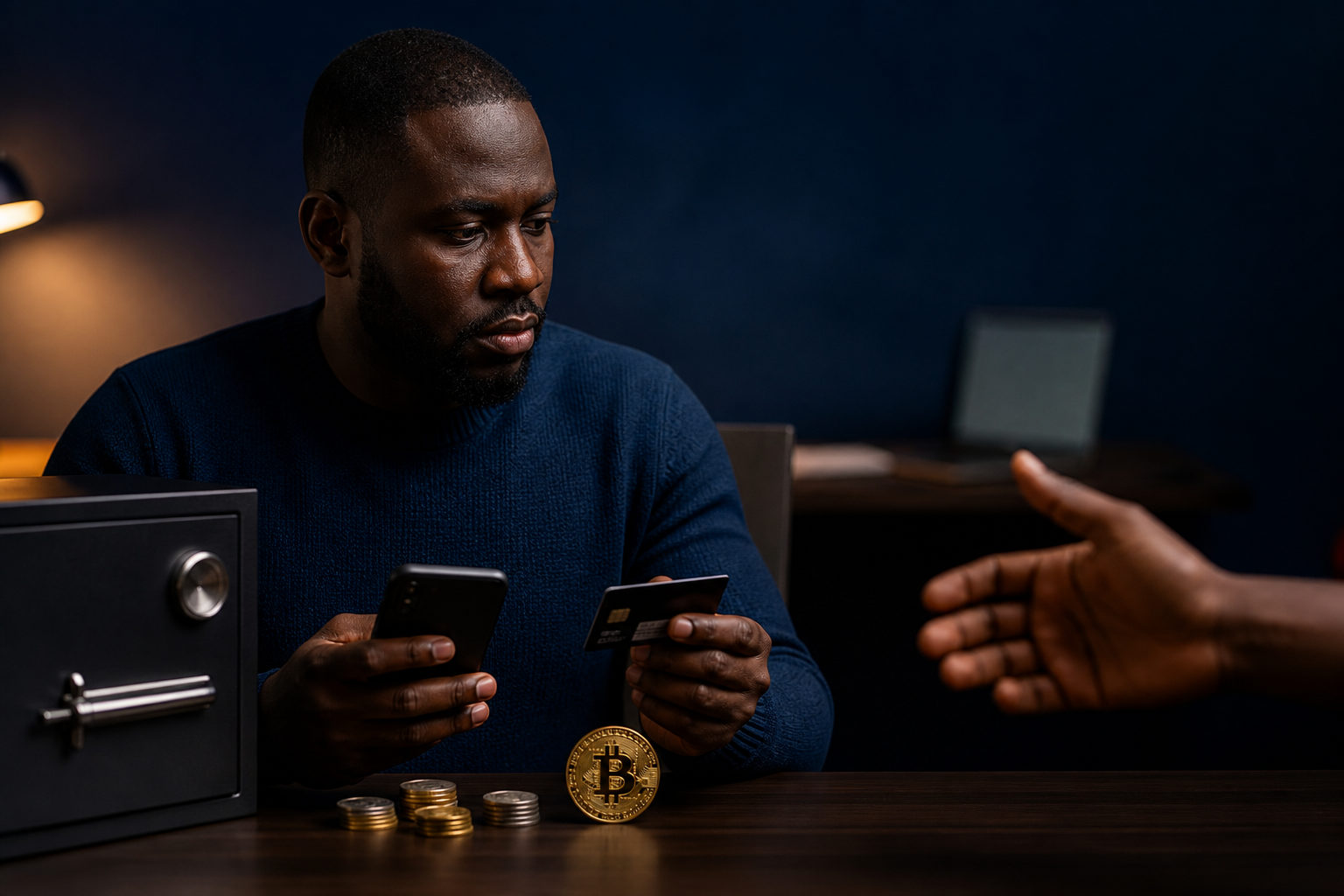
To withdraw bitcoin from Ghana safely, first decide whether you are sending BTC to your own wallet or selling it for funds you can withdraw; that choice determines the whole process.
Start by defining what “withdraw bitcoin” means
People often use the same phrase for two different actions. One is withdrawing BTC from an exchange or app to a personal wallet. The other is selling BTC and then withdrawing the proceeds through whatever payout method the service supports.
Those paths should not be mixed up. A wallet withdrawal is an asset transfer on the blockchain. A cash-out flow adds counterparty risk, account checks, and payout review. If you do not separate them at the start, it becomes much easier to send funds to the wrong destination or approve a trade you did not intend to make.
| Goal | What you actually do | Why the distinction matters | Main caution |
|---|---|---|---|
| Move BTC to your wallet | Enter a BTC receiving address and send a blockchain transfer | You still hold bitcoin after the move | Address, asset, and network details must match |
| Sell BTC and withdraw funds | Complete a sale first, then request payout | This adds payment and account verification risk | Do not rely on promises or screenshots |
| Private off-platform trade | Arrange payment directly with another person | Flexibility is higher, fraud risk is also higher | Do not release coins before verified receipt |
If your aim is self-custody, your main concern is getting the wallet transfer right. If your aim is spendable money, your main concern shifts to settlement and confirmation. That is the basic split.
Step 1: Confirm the destination before touching the withdraw button
Ask one clear question: what should you have at the end of this process? If the answer is BTC in a personal wallet, you need a valid bitcoin receiving address from that wallet. If the answer is withdrawable funds, you need to understand the service's sell flow and its payout instructions before you do anything else.
The reason is practical. A user who wants cash may accidentally send BTC to another wallet and then realize the problem is still unsolved. A user who wants to keep bitcoin may enter a sell flow by mistake and end up disposing of the asset. The same word, “withdraw,” hides very different outcomes.
Do not make this decision based on a chat message alone. Look at the interface you are actually using. A blockchain address means one thing. A payout form for sale proceeds means something else. Similar wording on a screen does not mean the process behind it is the same.
Step 2: Verify the wallet address, asset, and transfer route
If you are moving BTC to a wallet, the most important step is address verification. Copy the receiving address directly from your own wallet or the intended destination inside its official interface. Paste it into the withdrawal form, then compare the beginning and ending characters and confirm that the asset shown is bitcoin.
This matters because blockchain transfers are usually not reversible. If you paste the wrong address, use an address altered by clipboard malware, or choose an incompatible route shown in the withdrawal form, recovery may be difficult or impossible. Many losses happen because someone rushes through the final confirmation screen.
| Checkpoint | What to do | What can go wrong if skipped |
|---|---|---|
| Address source | Copy only from your wallet or official account page | You may send to a fake address from chat |
| Asset name | Confirm the form clearly says BTC | You may withdraw the wrong asset |
| Transfer route | Read the withdrawal screen carefully before approving | You may send through a route the destination does not accept |
| Security checks | Complete email, app, or device confirmation | Account compromise becomes easier to exploit |
Avoid typing long addresses by hand. Avoid checking only the first few characters. Avoid assuming that a familiar-looking screen is correct. Small habits make a large difference here.
Step 3: Send a small test first
If this is your first time withdrawing to a new wallet, a new recipient, or a new device, start with a small test transaction. Wait until the full path is confirmed before moving the remaining amount.
The reason is simple: first attempts expose hidden mistakes. You may have copied the wrong address, misunderstood whether the recipient expects BTC or sale proceeds, or missed a detail on the withdrawal page. A test transaction keeps that mistake contained.
A test only works if you actually review the result. Check whether the receiving side shows BTC, whether the status on your side is consistent, and whether the destination matches your original plan. If anything looks unclear, stop there and inspect the issue before sending more.
Step 4: Read fees, status messages, and verification prompts carefully
Withdrawal screens often display a fee, a pending status, a sent status, or a request for additional verification. Those are not minor details. They tell you whether the transaction is still being reviewed, already broadcast, or waiting on a step you have not finished.
Misreading status messages creates avoidable trouble. “Processing” does not always mean failure. “Sent” does not always mean the other side can already use the funds. A visible account balance after a sale does not always mean the payout step is complete. Repeating the request too quickly can make a clean process messy.
| Screen message | What it usually means | Best response |
|---|---|---|
| Fee | Part of the amount will be deducted as transfer cost | Review before confirming so the net amount does not surprise you |
| Processing | The service has not finished its current step | Wait and monitor instead of submitting again |
| Verification required | You need to complete an identity or security check | Do it only inside the official interface |
| Sent | The transfer has moved to the next stage | Check the receiving side rather than guessing |
If anyone tells you to leave the official interface, contact “support” through a social app, install unfamiliar software, or grant remote access to speed up the withdrawal, treat that as a danger signal. A legitimate process may be slow, but it does not need you to surrender control of your device.
Step 5: If you are selling BTC, confirm real receipt before releasing anything
When “withdraw bitcoin from Ghana” really means selling BTC and receiving usable funds, the main risk moves away from wallet addresses and toward payment confirmation. That applies whether the trade happens inside a platform system or through a private buyer.
The reason is straightforward. In cash-out situations, common scams include fake payment screenshots, third-party payments, pressure to release coins early, and fake support accounts trying to direct the trade. The conversation may look convincing while the money is still missing.
| Situation | Safer approach | Warning sign |
|---|---|---|
| Platform-based sale | Follow only the order page and system status | The buyer asks to move the chat off-platform |
| Private trade | Verify that funds are truly available to you before release | The other party sends only a screenshot |
| Support contact | Use only the official in-app or on-site support path | A social account claims to be support and gives instructions |
| Fast-close pressure | Pause if the other side rushes you | You are pushed to act before you can verify payment |
If a step makes you feel hurried, that is a reason to slow down. Speed is useful only after the process is already clear and verified.
FAQ
Can I withdraw bitcoin in Ghana directly to cash?
That depends on the service you use and what withdrawal options it actually shows in its official interface. This guide does not recommend any specific platform, so you should rely on the options clearly presented to you at the time of use.
Is sending BTC to my own wallet the same as cashing out?
No. That is a wallet withdrawal, not a sale into spendable funds. You still own bitcoin; you have only moved it from one place of custody to another.
What is the most common withdrawal mistake?
Mixing up the destination is a major one. People also skip address checks and approve a transfer after looking only briefly at the confirmation screen.
Someone sent me proof of payment. Should I release the bitcoin?
Not until you verify actual receipt on your side. A screenshot is only an image; it is not settlement. Your decision should be based on funds you can independently confirm.
Why is a small test withdrawal recommended so often?
Because it exposes address errors, process confusion, and destination mismatches at a lower cost. Any new wallet, new recipient, or new device is enough reason to test first.
When you are ready to act, use a fixed order: confirm the destination, collect the address or payout details from the official interface, verify the asset and route, send a small test, and only then complete the full withdrawal. If a sale is involved, keep one final rule in place: verify usable receipt before releasing the bitcoin.