
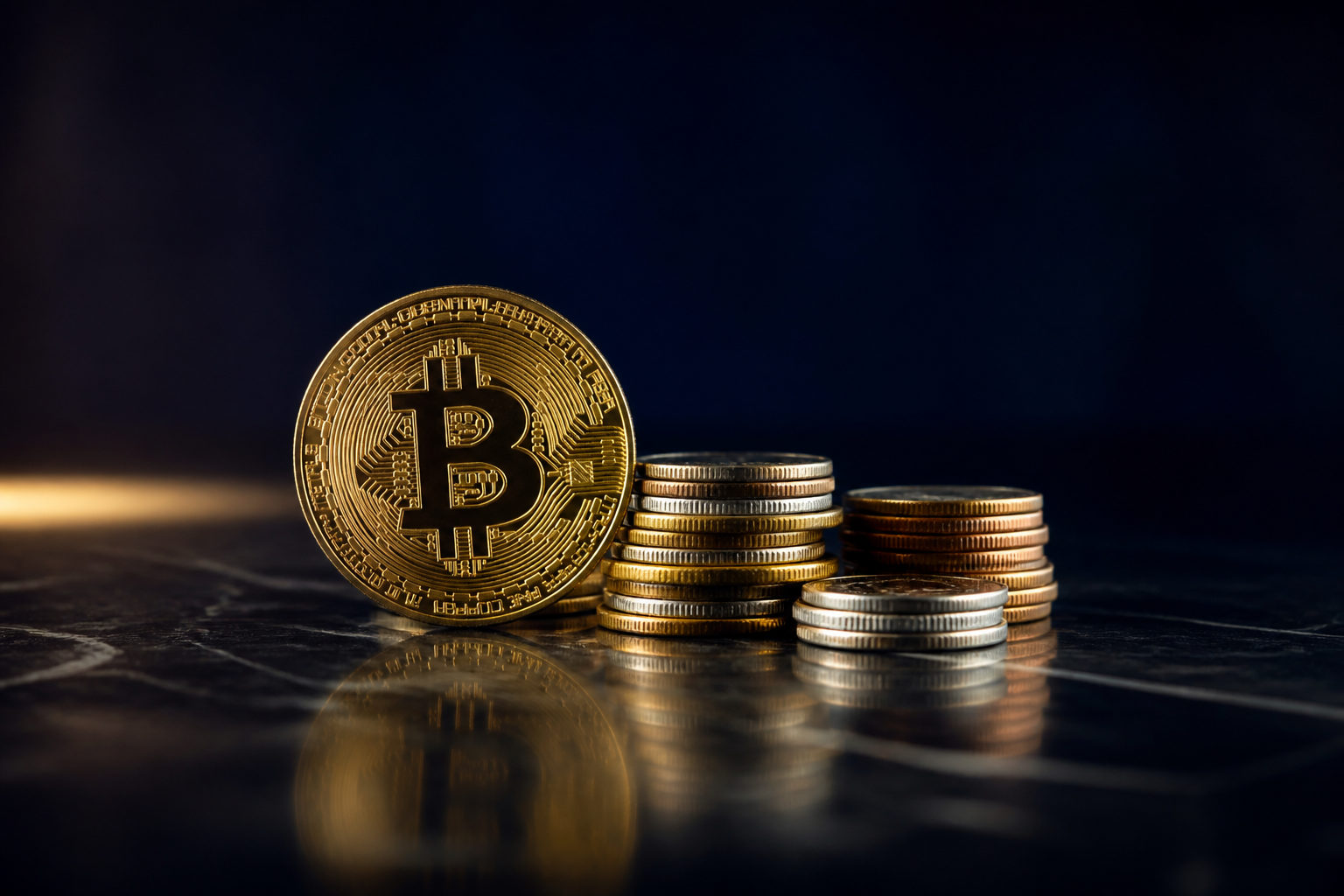
You do not need enough money to buy one full Bitcoin to start. BTC is divisible, so the better question is how little you can invest without fees, volatility, or bad sizing turning that first purchase into a poor decision.
You can buy a fraction of Bitcoin
People often get stuck on the price of one whole coin. That is the wrong starting point. Bitcoin can be divided into much smaller units, and its smallest unit is the satoshi: 1 satoshi = one hundred millionth of a BTC.
So when someone asks how much money they need to begin investing in Bitcoin, the practical answer depends on three things at once: the platform's minimum order size, the costs attached to buying and moving the asset, and whether that amount fits their personal budget. A tiny minimum does not always mean a useful minimum. If fees take too much of the purchase, the trade may be possible but still inefficient.
| What to check | What it means | Why it matters for a small start |
|---|---|---|
| Divisibility | You do not need to buy 1 full BTC | It lowers the entry barrier |
| Minimum order size | Each platform sets its own trading floor | It decides whether very small purchases are allowed |
| Fees | Buying, selling, or withdrawing may cost money | Small positions can lose efficiency fast |
| Personal cash flow | Your rent, food, bills, and emergency buffer still come first | It tells you whether the amount is sensible at all |
Pick your starting amount by looking at yourself first
New investors often focus on the market and ignore their own behavior. The first Bitcoin purchase is not only about exposure. It is also a stress test. You are learning how you react to price swings, how well you understand the app or exchange, and whether you can follow a plan once real money is involved.
That is why a small trial purchase makes sense for many beginners. It lets you go through signup, verification, placing an order, checking your holdings, and understanding what the platform actually shows you after the trade settles. You also get a feel for your own reactions. Some people stay calm. Others keep checking the screen every few minutes.
That difference matters. If a very small Bitcoin position already makes you anxious, there is a good chance the issue is not the size of the position but your current tolerance for volatility. Better to learn that early than after putting in too much.
| Approach | Best for | Main benefit | Main caution |
|---|---|---|---|
| Small test buy | First-time BTC buyers | Low-cost way to learn the process | Do not ignore security settings just because the amount is small |
| Buying in parts | People who dislike choosing one exact entry point | Less emotional pressure on a single purchase | You need a rule before price moves start affecting you |
| Ongoing recurring buys | People who want a routine | Simple structure, easier to repeat | Works only if your cash flow can support it |
| Large one-time buy | Experienced investors with high risk tolerance | Simple execution | Beginners often underestimate the emotional side |
For small Bitcoin buys, costs matter more than most people expect
Here is where many first-time buyers get tripped up. They spend all their time asking whether the price is high or low, then barely look at the fee schedule. For a small purchase, that can be the difference between a useful start and a frustrating one.
Trading fees matter. The spread matters too. Withdrawal rules matter as well. A platform may technically let you buy a small amount of Bitcoin, yet the full path from deposit to purchase to withdrawal may still be awkward for a small account. That is why the minimum buy amount shown on the screen does not tell the whole story.
Storage choices also change how a starting amount feels in practice. If you only want to get familiar with Bitcoin first, keeping a small position on a widely used platform for a while may feel simpler. If your plan is long-term holding, then wallet type, backup habits, and a test withdrawal become part of the real setup. Same asset. Very different user experience.
| Cost or rule | Why it matters | Common issue for small buyers |
|---|---|---|
| Trading fee | Reduces the amount of BTC you actually get | The smaller the buy, the heavier the cost feels |
| Spread | Affects your real execution price | A platform may look cheap while the hidden trading cost is still meaningful |
| Withdrawal policy | Affects whether you can move BTC to your own wallet | You buy first, then realize moving it is not practical yet |
| Account security setup | Protects your assets from account compromise | Beginners rush to buy and postpone basic protection |
A practical order for getting started
If you have never bought Bitcoin before, sequence matters more than speed. Start by choosing a platform whose rules and interface make sense to you. Set up account protection before funding it. Make one small purchase. Only after that should you decide whether to keep buying in parts or hold off.
This sounds slow. It is not. It is simply less error-prone. Many beginners lose control by trying to predict every short-term move while skipping the boring parts: fee checks, withdrawal rules, wallet basics, and account safety. Those details shape the first experience more than people expect.
- Check whether the platform supports small purchases and explains its fees clearly.
- Finish your security setup before adding funds.
- Make one small buy and verify that you understand the order screen, balance display, and transaction record.
- If you plan to hold for longer, learn wallet backup basics and do a small withdrawal test later.
- Increase the amount only if the position size still fits your budget and your reaction to volatility is manageable.
FAQ
Do I need to buy one whole Bitcoin to invest?
No. Bitcoin is divisible into very small units, so most people start by buying a fraction rather than a full coin.
What limits you in real life is usually the platform's minimum order size and the fee structure, not the need to own 1 BTC.
Is it still worth buying Bitcoin with a very small amount?
It can be, especially if your goal is to learn how buying, holding, and tracking Bitcoin actually works. A small purchase can teach you more than reading about it for weeks.
Problems start when someone expects a tiny position to produce a large short-term result. That expectation tends to collide with fees and normal volatility.
Should a beginner buy all at once or in smaller steps?
Many beginners find smaller, spread-out purchases easier to handle because the emotional pressure is lower. One single purchase is simpler on paper, but it can feel much harder once price starts moving.
The better method is usually the one you can keep following without changing your plan every time the market jumps or drops.
Should I move Bitcoin to a wallet right after buying?
That depends on why you bought it and how prepared you are. If you are still learning, leaving a small amount on a platform for a short period may be the easier starting point.
If you intend to hold for a long time, learning self-custody basics early makes sense. Just do not rush past backup and address-check habits.
Where should I check the live Bitcoin price?
Use major trading platforms or market data sites to view the live price and market depth. Social media screenshots are a poor substitute because they can be delayed or based on a different quote source.
When you check the price, look at fees and spread too. That is closer to the price you would actually pay.
If you are trying to decide how much money to start with in Bitcoin, the most useful move is simple: choose a clear platform, secure your account, make one small test purchase, and let that first experience guide the size of your next step.
Disclaimer: This article is for informational and educational purposes only and is not investment, financial, or legal advice. Crypto assets are highly volatile and you could lose your entire investment. Do your own research and decide carefully.