
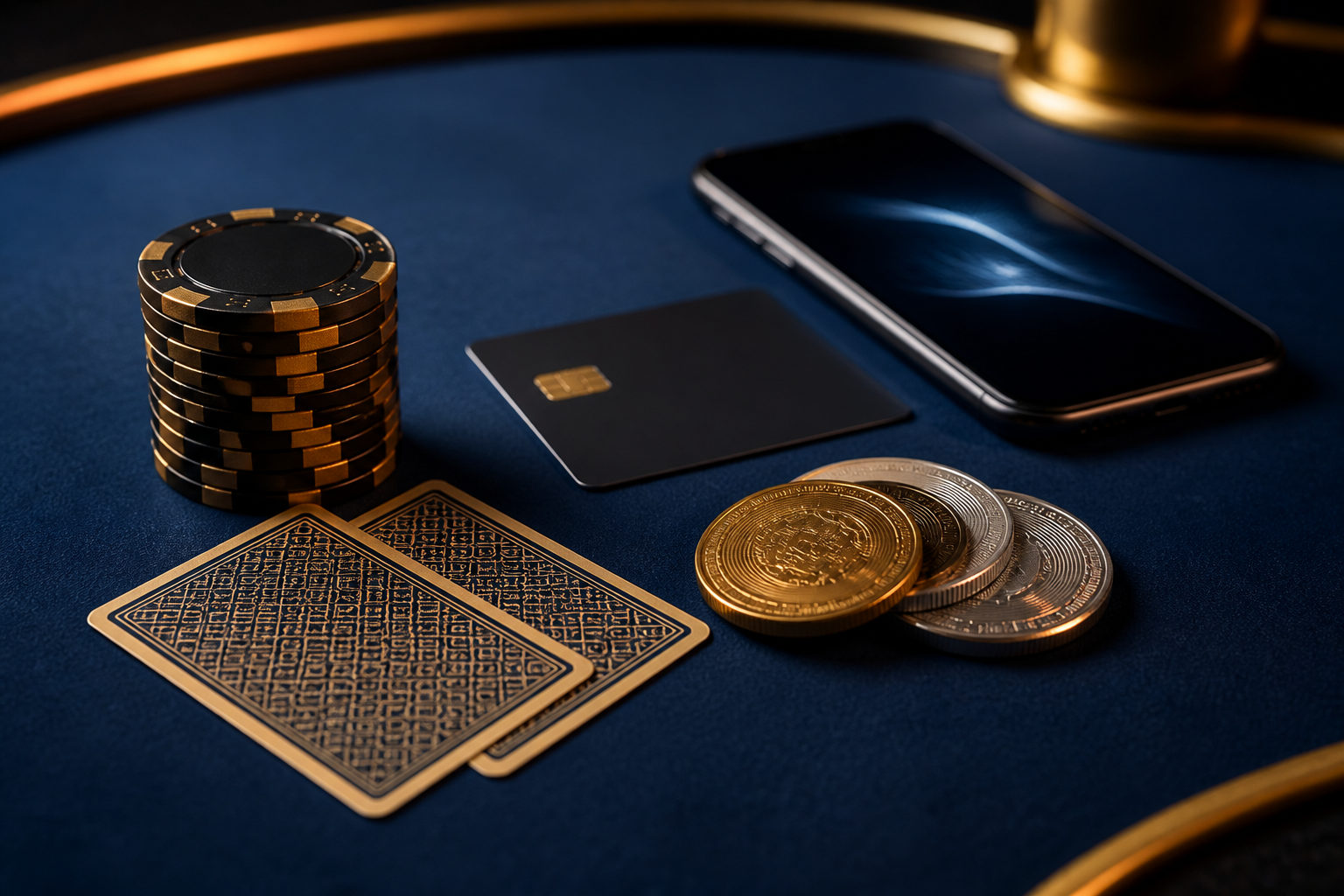
No. Bitcoin is not the only way to enter online poker. It is one payment option on some sites, while others also offer cards, e-wallets, bank transfers, or other cryptocurrencies depending on regional access, compliance checks, and cashier settings.
Why Bitcoin gets linked to online poker so often
The connection makes sense. Online poker often sits at the intersection of cross-border payments, account reviews, and withdrawal friction. When standard card processing is limited or inconsistent, Bitcoin becomes an obvious alternative because it lets users move value without relying on the same banking rails.
That still does not make it the sole route in. Many poker sites support more than one deposit method, but the set of methods shown to each player can change based on location, account status, and verification level. What a site mentions on a public page may differ from what appears inside the cashier after login.
Common ways to fund an online poker account
| Method | When it fits | Main advantage | Main drawback |
|---|---|---|---|
| Bitcoin | You already use a crypto wallet and the site accepts BTC | Useful for cross-border transfers | Price swings can affect value before play or withdrawal |
| Debit or credit card | The site has card processing in your region | Easy for most users to understand | Banks may decline gambling-related transactions |
| E-wallet | The poker room supports a third-party payment account | Familiar checkout flow | Availability varies by country and provider rules |
| Bank transfer | You prefer traditional account-based payments | Clear funding trail | Processing can take longer and paperwork may be heavier |
| Stablecoin | The site accepts crypto and you want less volatility | Value is easier to track during the transfer window | Network selection mistakes can still cause problems |
If your main goal is convenience, cards or e-wallets often feel more familiar. If your main goal is payment flexibility across borders, Bitcoin or stablecoins may look better. The key point is that a successful deposit alone tells you very little. You also need to know whether the same path works for withdrawals and whether identity checks can delay cashing out later.
Bitcoin can help, but it does not solve every access issue
A common misunderstanding is that owning Bitcoin automatically means you can play on any online poker site. In practice, access depends on several separate gates: whether the platform serves your region, whether your account passes verification, whether the cashier accepts your chosen network, and whether the site permits your payment method for withdrawals.
Another mistake is treating “crypto accepted” as shorthand for “Bitcoin required.” Some sites support several digital assets. Others mention crypto support but only enable a small set of coins or networks at the final payment step. For a player, the useful checks are much more specific: accepted asset, accepted network, deposit instructions, confirmation rules, and withdrawal policy.
| Checkpoint | What to confirm | What can go wrong |
|---|---|---|
| Regional availability | Whether the poker site serves your jurisdiction | You may register but still be unable to play or cash out |
| Account verification | Whether ID or proof of address is required | You deposit first and get blocked at withdrawal |
| Supported network | The exact blockchain or address format requested | A transfer sent on the wrong network may be hard to recover |
| Withdrawal route | Whether funds must return through the same method | Deposits work, but withdrawals become difficult |
| Fee structure | Platform, wallet, and network costs | The final usable balance is lower than expected |
If you do not want to use Bitcoin, how should you decide?
Start from the withdrawal side, not the deposit side. A payment method is only truly useful if it lets you move funds both ways under the site’s rules. Some players focus on how fast they can get money in, then discover later that their chosen method is restricted, name-mismatched, or unavailable for cashout.
After that, match the payment option to your own comfort level. Bitcoin works best for users who already understand wallets, addresses, and blockchain confirmations. Cards fit people who want to stay inside familiar banking interfaces. Stablecoins can reduce transfer-window volatility, but only if you are comfortable checking the correct chain and receiving format.
One more practical point: payment options often change inside the same site. Unverified users, newly opened accounts, and fully verified accounts may see different cashier menus. That is why copying another player’s setup is risky. The safer approach is to complete basic account checks first, inspect the cashier yourself, and test the full deposit-to-withdrawal path with a small amount before relying on it.
What actually matters more than the funding method
For most players, the real question is not whether Bitcoin is available. It is whether the site offers a complete, usable money flow for your situation. A workable setup has three parts: legal access in your region, a deposit method you can use correctly, and a withdrawal route that remains open after verification.
That is why “Can I use Bitcoin?” is only the first layer. You should also ask whether the account must be in your own name, whether the platform imposes extra review on gambling-related payments, whether crypto deposits trigger source-of-funds questions, and whether support can clearly explain the cashier rules. If those answers are vague, the funding method itself is not the main risk.
FAQ
Do all online poker sites accept Bitcoin?
No. Some poker sites only support traditional payment channels, while others offer Bitcoin alongside cards, e-wallets, or bank transfers. The list you see depends on the operator and, in many cases, your location and account status.
Can I play online poker without a Bitcoin wallet?
Often, yes. If a site supports card payments, e-wallets, or bank transfers in your region, you may never need Bitcoin at all. The better question is whether the site gives you a payment method that also works for withdrawal.
Is Bitcoin more private for online poker payments?
It can reduce the visibility that comes with card statements, but it does not remove identity checks at the poker site. If the operator requires verification, your account activity and submitted documents still matter.
If I deposit with Bitcoin, do I have to withdraw in Bitcoin too?
Sometimes yes, sometimes no. Some sites want funds returned through the same path or through an account in the same name, while others allow a different withdrawal method after review. Read the cashout rules before making your first deposit.
Is a stablecoin better than Bitcoin for poker deposits?
It may be better if your main concern is value stability during the transfer window. Even so, it only helps if the site supports that asset and you send it on the correct network.
Before joining an online poker room, check whether the site serves your region, what the cashier shows after verification, and how withdrawals are handled. Once those pieces are clear, the answer becomes straightforward: Bitcoin is one route into online poker, not the only one.
Responsible Gambling Notice: This article is for informational and educational purposes only and is not gambling, investment, or legal advice. Gambling carries a risk of losing your funds and is not legal in every jurisdiction. Check your local laws, be of legal age, and gamble responsibly; seek professional help if gambling becomes a problem.
Disclaimer: This article is for informational and educational purposes only and is not investment, financial, or legal advice. Crypto assets are highly volatile and you could lose your entire investment. Do your own research and decide carefully.