
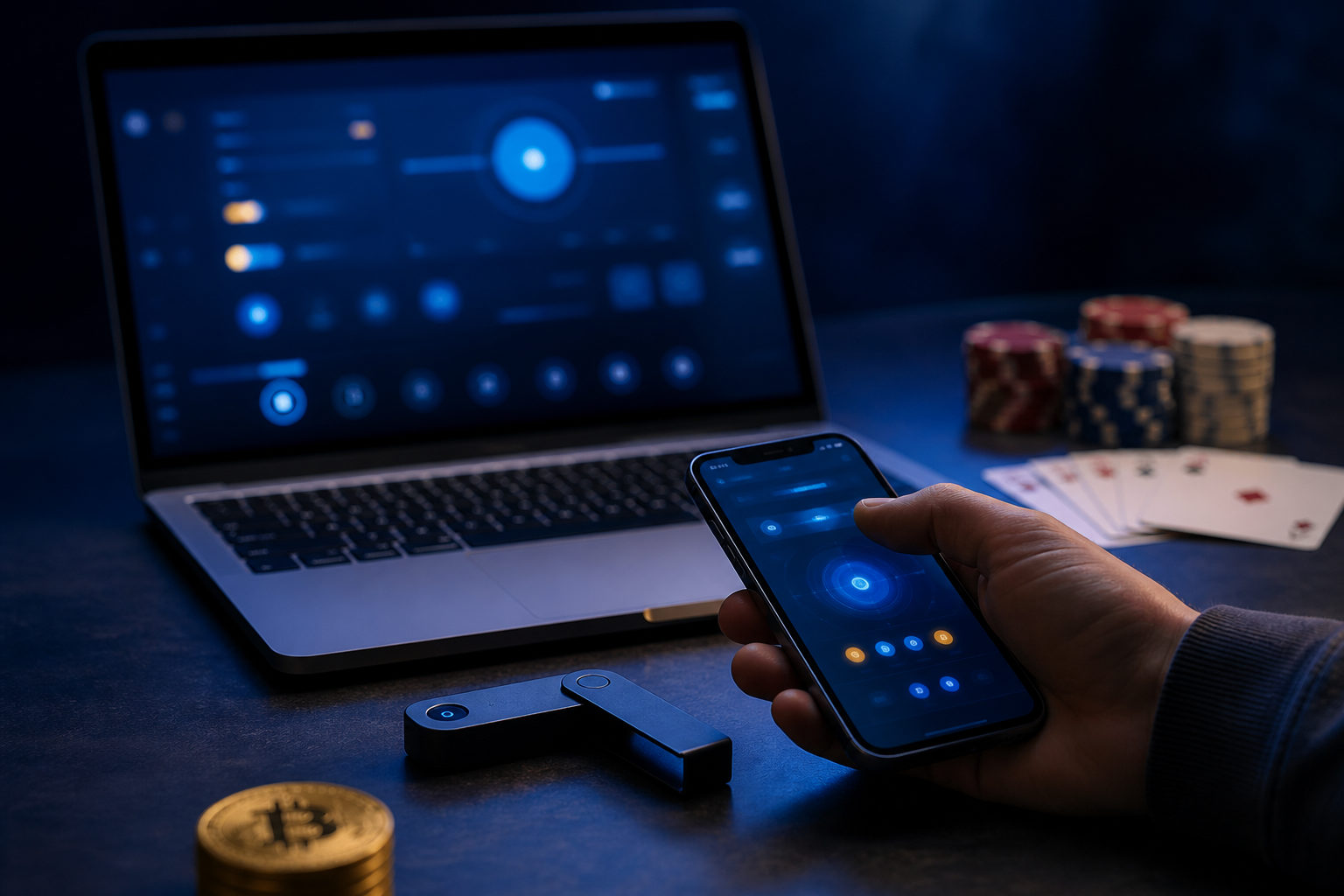
To deposit into online poker using Bitcoin, first confirm the site supports BTC on the exact network shown, then send a small test from a wallet you control, wait for the deposit record to appear, and only then send more if needed.
What to check before you send any BTC
A Bitcoin poker deposit can look simple: copy an address, paste it into your wallet, and send. The real mistakes usually happen before the transaction goes out. You need to know whether you are on the actual BTC deposit page, whether the site expects a specific network, and whether funds land directly in your poker balance or in a main wallet first.
You should also decide whether you are sending from an exchange account or from your own wallet. A transfer from a wallet you control is often easier to verify step by step, while an exchange withdrawal may add its own review process, timing, and interface quirks. In both cases, once the Bitcoin transfer is sent, there is usually no practical undo button.
| Checkpoint | What to do | Why it matters | What to watch for |
|---|---|---|---|
| Asset type | Confirm the page clearly says BTC | Prevents sending the wrong coin | Do not rely on icons alone |
| Network | Read the deposit instructions carefully | Matching the wrong network can block crediting | If unclear, do not send yet |
| Credit path | Check whether funds go to a main wallet first | Avoids false alarms about missing funds | Many users look only at the game balance |
| Minimum deposit rule | Review any deposit policy shown | Tiny transfers may not be handled as expected | A test transfer still needs to be meaningful |
| Account status | Make sure you are logged into the correct account | Stops deposits from going to the wrong profile | Extra care is needed with multiple accounts |
Step-by-step: how to deposit into online poker using Bitcoin
Step 1: Open the correct BTC deposit page
Go to the wallet, cashier, or deposit section and make sure you are looking at the Bitcoin deposit screen, not a withdrawal screen and not another coin. On many poker sites, wallet pages use similar layouts, so a quick click can put you on the wrong page without you noticing.
Keep your browser tabs under control while you do this. If you have several exchange, wallet, and poker tabs open at once, copy-paste mistakes become much more likely.
Step 2: Verify both the address and the network
When the site shows a deposit address, do not send right away. Check the address itself and the network requirement at the same time. If the site gives an address but the network instruction is vague, pause there and sort that out first.
Copy the address directly instead of typing it by hand, then compare the beginning and ending characters after pasting to make sure nothing was changed.
Step 3: Send a small test transaction first
If you plan to move a meaningful amount, split the process in two. Send a small test transaction from your own wallet, wait for the site to detect it, and use that first transfer to confirm that you chose the right page, copied the right address, and understood the site’s crediting flow.
The test should still be large enough to make the result visible and should respect any rule the site displays for deposits.
Step 4: Review the sending screen before confirming
Right before you hit send, read the details one more time on both sides. On the poker site, finish the deposit instructions instead of stopping at the address box. In your wallet, look over the recipient address, the network context, and the transaction summary shown on screen.
Some sites may show a pending status first or may require you to move funds inside the account after the deposit is recognized. Also, do not assume that a note inside your wallet app will mean anything to the receiving site.
Step 5: Track the deposit by record, not by guesswork
After sending, first confirm that the transaction was broadcast from your wallet or withdrawal source. Then return to the poker site and check the deposit history, wallet activity, or pending status page. Looking only at the playable balance can be misleading.
Save the transaction hash, amount, time, and screenshots while everything is still fresh.
| Step | Main action | Reason | Frequent mistake |
|---|---|---|---|
| Open deposit page | Confirm it is the BTC deposit screen | Avoids starting with the wrong asset | Using another wallet page by accident |
| Check address | Paste and compare visible characters | Reduces copy errors and address replacement risk | Trusting paste without verification |
| Check network | Match the sending and receiving side | Prevents crediting failures | Seeing BTC and sending immediately |
| Test first | Send a small trial deposit | Validates the full path | Sending the full amount first |
| Keep records | Save the hash and screenshots | Makes support requests easier | Closing everything with no proof saved |
The main risks to avoid
The biggest risk is a fake site. A scam page can imitate a real poker cashier closely enough that the address box looks normal, the branding looks familiar, and the user does not realize anything is wrong until the Bitcoin is gone. The safest habit is to access the poker room through your own verified path, not through random ads, chat messages, or unknown search results.
Another major risk is clipboard address replacement. Malicious software can watch what you copy and swap the destination address before you send. That is why the manual check of the first and last characters still matters, even if you copied the address directly from the site.
A different type of mistake comes from reading the deposit flow too fast. A transaction can be sent successfully and still not appear as a playable balance right away. If the site shows pending, processing, or wallet crediting status, do not rush into sending another transaction just because the poker balance has not changed yet.
| Risk | How it shows up | How to spot it | Best response |
|---|---|---|---|
| Fake poker site | The page looks authentic | Odd domain, login flow, or deposit page details | Use only a trusted access path |
| Clipboard replacement | The pasted address is not the same one shown | Beginning or ending characters do not match | Re-check before sending |
| Network mismatch | The transfer leaves but is not credited properly | The sending and receiving instructions do not align | Pause until the network is clear |
| Duplicate deposit | You send again because the balance looks unchanged | You checked only the game balance | Review deposit records first |
| Poor documentation | You cannot explain the issue later | No hash, screenshots, or timeline saved | Keep full records for every transfer |
Exchange withdrawal or personal wallet transfer?
Some players want to send BTC straight from an exchange to an online poker account. That can work in some cases, but it gives you less control over troubleshooting because the transfer path includes the exchange’s own withdrawal flow, timing, and account checks.
Sending from a wallet you control usually gives you a cleaner process. You can verify the address more carefully, run a small test deposit more comfortably, and review the transaction details without relying on another platform’s interface. If your goal is clarity and error control, a personal wallet often makes the deposit process easier to manage.
| Method | Advantage | Trade-off | Best fit |
|---|---|---|---|
| Direct from exchange | Fewer visible steps | Less flexible for troubleshooting | Users comfortable with exchange withdrawals |
| From personal wallet | Better control and clearer verification | Requires moving funds to your wallet first | Users focused on safety and process control |
FAQ
My Bitcoin deposit is not showing in the poker balance. Is it gone?
Not necessarily. First check whether the transaction exists on the sending side, then look at the poker site’s deposit history or wallet activity rather than the game balance alone. A site may detect a deposit before it marks it as playable funds.
If the record exists, gather the transaction hash, amount, time, and screenshots before contacting support. That makes the issue easier to trace.
Can I deposit Bitcoin into online poker directly from an exchange?
Sometimes you can, but that does not mean it is the safest option for every user. If you are not fully comfortable with withdrawal settings, network selection, and deposit status tracking, sending from your own wallet first is often easier to manage.
The key question is whether you can verify every detail before the transfer leaves, not whether the source is technically able to send BTC.
Why should I send a small test deposit first?
A test deposit checks the whole route with limited exposure. It tells you whether you opened the right deposit page, copied the right address, matched the network correctly, and understood how the site credits incoming Bitcoin.
That extra step can prevent a much larger mistake later in the process.
If I copied the address, do I still need to inspect it manually?
Yes. Copying helps, but it does not protect you from every problem. The address can still be pasted incorrectly, cut off, or replaced by malicious software.
Comparing the first and last visible characters takes only a moment and can stop an expensive error.
Does a successful Bitcoin deposit mean withdrawals will also be easy?
No. Deposit handling and withdrawal rules are separate matters. Before funding a poker account, read the site’s withdrawal terms, account verification requirements, and wallet policies so you are not surprised later.
If a site explains deposits clearly but stays vague about withdrawals, treat that as a warning sign and slow down.
When you actually deposit, keep the process narrow and disciplined: verify the page, verify the address, verify the network, send a test, and save your records before doing anything larger.
Responsible Gambling Notice: This article is for informational and educational purposes only and is not gambling, investment, or legal advice. Gambling carries a risk of losing your funds and is not legal in every jurisdiction. Check your local laws, be of legal age, and gamble responsibly; seek professional help if gambling becomes a problem.