
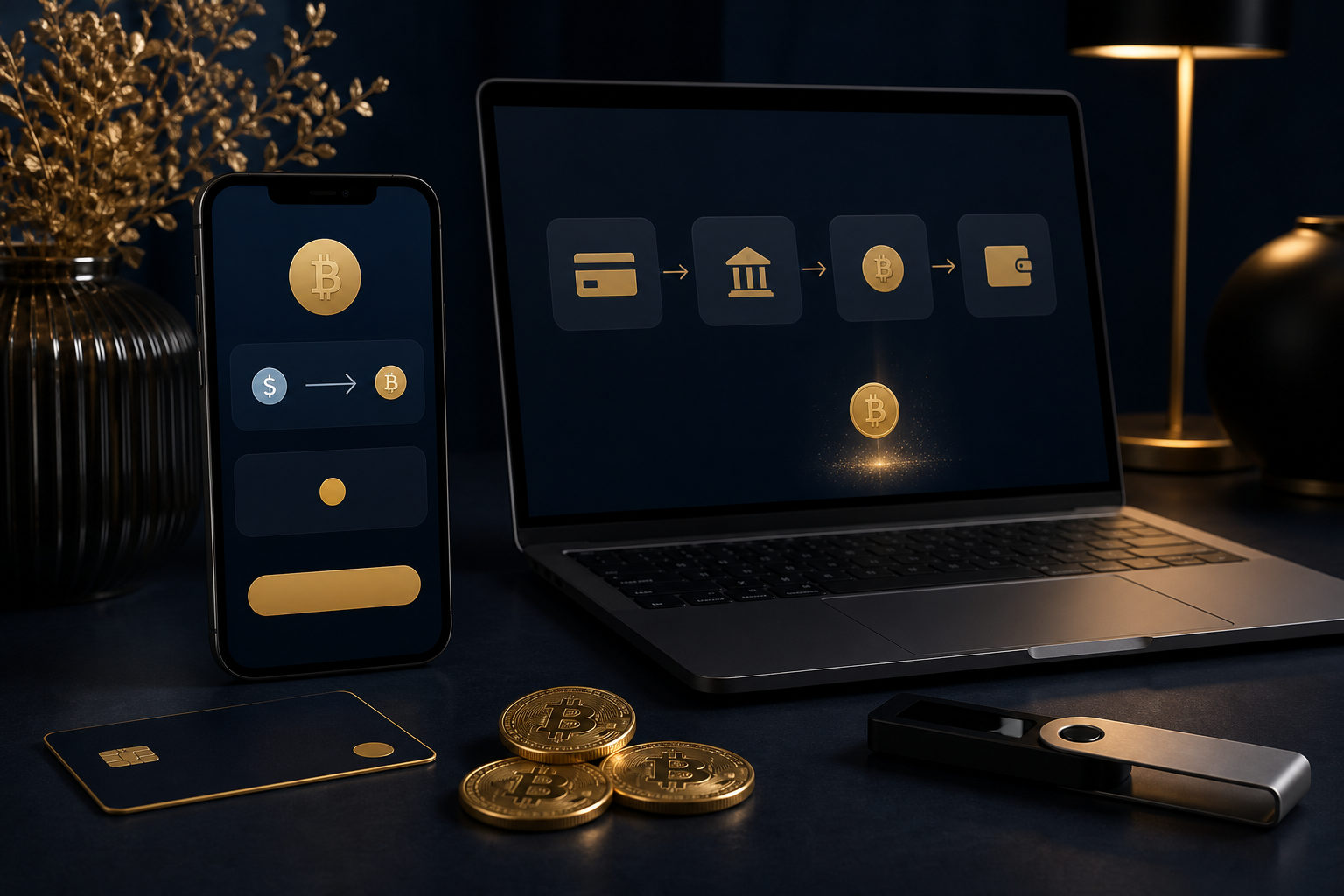
Yes, you can buy $20 worth of bitcoin because bitcoin is divisible and does not need to be bought in whole coins. The real question is not whether $20 is enough, but whether the service you use supports small orders, keeps fees clear, and gives you a safe way to hold what you buy.
Why $20 is enough to buy bitcoin
A lot of beginners assume bitcoin must be purchased as one full coin. That is one of the most common misunderstandings. Bitcoin can be split into very small units, and the smallest unit is one satoshi, which is one hundred millionth of a BTC. In practice, this means many services let you buy by dollar amount instead of by whole-coin quantity.
So if your budget is $20, the main issue is not access. It is efficiency. One service may allow a small purchase with a clear fee breakdown, while another may accept the payment but leave you with a poor result after charges, spread, or withdrawal limits. A small starting amount can still make sense, but only if you understand what happens before and after the buy button.
For many people, $20 works well as a learning budget. It lets you test the basic flow: opening an account, completing identity checks, placing an order, reviewing the filled amount, and deciding how to store your bitcoin. What it does not do well is absorb waste. With a small order, every fee matters more.
How to buy $20 worth of bitcoin, step by step
Step 1: Make sure you are buying actual bitcoin exposure you can understand
Before you pay, check what the product really is. Some services use BTC wording in ways that confuse new users. You may be looking at actual spot bitcoin, an internal balance entry, or a product tied to bitcoin's price without giving you direct control over the asset.
The reason this step matters is simple: if your goal is to own a fraction of bitcoin, you should know whether you can hold it, move it, or withdraw it later. Look for clear wording about BTC balances, withdrawals, and custody. If the page only talks about account value and avoids explaining transfer rights, slow down and read more before you continue.
Step 2: Choose a service that supports small purchases and explains the rules
When your budget is small, clarity matters more than flashy features. Look for a service that spells out its fees, payment methods, minimum purchase rules, identity verification process, and withdrawal policy in plain language. You do not need the most advanced trading tools for a first purchase.
There is a practical reason for that. A tiny order can be hit by several layers of cost: purchase fees, payment processing charges, spread, and later withdrawal costs. A service that says you can buy bitcoin is not automatically a good fit for a $20 test purchase. If the rules are hard to find, or if support pushes you into a private chat, walk away.
Step 3: Review the full cost before you place the order
Do not treat the payment screen as a formality. Check how much bitcoin you are expected to receive, whether the service shows a fee line, whether the payment method adds its own charge, and whether the pricing looks different between buy and sell screens.
This matters because small orders are especially sensitive to friction. You may start with $20 and still end up with a much smaller effective bitcoin position than expected once every cost is counted. A smart beginner focuses on net result, not just on the fact that the purchase went through.
It also helps to think one step ahead. If you may want to sell later or move the bitcoin to your own wallet, those actions can carry their own costs or restrictions. A purchase is not one isolated click. It is part of a full path.
Step 4: Set up your payment method, but keep control of every authorization
Many services allow payments through a card, an account balance, or another supported payment channel. Whatever method you use, confirm that the payment is being made inside the official app or website and that the account you are paying from is your own.
This is where many scams begin. Fraud often targets the payment step rather than the bitcoin step. Never send one-time codes to another person. Never let a stranger remotely operate your screen. Never agree to a “helper” who says they can buy for you if you transfer the money first. If someone asks you to install unknown software or move the conversation to a private channel, stop there.
Step 5: Complete verification on the official interface, then do a small test purchase
Some beginners try to avoid identity verification because it feels inconvenient. In many cases, that is a mistake. A service with a clear verification process is often easier to deal with later if you need to recover your account, review a blocked withdrawal, or respond to security checks.
The key point is where the verification happens. Submit documents only through the official interface. Do not send ID photos, login details, or selfies to someone claiming to be support in a messaging app. If the process keeps jumping to unrelated pages or becomes inconsistent, pause and confirm what you are being asked to do.
Step 6: After buying, verify the fill, the fees, and the balance
Once the order is done, check the result carefully. Did you buy by dollar amount or by BTC amount? Does the account show the bitcoin fraction clearly? Do the fees match what you saw before placing the order? If the service shows only an account value and not the BTC balance itself, you should investigate further.
Many user problems come from not understanding what was credited, not from a failed purchase. Save the confirmation screen, the fee details, and the transaction record. That makes it easier to compare services later and to catch mismatches while they are still fresh.
Step 7: Decide whether to leave it with the service or move it to your own wallet
If you are only using $20 to learn the process, leaving the bitcoin in the service account for a short time may be the simpler option. If your plan is to keep accumulating over time, you should start learning how self-custody works and what it asks from you.
The reason is straightforward: buying bitcoin and controlling bitcoin are related, but they are not the same thing. Before moving anything, learn how wallet backups work, how addresses are checked, and how test transfers reduce errors. Do not rush into withdrawal just because it sounds more advanced.
The costs and risks people overlook with a $20 bitcoin purchase
A small purchase feels harmless, which is exactly why many beginners drop their guard. The amount may be low, but the same mistakes can still happen: hidden fees, confusing products, weak account security, and direct fraud.
Fees can take a much bigger bite than you expect
With a large purchase, fees may feel easier to absorb. With $20, they can shape the entire outcome. The visible fee is only one part of the picture. Payment charges, spread, and later withdrawal conditions can all change how much bitcoin you really end up owning.
If a service makes the cost structure difficult to understand, that alone is a reason to skip it. Transparency is not a bonus feature for small buyers. It is a basic requirement.
A stranger offering to buy bitcoin for you is a major warning sign
Many scams follow the same pattern. Someone approaches you on social media, in a chat group, or through a comment thread and says they can help you buy bitcoin more cheaply or more quickly. Then they ask you to send money first, share a code, or let them guide the process on your device.
You do not need a stranger to buy bitcoin for you. You do not need a “teacher” to hold your funds in their wallet. If the setup depends on trust in a random person, it is the wrong setup.
Small purchases still need a withdrawal check
Beginners often think, “It is only $20, so I will figure out the rest later.” That approach can hide an important issue: some services let you buy but place limits or conditions on withdrawals that make the end result less useful than expected.
Even if you do not plan to move the bitcoin right away, check whether withdrawals are supported, what the rules look like, and whether the process is explained in a way you can follow. Future flexibility matters.
Price swings can trigger bad decisions even with a tiny amount
Bitcoin moves in price, and that can affect your behavior even when the amount is small. If you treat a $20 purchase as a quick trade instead of a learning exercise, you may start chasing moves, reacting emotionally, and ignoring the basic setup work that actually protects you.
A first purchase is a better time to learn process discipline than to guess short-term direction. Good habits tend to matter more than trying to time your entry perfectly.
How to judge a buying service without relying on platform recommendations
You do not need a list of platform names to filter out weak options. A simple checklist can remove many bad choices before you ever create an account.
Check whether the rules are easy to find
Start with the basics: fees, risk disclosures, withdrawal policy, account security information, and support channels. If that information is buried, vague, or inconsistent across pages, that is a problem.
Check whether the process stays inside the official environment
A normal flow should happen on the official website or official app: registration, verification, payment, and order placement. If you are pushed into a private chat, asked to install a file from an unknown source, or redirected to a suspicious payment page, stop immediately.
Check whether security settings are visible and usable
At a minimum, you should be able to set a strong password and enable extra verification. It also helps if login alerts, device management, and withdrawal confirmations are easy to find. Security should not be hidden behind guesswork.
Check whether the service encourages calm review or rushed action
A trustworthy buying flow usually gives you room to confirm the amount, the fee impact, and the account details. A questionable one often tries to rush you with countdowns, pressure, or promises of easy gains. Pressure is not a sign of quality.
What to do after the purchase so a small start stays safe
Buying is only the first part. Storage and account hygiene matter just as much. Many people put all their attention on the purchase itself and barely think about what comes next.
Custodial storage is easier at first, but you accept limits
Leaving your bitcoin with the service can be simpler for a first-time buyer. You do not need to deal with addresses, backups, or wallet setup on day one. That ease comes with trade-offs, since the service controls the environment and the rules that apply to your account.
If your only goal is to complete one learning purchase, that may be acceptable. If you expect to keep adding over time, it makes sense to start learning the basics of self-custody sooner rather than later.
Self-custody gives you more control, but also more responsibility
With your own wallet, you are responsible for safeguarding the critical recovery information. That can give you more direct control, but it also means mistakes become your problem to prevent. If you lose or expose what secures the wallet, help may be limited.
That is why beginners should not rush this step. Learn how backup phrases are stored, how wallet recovery works, how addresses are checked, and why a small test transfer is smart before moving larger amounts.
Basic safety actions you should take right away
- Use a unique, strong password for the account you use to buy bitcoin.
- Turn on extra verification so a leaked password is not enough to access the account.
- Do not allow remote access, screen sharing, or browser add-ons you do not fully understand.
- Keep records of your order confirmations and important security changes.
- If you receive a login or withdrawal alert, verify it only through the official app or site.
FAQ
Is $20 enough to start buying bitcoin?
Yes. A small amount can be a practical way to learn how bitcoin purchases work without making a large commitment. The main thing to watch is whether fees and restrictions make the test purchase worthwhile.
Do I need to buy one full bitcoin?
No. Bitcoin is divisible, so most services let you buy a fraction based on a dollar amount. You should still confirm that the service shows your BTC balance clearly and supports the kind of ownership you want.
Why does $20 sometimes turn into a much smaller bitcoin amount than expected?
The usual reasons are fees, spread, and payment costs. Small purchases feel these costs more sharply, so you need to look at the net bitcoin received rather than just the amount paid.
Should I move my bitcoin to my own wallet right away?
Not if you do not yet understand wallet backups and address checks. It is better to learn the process first and use a small test transfer than to rush and make a preventable mistake.
Can I trust someone online who offers to buy bitcoin for me?
You should be very careful. If the offer involves sending money to a person, sharing codes, giving screen access, or installing unknown software, it is a serious risk. Buying through a normal, self-directed process is usually much safer.
If you want to start with $20, the most useful approach is to compare the rules first, make one small test purchase, and review every step yourself: the fees, the BTC balance, the withdrawal options, and the security settings. Keep control of the payment, the account, and the storage decisions from start to finish.
Disclaimer: This article is for informational and educational purposes only and is not investment, financial, or legal advice. Crypto assets are highly volatile and you could lose your entire investment. Do your own research and decide carefully.