
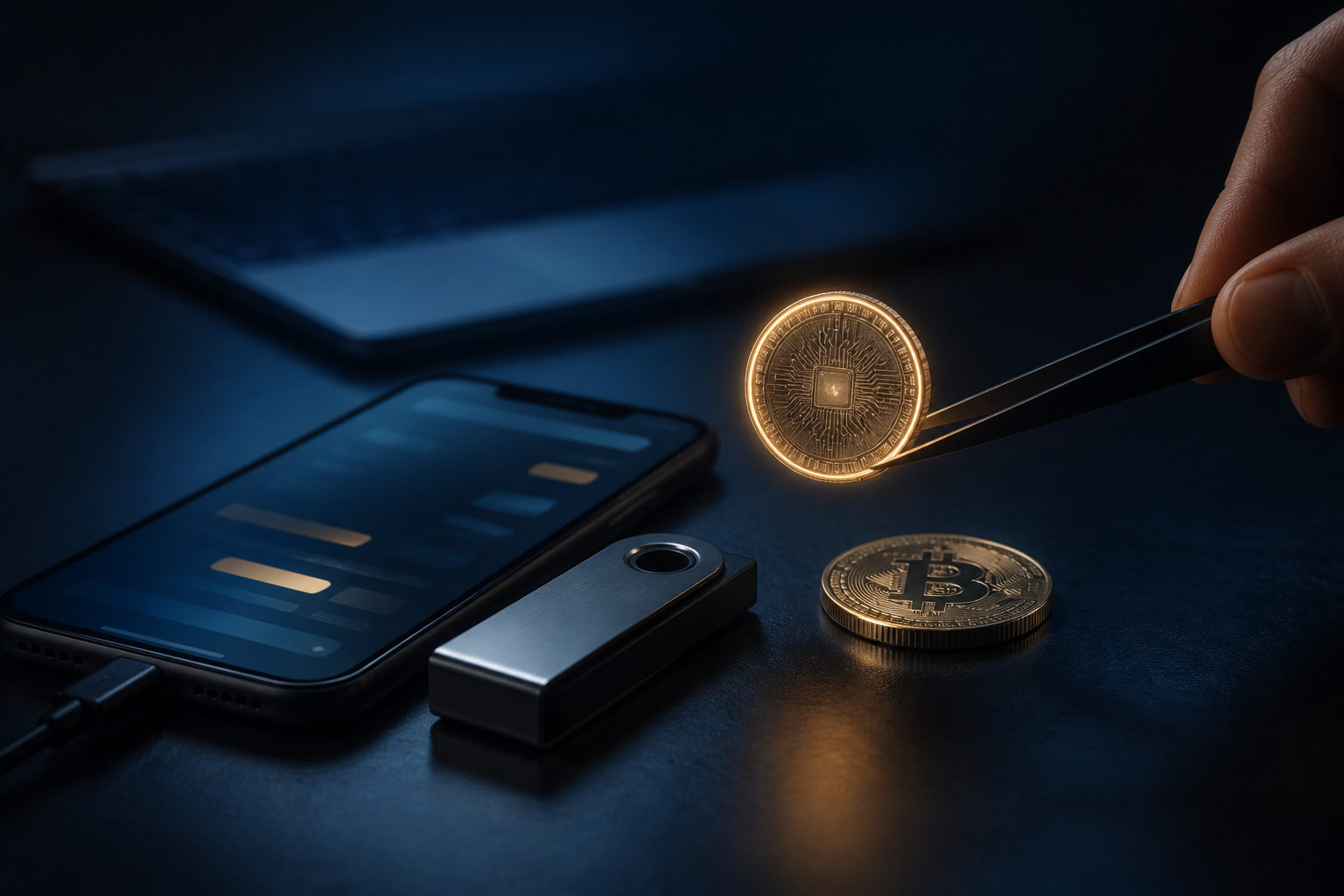
To buy Bitcoin Ordinals safely, start with a wallet that can receive inscriptions, confirm exactly which on-chain asset you are purchasing, and use a small test before sending the full payment.
Know what you are actually buying
Bitcoin Ordinals transactions usually involve inscriptions. They live on the Bitcoin network, but they should not be treated like a simple balance transfer. When you buy one, the key question is not only whether BTC moves, but whether the specific inscription you intended to purchase ends up under your control.
That distinction matters because many listings are built around preview images, collection names, or marketplace presentation. A screenshot, thumbnail, or collection banner is not proof of the exact asset that will be delivered. Before you pay, make sure the seller or marketplace clearly identifies the inscription itself, explains whether you will receive it directly on-chain, and states whether you can withdraw it to your own wallet after the purchase.
It also helps to separate three different things that are often blurred together: the artwork or media you can see, the marketplace record that says you own something, and the actual on-chain inscription. If a listing is clear about the first two but vague about the third, you do not have enough information yet.
Step 1: Set up a wallet that can handle inscriptions
Do not rush into a purchase with the same wallet setup you use for routine BTC payments. A cleaner approach is to create a separate wallet or account for Ordinals activity so your inscription holdings are not mixed with everyday Bitcoin use. That reduces the chance of accidental transfers later.
When checking wallet compatibility, focus on practical support rather than marketing language. You want a wallet that clearly supports Taproot addresses, can recognize inscriptions, and lets you inspect transaction details. A wallet that only shows your BTC balance may leave you guessing whether the inscription arrived or which output should stay untouched.
Backup comes before funding. Write down the recovery phrase, confirm that you understand the restore process, and avoid relying on one device alone. Self-custody means you are responsible for access. If your recovery method is incomplete or untested, the purchase itself is the easy part; asset recovery after a problem is the hard part.
If the wallet supports labeling, use it. Mark the account for inscriptions and keep it separate from your general spending wallet. That small bit of organization can prevent confusion when you later review outputs or move funds.
Step 2: Fund the wallet with room for a test
Before buying Bitcoin Ordinals, you need BTC in the receiving wallet. One common mistake is sending the entire budget at once or leaving only enough BTC to cover the expected purchase amount. Network fees still matter, and some trading flows include extra steps that may require a little flexibility in your balance.
A better routine is to send a small amount first, check that the address works, confirm the wallet displays the incoming funds properly, and only then add more for the intended purchase. This gives you a real-world verification of your setup before the higher-stakes transaction begins.
During funding, basic security checks still matter. Clipboard malware can swap addresses. Search results can lead to fake sites. Direct messages can pretend to be support staff and push you to move fast. After copying an address, compare the beginning and end. If your device feels compromised or cluttered, move to a cleaner environment before continuing.
Speed pressure is often part of the trap. A seller claiming that a listing will vanish any second may be trying to make you skip verification. If a purchase only works when you stop checking details, that is already useful information.
Step 3: Evaluate the trading route before the item
You will usually see two broad ways to buy Ordinals: through a marketplace with listing and settlement tools, or directly from a holder in a peer-to-peer deal. The marketplace route often provides a more structured flow. Peer-to-peer deals can be more flexible, but they shift much more of the verification burden onto you.
Whichever route you use, read the delivery rules first. Will the inscription be sent directly to your on-chain address after payment, or will it sit inside a platform account until you withdraw it? If withdrawal is separate, what steps are required, and when do you actually gain control? A polished listing page is less important than a clear answer to that question.
Be cautious when a venue emphasizes hype while staying vague on mechanics. If the page talks heavily about rarity or community interest but does not clearly explain asset identification, order status, and delivery flow, treat the missing detail as a risk signal rather than a minor inconvenience.
Step 4: Verify the inscription itself
The preview is not the purchase. Before sending payment, review the asset details closely enough to understand what the seller is committing to deliver. You want the listing to point to a specific inscription in a way that is hard to confuse with another item from the same series.
Useful checks include whether the inscription is identified clearly, whether the collection and individual item description match, whether the content type is shown, and whether the seller states that the delivered asset is this exact inscription. If all you have is a social post, cropped image, or forwarded screenshot, you still lack a reliable basis for payment.
Copycat collections are another problem. Similar names, near-identical visuals, and misleading ordering can all push buyers into mistakes. If a project name is popular, rely on the detailed asset page and the delivery record, not the collection branding alone.
Step 5: Use a small test before the full purchase
Once the wallet, trading route, and target inscription are all confirmed, move to payment carefully. A small test is especially useful if this is your first time using a given marketplace or if the trade is direct with another person. The purpose is simple: verify that the receiving setup works, confirm both sides are referring to the same asset, and make sure the order flow behaves as expected.
After the test, complete the main transaction. This sequence can catch errors that are easy to miss in a rushed purchase, such as using the right address for the wrong item or misunderstanding what the seller planned to deliver. During the final payment, avoid switching between multiple devices and copying different addresses back and forth. That is how test details and live details get mixed up.
If a seller asks you to send BTC to a personal address first and promises to deliver the inscription manually afterward, increase your caution sharply. Once a Bitcoin transfer is confirmed, your leverage is limited. In a direct deal, trust assumptions should be low unless the process itself gives you something concrete to verify.
Step 6: Confirm control after delivery
After you receive the Ordinal, do not rush to move it again. First check whether the wallet shows the expected inscription and whether the receiving record matches the address you provided. If your wallet has weak display features, inspect whatever transaction details it does support before doing another on-chain action.
A common mistake happens right here: the buyer receives the asset, then immediately forwards it to another wallet without confirming how that wallet handles inscriptions. If you have not reviewed the transfer behavior, you may create avoidable confusion or move outputs without understanding the consequences.
If you plan to hold the inscription for a longer period, keep that account separate from ordinary BTC activity. A dedicated setup makes later management easier because you are not mixing casual payments with assets that require more careful handling.
Common scams and user mistakes
- Fake marketplace pages: scam sites are pushed through ads, messages, or lookalike domains and then ask for wallet connections or signatures.
- Confusing media with the asset: the image is shown clearly, but the actual inscription being sold is not identified with equal clarity.
- Pay first, delivery later: without a reliable process, the buyer takes most of the risk.
- Mixing inscription storage with daily BTC use: that raises the chance of accidental transfers later.
- Following social hype alone: popularity does not guarantee a transparent trading flow.
FAQ
Do I need a separate wallet to buy Bitcoin Ordinals?
You do not always need a different brand of wallet, but using a separate account or setup is a strong safety measure. It keeps inscription handling away from normal BTC spending and makes mistakes easier to spot.
How is buying an Ordinal different from sending regular Bitcoin?
Regular BTC transfers focus on value moving from one address to another. Ordinal purchases also require you to confirm that the exact inscription you wanted was the one delivered and remains under your control.
Is peer-to-peer buying cheaper?
It can be, but lower friction does not mean lower risk. In a direct trade, you need to judge the seller, the delivery sequence, and the consistency between the conversation and the on-chain result.
Why can I see BTC in my wallet but not the inscription?
That often comes down to wallet display support rather than a failed delivery. Check whether the wallet can show inscriptions and review the transaction details before assuming the asset is missing.
Can I move the Ordinal to another wallet right away?
Only do that after confirming the destination setup can recognize and manage inscriptions safely. A hurried transfer can create problems that were not present when the asset first arrived.
What is the safest way to buy Bitcoin Ordinals?
The safest routine is methodical: verify the wallet, confirm the asset identity, understand the delivery path, and run a small test before the main payment. None of those steps are hard, but skipping one removes a layer of protection you may need later.
Before placing any real order, write your own checklist with the receiving wallet, address, inscription details, delivery method, and test plan. Following a fixed sequence reduces distraction and makes it harder for urgency or hype to push you into a bad trade.
Disclaimer: This article is for informational and educational purposes only and is not investment, financial, or legal advice. Crypto assets are highly volatile and you could lose your entire investment. Do your own research and decide carefully.