
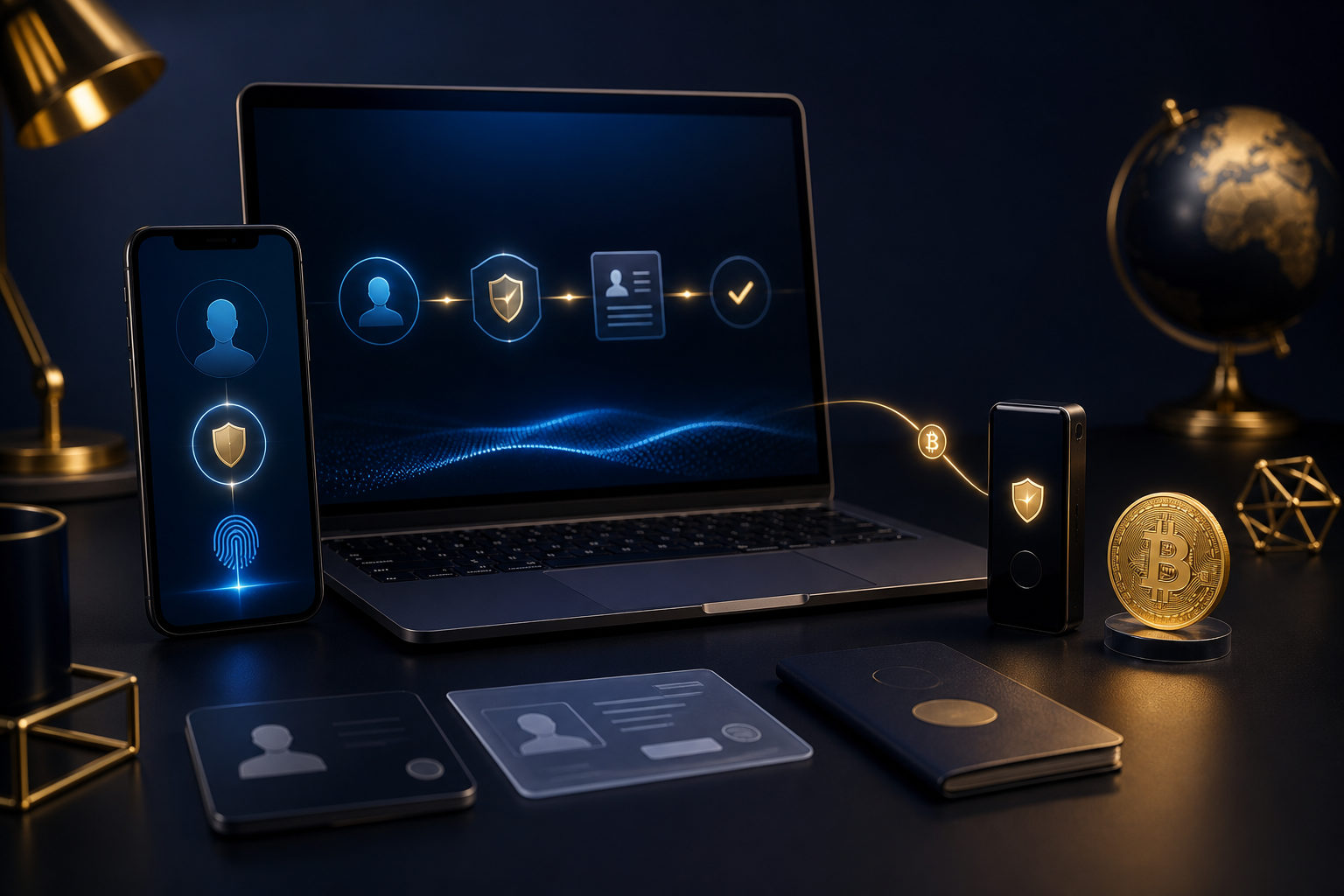
To open a bitcoin account, you usually need either an exchange account for buying and selling or a bitcoin wallet for holding and sending coins. The right first step depends on which of those you actually need.
What people mean by a “bitcoin account”
When people search for how to open bitcoin account, they often mean one of two things. Some want a place to buy bitcoin with regular money. Others want a tool that can receive, store, and send bitcoin under their own control.
That distinction matters. An exchange account is mainly a service account with a trading platform. A wallet is a storage and transaction tool tied to private keys, backup phrases, and bitcoin addresses rather than a bank-style account number.
Steps to open a bitcoin account
The process is simple on paper, but skipping the security setup causes many of the problems beginners run into later. A better approach is to build the account first, lock it down, and only then move funds.
- Choose the account type: decide whether you need an exchange account, a wallet, or both. If your first goal is to buy bitcoin, an exchange may be the easiest starting point. If self-custody matters to you, prepare a wallet as well.
- Register or install: create your account with an email address or phone number, or install a wallet app and set it up. Use a unique password rather than one you already use elsewhere.
- Complete identity checks if required: many regulated exchanges ask for identity verification before they allow full account features. Wallet software itself may not require that, though buying services connected to a wallet still can.
- Turn on two-factor authentication: do this before adding money if possible. An authenticator app is often preferred over relying only on text messages.
- Back up wallet recovery details: if you create a self-custody wallet, you will receive a recovery phrase or private-key-based backup. Keep it offline and private. Anyone with that information may be able to control the bitcoin.
- Test with a small transfer: before moving a meaningful amount, send or receive a small amount first. That helps confirm the address, network, and process are all correct.
Exchange account vs wallet: which one should you open?
Many guides blur the difference, which is why beginners keep asking the same question in different words. The choice becomes easier if you match the tool to the job.
| Goal | Better fit | Why |
|---|---|---|
| Buy or sell bitcoin quickly | Exchange account | Trading tools and account funding are built in |
| Control your own bitcoin | Wallet | You manage the keys instead of leaving custody with a platform |
| Keep things simple at the start | Exchange first | It reduces the number of moving parts for a first purchase |
| Plan to hold for a long time | Use both | Buy on an exchange, then move coins to a wallet you control |
It also helps to drop the banking analogy. Bitcoin itself does not open an account in your name the way a bank does. Control comes from access to keys, backup phrases, and addresses.
Security mistakes beginners make after opening one
Opening the account is only the start. Many losses happen later because people treat the setup as finished once registration is done.
- Never share your recovery phrase: support staff should not ask for it, and no legitimate helper needs it to “fix” your wallet.
- Do not rely only on screenshots: images stored on connected devices can be exposed through cloud sync, malware, or account compromise.
- Check the destination carefully: review the address before every transfer, especially the first withdrawal from an exchange to a wallet.
- Secure your email too: exchange accounts are often attacked through the email account behind them.
- Know the custody model: if funds stay on an exchange, the platform handles custody. If you move them to your own wallet, the responsibility shifts to you.
A common misunderstanding is that buying bitcoin on a platform means full control right away. That is not always true. Full control is closer to reality when you hold the wallet backups or private keys yourself.
FAQ
Do I need ID to open a bitcoin account?
If you use a regulated exchange, identity checks are common before full access is granted. If you only create a wallet, the software may not ask for ID, but services connected to buying or cashing out still might.
Is a bitcoin account the same as a wallet?
No. An exchange account is mainly for access to a service that lets you trade or hold bitcoin with the platform. A wallet is the tool that lets you receive, store, and send bitcoin using keys you control.
Should I open an exchange account or a wallet first?
If your immediate goal is to make your first purchase, an exchange account is often the easier starting point. If self-custody is your priority, create a wallet early and learn how backups work before moving funds.
Can I receive bitcoin right after opening the account?
A wallet can usually generate a receiving address as soon as setup is complete. With an exchange account, it depends on whether deposit functions are active and whether any verification steps are still pending.
What happens if I forget my password?
For an exchange account, password reset options are usually available. For a self-custody wallet, losing both the password and the recovery backup can mean losing access, which is why the backup step matters so much.
Before you fund anything, choose the right type of bitcoin account, enable two-factor authentication, store wallet backups offline, and run a small test transfer. Those actions prevent many of the mistakes new users make in the first week.