
To pay for Apollo Group TV with Bitcoin, use the official checkout flow, verify the BTC payment details carefully, send the transaction from a wallet you understand, and keep proof after payment. The biggest risk is not speed. It is sending coins to the wrong address, a fake support contact, or the wrong asset.
Start by confirming that Apollo Group TV actually accepts Bitcoin
Your first move should be inside the normal subscription or checkout process. Look for a clear Bitcoin payment option on the billing page, checkout page, or account area tied to your order. Do not begin with a random tutorial, a social media post, or a message from someone claiming they can “help you pay.”
This matters because Bitcoin payments are usually irreversible once broadcast to the network. If a scammer gets you to send BTC to a personal wallet, there may be no practical way to pull it back. That makes pre-payment verification more important than any wallet trick or shortcut.
Check that you are signed in to the correct account, that the order details match what you intend to buy, and that the page has not pushed you onto a strange domain. If the only payment instructions appear in chat or email and do not also appear in the official order flow, stop there and verify before doing anything else.
Verify the payment details before you touch the send button
If Apollo Group TV offers BTC payment, the next job is to inspect the payment instructions. Confirm the asset is actually Bitcoin, confirm the receiving address is complete, and confirm whether the order requires an identifier such as an invoice reference or payment note.
A large share of crypto payment mistakes come from users following a valid process with invalid details. A merchant may support several coins. If you send BTC when the request is for a different asset, or if you ignore a required order reference, the merchant may have trouble matching the payment to your subscription.
Copy the address directly from the order page if possible. Avoid typing a long wallet address by hand, and do not trust an address shown only in a screenshot. After copying it, compare the beginning and end of the address, then look again at a few characters in the middle. Clipboard malware can replace a copied address with one controlled by an attacker.
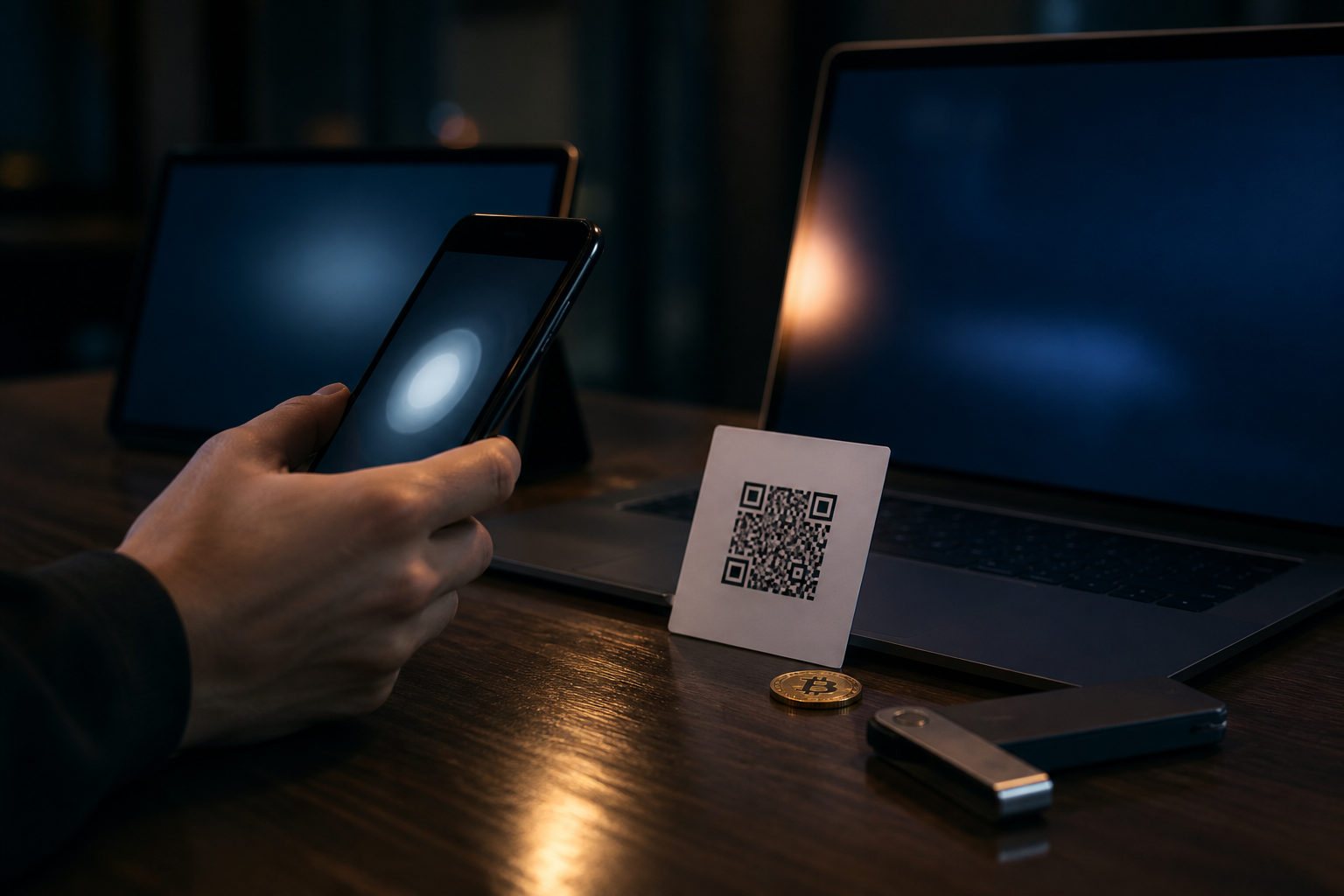
If the page shows a QR code, scanning it is only the start. You still need to read the wallet confirmation screen and verify the destination and asset there as well. A QR code can point to the wrong place just as easily as pasted text can.
Choose a wallet that lets you send clearly and check records later
Before payment, you need a wallet that can send BTC and show you what is happening. A useful wallet should make it clear whether you control the seed phrase or private keys, whether the send screen displays the network and fee settings in a readable way, and whether transaction history is easy to review later.
That is important because if the order does not update, you will need to identify the exact transaction quickly. A wallet that hides the transaction record or makes it hard to find the transaction hash can turn a simple support request into a long back-and-forth exchange.
Also make sure the balance you plan to use is actual BTC, not another asset with a similar name. Read the send screen closely so you know which balance is being used, what fee is being charged, and where you will see the transaction status after submission.
Some users prefer to send directly from an exchange account to the merchant. That can work, but it adds another layer when something goes wrong. Exchange withdrawal reviews, internal delays, and limited record visibility can complicate support. If you are new to Bitcoin payments, moving funds to a wallet you control before paying often makes the process easier to follow.
Send the payment in a fixed order and avoid mid-process changes
When you are ready to pay, import or paste the receiving address first, enter the amount requested by the merchant, review the fee setting, and then confirm. If the order page gives a specific amount or a payment window, follow those instructions exactly. Do not improvise because you saw a different market quote elsewhere.
A fixed sequence lowers the chance of mistakes. Problems often happen when someone verifies the address, leaves the page to ask a stranger for help, copies the address again, edits the amount, and then rushes through the final screen. Every extra switch increases the chance that something changed without being noticed.
It also helps to understand what the fee does. The Bitcoin network fee affects how the transaction is processed by the network. It is not a service charge paid to Apollo Group TV. If the fee is set too low, confirmation may take longer. If it is set much higher than needed, you usually only spend more on the transaction itself.
If the merchant’s process allows it, a small test payment can be useful when you are dealing with an unfamiliar address for the first time. Send a small amount, confirm that the order system can recognize it, and then complete the rest. If the merchant requires one exact payment, then the address, amount, and any order reference deserve one more careful review before you submit.
Right before final confirmation, read the address again, check the unit of the amount, and confirm that any reference tied to the order is present. After sending, wait for the wallet to generate the transaction record. Do not fire off a second payment just because the merchant page has not refreshed yet.
Keep the right proof after payment
Once the transaction is sent, save the order screen, the wallet record, the transaction hash, and the payment instructions shown at the time. These records help when the order is not credited automatically, when support asks for manual verification, or when you want to trace what happened later.
There is a firm boundary here: save transaction-related proof, but never share your seed phrase, private key, one-time security code, or wallet recovery details. Real payment verification does not require control over your wallet. Anyone asking for that is asking for access to your funds, not proof of payment.
If someone claiming to be support tells you to install remote access software, import your wallet somewhere else, or send BTC to a “verification address,” treat that as a major warning sign. There is no normal checkout step that requires you to move coins again to prove ownership.
If the order is not marked paid, check the chain first
If Apollo Group TV does not show the payment as complete, open your wallet and inspect the transaction status. Has it been broadcast? Is there a transaction hash? Does the wallet show it as pending or confirmed? If the chain has not processed the transaction yet, the merchant may not be able to credit it on their side.
Next, look at the order itself. Some orders expire if payment is not recognized within a certain window. If that happens, a later-arriving transaction may need manual review. Avoid placing a fresh order and paying again unless you are sure the first payment never left your wallet. Duplicate payments are a common self-inflicted problem.
When you contact official support, provide only the information needed to identify the transaction: order number, payment asset, receiving address, transaction hash, and the status you can see. A short but precise message is more useful than a vague complaint that simply says you already paid.
Main scam patterns to watch for before you send
- Fake support contacts: someone in chat, email, or social media gives you a different address and promises faster activation or a discount.
- Impersonation pages: a site that looks similar to the real one but shows a wallet controlled by an attacker.
- Wrong asset confusion: you assume any asset with “Bitcoin” in the name will work for a BTC payment request.
- Clipboard replacement: the address you copied is switched before you paste it into your wallet.
- Duplicate sending: the first payment is still pending and you send a second one out of anxiety.
These risks are best handled through discipline, not guesswork. If payment instructions appear outside the official order flow, if someone pressures you to move the conversation off-platform, or if anyone asks for wallet recovery information, stop the payment and verify everything from the beginning.
FAQ
Can I pay Apollo Group TV with Bitcoin straight from an exchange account?
You may be able to, but it can make troubleshooting harder if the order is not credited quickly. For many users, sending from a wallet they control gives clearer records and a cleaner path for later verification.
How long does a Bitcoin payment take to show as complete?
That depends on network confirmation and the merchant’s own crediting process, so there is no single answer here. What you can check first is whether the transaction was broadcast, whether it has a hash, and whether the order is still active.
What if I send Bitcoin to the wrong address?
In many cases, recovery is difficult or not realistic. That is why address verification before payment matters much more than trying to fix a bad transfer after the fact.
Why would the merchant ask for an order reference or payment identifier?
It helps connect the on-chain payment to your specific subscription order. Even if the BTC reaches the correct destination, missing reference details can slow down or block automatic matching.
Where should I check the live Bitcoin price before deciding to pay?
You can check a major market data site, your wallet service, or the trading service you use. When it is time to pay, follow the merchant’s order instructions rather than substituting a number you saw elsewhere.
When you actually do this, slow down at the points that matter: confirm the official order page, verify the BTC address, review the wallet send screen, and save the transaction hash after payment. If any one of those steps looks off, pause there instead of trying to finish fast.