
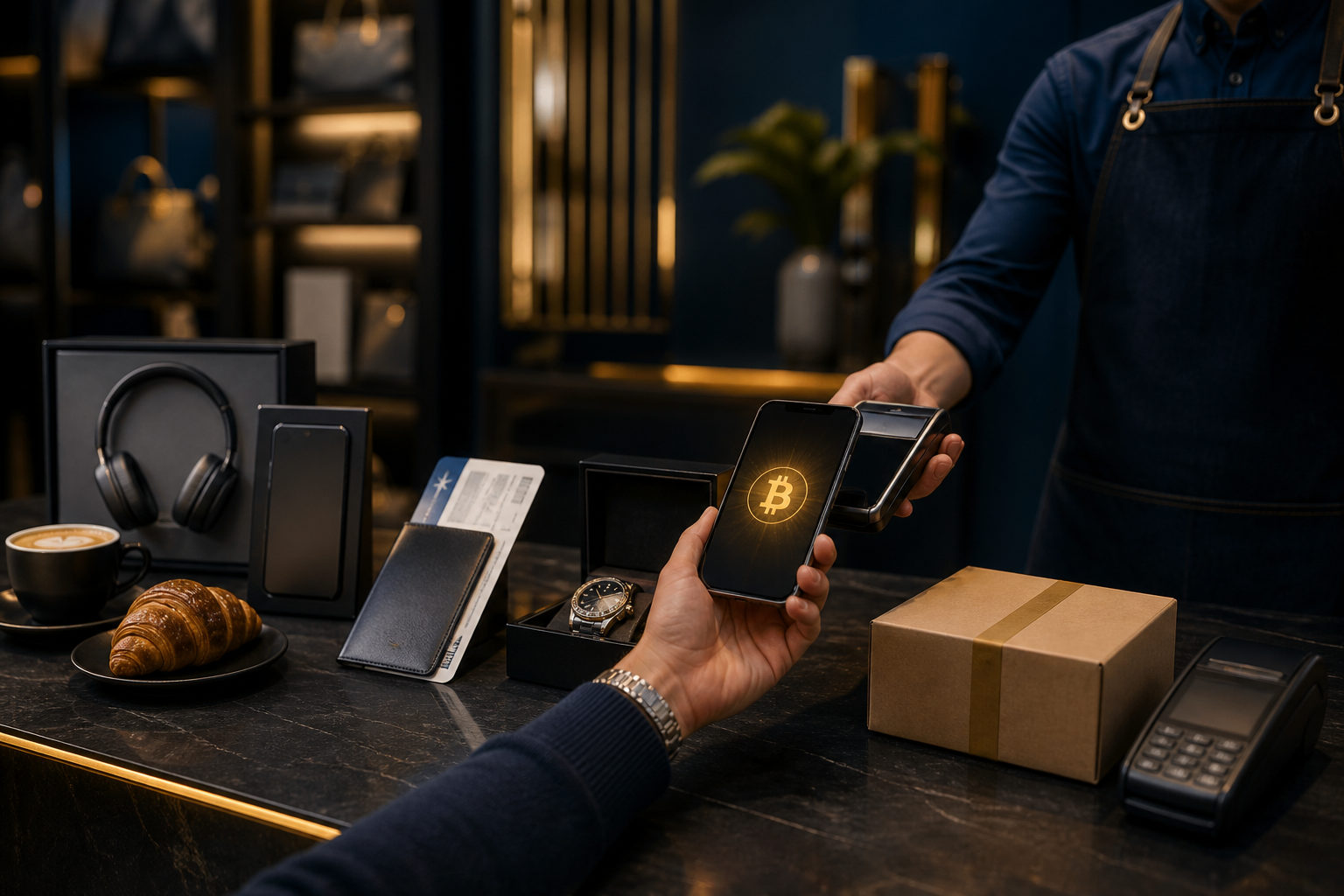
As of August 2, 2026, Bitcoin trades at $62543. What can you buy with bitcoin today? In practice, the answer depends less on the price itself and more on whether a merchant accepts BTC directly, uses a crypto payment processor, or can be reached through gift cards.
Bitcoin price and market snapshot
According to CoinGecko and alternative.me data, the public market figures for BTC on that date are listed below. These numbers show the asset's market status, but they do not tell you by themselves where Bitcoin is accepted as a payment method.
| Metric | Value |
|---|---|
| Price | $62543 |
| 24-hour change | -0.63% |
| Market cap | about $1.25 trillion |
| Fear & Greed Index | 27 (Fear) |
| Data time | August 2, 2026 |
For spending use cases, the daily move and sentiment reading matter mainly because they can affect checkout timing, quote locks, and whether a seller chooses to convert incoming BTC into dollars right away.
What can you buy with bitcoin today: the main categories
Bitcoin spending is real, but it is uneven. You are more likely to find acceptance in categories where delivery is digital, settlement is easy to automate, or a third party can stand between the buyer and the final merchant.
Digital goods and online services
This is one of the clearest places where BTC spending makes sense. A seller can automate checkout, detect incoming payment, and release access after payment is recognized. That structure works well for software access, subscriptions, memberships, downloadable products, and other online services.
The key detail is not a logo on a landing page. What matters is whether the checkout page actually offers BTC, whether it gives you a wallet address or QR code, and whether the order expires if payment is not completed within the stated window.
Gift cards and indirect purchases
Many buyers use Bitcoin indirectly. Instead of paying the target merchant in BTC, they first buy a gift card and then use that card in the store or service they want. This expands the list of things you can buy with Bitcoin because the final merchant does not need to accept crypto at all.
This route is practical, but it comes with limits. Gift cards may carry region restrictions, usage conditions, partial-balance rules, or support policies that differ from the store where the card is spent. If you use BTC this way, those terms matter as much as the payment itself.
Physical products and some in-person payments
Some merchants do accept BTC for physical goods, especially online sellers serving global customers or businesses already active in the crypto sector. A smaller number of local shops may also accept Bitcoin through QR-based payment flows, though coverage is far from universal.
For physical goods, payment acceptance is only one part of the order. Shipping destination, identity checks, fraud review, and stock availability can still stop the purchase from going through, even after a merchant says it supports Bitcoin.
Travel, tickets, and service bookings
Bitcoin can also be used in some booking and service contexts. In these cases, the platform may take BTC first and settle with the final provider later. That means the user sees Bitcoin as the payment method, while the back end runs on a different settlement process.
The practical issue here is cancellation policy. A platform may accept BTC for a booking, but the refund path may depend on timing, provider rules, or internal review. Before paying, check how cancellations are handled rather than assuming the reverse process will be simple.
What really determines usability: the payment path
When people ask what can you buy with bitcoin today, they often mean whether Bitcoin works like a normal spending tool. It can, but not in one single way. The spending path usually falls into one of several models.
- Direct BTC acceptance: the merchant takes Bitcoin in its own checkout process.
- Processor-based checkout: the merchant accepts crypto on the front end while a service handles conversion and settlement.
- Gift card route: BTC is used to obtain a spending instrument accepted elsewhere.
- Manual payment confirmation: common with smaller sellers that review incoming payment before completing the order.
All four count as real Bitcoin spending. The difference is in speed, support, reversibility, and how much trust is placed in the merchant or payment intermediary.
Limits to check before spending BTC
Bitcoin can buy real goods and services, but that does not mean it is always the best payment option for a given purchase. A payment method can be available while still being awkward, slow, or risky for the specific order you want to place.
Quote windows may be short
Merchants that accept BTC often set a payment deadline. If you wait too long, the order may expire and a new payment request may be generated. That is why the active checkout page matters more than a promotional banner saying Bitcoin is accepted.
Refund handling may be stricter
Some sellers accept Bitcoin but apply tighter refund procedures than they do for other payment methods. The refund could be delayed, reviewed manually, or issued under a store-specific policy. Reading the terms before paying is part of using BTC responsibly.
Confirmation timing can affect fulfillment
Buyers often focus on sending payment, but merchants focus on recognized receipt. If a seller waits for its system to confirm the payment before releasing goods or shipping an item, the full order timing depends on that internal rule.
Region and compliance checks still apply
A merchant may support BTC and still reject or block an order because of shipping limits, account verification, tax handling, or local policy. Payment acceptance opens the door, but it does not remove every other requirement attached to the purchase.
FAQ
Can Bitcoin be used for everyday purchases?
Yes, though not evenly across all merchants. Bitcoin is more commonly used through selected online stores, crypto-enabled checkout systems, and gift card-based spending rather than universal direct acceptance.
Does a BTC logo mean the merchant will always complete the order?
No. Stock issues, delivery restrictions, verification checks, payment expiry, and fraud review can still interrupt the purchase. Acceptance is only one part of the transaction.
What should I check first before paying with Bitcoin?
Start with the checkout page, not the homepage. Look for an actual BTC payment option, then review the payment window, refund terms, and how the merchant confirms the order.
If a store does not take BTC directly, can I still spend Bitcoin there?
Sometimes, yes, through gift cards or processor-based arrangements. In those cases you are not always paying the final merchant in Bitcoin, but you are still using BTC to complete the purchase.
Does price volatility affect Bitcoin spending?
It can affect the payment amount shown at checkout and how long a merchant keeps a quote active. On that date, BTC is at $62543 with a 24-hour move of -0.63%, so the payment window matters during checkout.
If you plan to spend BTC, the most useful step is to verify that the checkout page clearly supports Bitcoin and spells out timing, confirmation, and refund rules before you send payment. That tells you more than a general claim that a merchant accepts crypto.
Disclaimer: This article is for informational and educational purposes only and is not investment, financial, or legal advice. Crypto assets are highly volatile and you could lose your entire investment. Do your own research and decide carefully.