
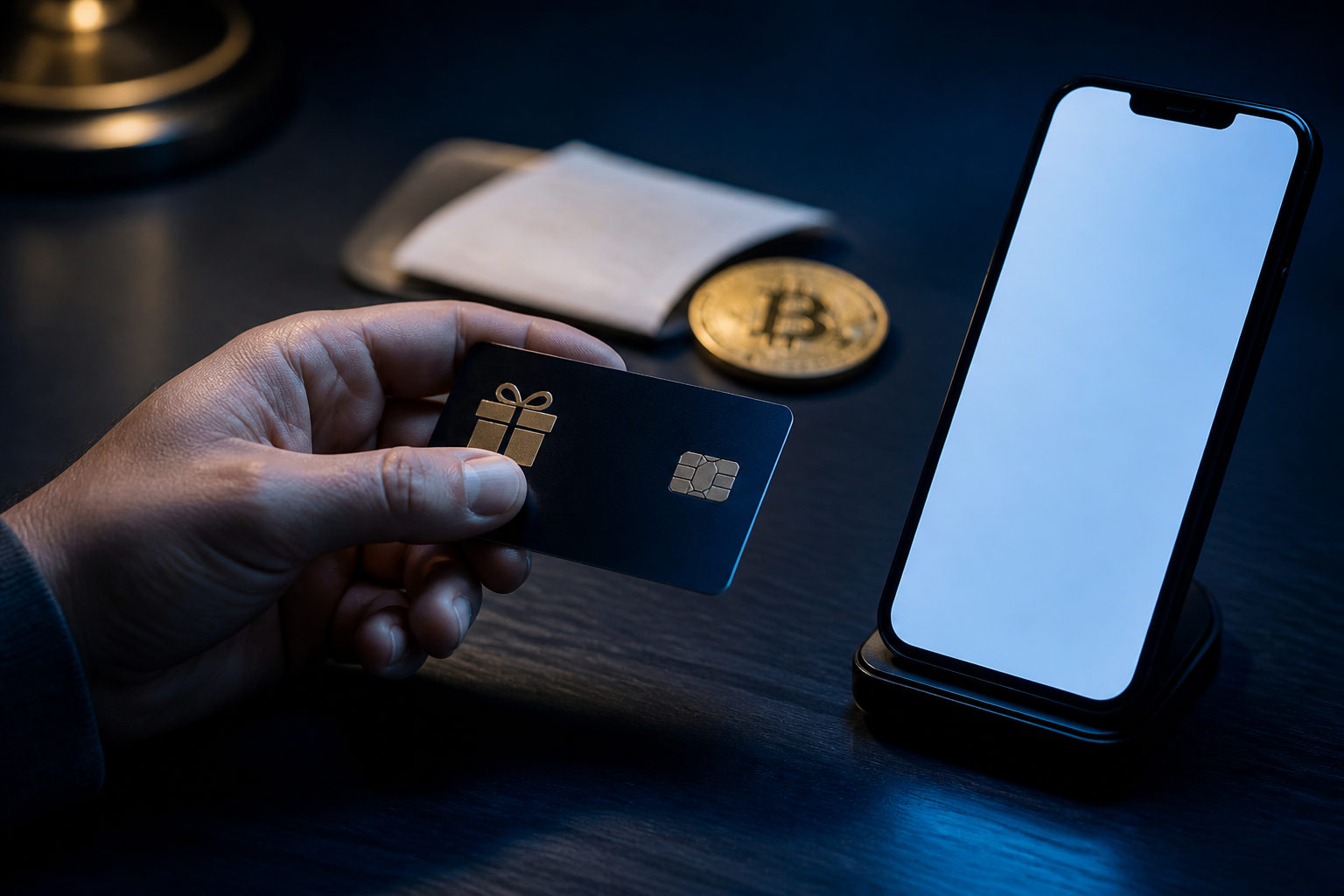
Yes, you can sometimes buy bitcoin with a Mastercard gift card, but success depends on the card terms, the payment rules of the service you use, and the checks required before the purchase is approved. The hard part is rarely clicking pay; it is figuring out whether the card is allowed, whether the seller is real, and whether you still control the process after payment.
Step 1: Check what kind of Mastercard gift card you actually have
Do this before you look for a seller. A Mastercard logo does not mean every gift card works like a normal debit or credit card. Some gift cards are meant for in-store use. Some work online only after activation and address registration. Some can be used online but still block categories tied to financial services, cash equivalents, or higher-risk merchants.
Read the card terms and look for a few specific points: online purchase support, activation status, billing address registration, expiration rules, and any merchant category limits. If the issuer restricts financial transactions, the payment may fail even if the checkout page accepts the card number. In some cases, the balance can be temporarily held and released later, which creates confusion if you think the card has already been drained.
If the wording mentions restrictions on money transfers, quasi-cash purchases, or similar categories, treat that as a warning sign. Repeated payment attempts are rarely helpful. They can trigger fraud filters and make later attempts harder, even on legitimate purchases.
Step 2: Work out whether you are paying a merchant or handing over card value
Pages that claim to let you buy bitcoin with a gift card do not all work the same way. Some process the card as a payment method. Some are peer-to-peer trades where you are dealing with another person. Others are little more than gift-card collection pages: they ask for the full card details first and promise bitcoin later.
That distinction matters because the risks are different. In a standard checkout flow, you should be able to see the order terms, identity checks, asset delivery rules, and dispute process before you pay. If a site keeps talking about speed but says little about failed orders, refunds, or how the final amount is calculated, you are being asked to trust too much without enough information.
Pay attention to what the seller wants from you. Entering card details into a payment field is one thing. Sending the front and back of the card, the code, and every identifying detail directly to a stranger is another. Once someone else has enough information to spend the card, your loss can happen before any bitcoin is sent.
Step 3: Prepare the transaction in the right order
Get the card ready for online use
Confirm that the card is activated, has spendable balance, has not expired, and has any required registration completed. Some merchants compare the billing data with what the issuer has on file. If the card needs a registered address and you skip that step, the payment can fail without a useful explanation.
Your setup also affects approval. Public Wi-Fi, unfamiliar devices, or rushed attempts across many tabs can make prepaid-card payments look suspicious. That does not prove fraud, but it can still stop the transaction.
Set up your own bitcoin wallet first
Before you pay, have a wallet that you control. That means you can view your receiving address yourself and you know how to secure your recovery phrase or private keys. If you wait until the last minute, it is easier to copy the wrong address or get pushed toward a wallet app you do not trust.
This step is about control. If the bitcoin stays inside a seller's internal account after the purchase, you may only be seeing a balance entry on their system rather than holding the asset in a wallet you manage.
Run a small test if the service allows it
If the card can be used in parts and the seller supports smaller purchases, test the flow with a limited amount first. That lets you check whether the order is recorded properly, whether the payment is accepted, whether the asset received is actually bitcoin, and whether the transfer record can be verified.
A small test does not remove risk, but it exposes problems earlier. If the process is confusing on a limited amount, scaling up will not make it safer.
Save evidence while you are still in the transaction
Keep the purchase receipt for the gift card, screenshots of the payment page, order numbers, messages with support, and any rules shown at checkout. Gift-card disputes often turn on what was promised at the time of payment. If the page changes later, your record may be the only proof of the original terms.
Do not leave this until something goes wrong. Chat logs can disappear, and web pages can change after the transaction.
Step 4: Understand why this payment method carries extra risk
Gift cards are harder to verify than ordinary bank-linked payments. Sellers may worry about stolen card data, resale fraud, or chargeback-related issues, so they often apply tighter controls or worse pricing. For buyers, that can show up as lower acceptance rates, more verification, and fewer reliable options.
Pricing is another problem. A gift card often does not convert into bitcoin at full face value. The gap can come from discounts, service charges, network fees, or the spread built into the quote. If the service does not show clearly what you will receive before you confirm payment, it becomes difficult to judge the real cost.
Scammers also know that gift-card buyers are often trying to complete a transaction quickly. A common trick is to call the full card details a verification step. Once they have enough information to spend the card, they can stall with excuses about review queues, payment checks, or temporary delays while the value is already gone.
Step 5: Know when to stop immediately
- The seller moves you off the original platform: If they push the conversation into private chat, the record of what was promised becomes weaker.
- You are rushed to send the card details now: Time pressure is often used to stop careful checking.
- Fees and delivery rules are vague: If you cannot tell what amount of bitcoin you will receive and under what conditions, you are missing the core terms of the trade.
- The service promises to skip all checks: That may sound convenient, but it often leaves you with less protection if the deal breaks down.
- You must reveal the full card before seeing the process: If the payment path is hidden until after disclosure, you are giving up leverage too early.
There is also a less obvious problem: a site may be real, yet the payment processor, bitcoin delivery, and support handling may sit with different parties. If responsibility is split and the terms are unclear, delays can turn into finger-pointing.
Step 6: If it keeps failing, do not force it
A failed attempt does not automatically mean you made a mistake. Gift cards were not built specifically for buying bitcoin, and some issuers simply do not support that use. Repeated attempts with the same card can create more friction without solving the underlying compatibility issue.
If your goal is to hold bitcoin for the long term, focus on a route where the rules are easy to understand, the costs are shown before payment, and the receiving wallet is under your control. The more indirect the payment path becomes, the harder it is to tell whether you are buying bitcoin, buying a promise, or just giving away the card's value.
FAQ
Will a Mastercard gift card always be declined for bitcoin purchases?
No. Some services do accept them, but approval depends on the card issuer's terms, the merchant category, and the checks required for the order. Reading the card rules first is usually more useful than trying the same payment over and over.
Why do gift-card bitcoin purchases often feel more expensive?
The final cost may include a discount on the card value, processing costs, network fees, and the spread in the quoted trade. Even when each item is not listed separately, the amount of bitcoin received may already reflect those deductions.
If someone says they only need my gift card details to verify the balance, should I send them?
You should be very careful. If the details are enough to spend the card, the value can disappear before any bitcoin arrives. A verification claim does not protect you once the information has been used.
Can I buy first and set up a wallet later?
That is a poor idea. Preparing your own wallet first reduces the chance of address mistakes, questionable wallet downloads, or leaving the bitcoin under someone else's control after payment.
What should I do first if the card was charged but no bitcoin arrived?
Collect the order number, screenshots, payment record, and all written promises shown during checkout, then use the official support or dispute path offered by the service. Do not send extra card details or make another payment just because someone says the first one is still pending.
Before you try to pay, check the card terms, the full fee display, who controls the receiving wallet, and what proof you can save during the transaction; if any one of those points stays unclear, stop before entering the card.
Disclaimer: This article is for informational and educational purposes only and is not investment, financial, or legal advice. Crypto assets are highly volatile and you could lose your entire investment. Do your own research and decide carefully.