
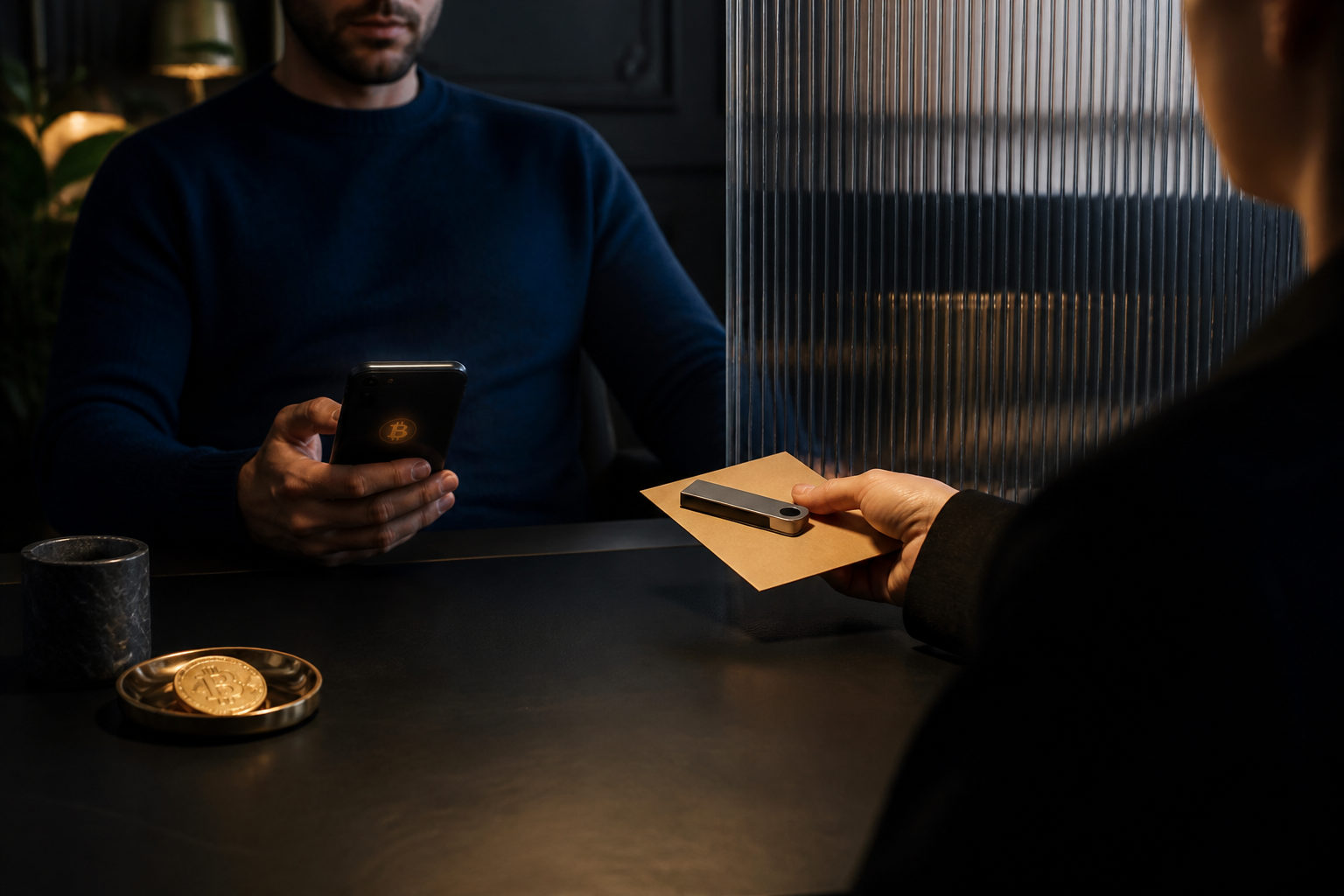
Where to buy bitcoin without KYC? In practice, the main options are peer-to-peer trades, bitcoin ATMs, face-to-face cash deals, and a small group of low-data exchange methods. The catch is simple: less identity checking usually means more risk, higher costs, or both.
Why people look for non-KYC bitcoin options
Someone searching for where to buy bitcoin without KYC is not always trying to avoid rules. Many people just want to limit how much personal data they hand over. Passport images, proof of address, selfies, and account records can sit in company systems for a long time, and users have little control over that once the upload is done.
There is also a privacy difference between buying bitcoin and opening a fully verified exchange account. Some buyers want to reduce the number of databases that hold their identity. Others want to separate small bitcoin purchases from their main financial profile. Those are understandable goals, but they often get mixed up with the idea of anonymity.
That is the first point to get right: no KYC does not automatically mean anonymous. Your payment method, your device, your network activity, your messages with a seller, and what you do with the coins after purchase all affect your privacy. Skipping an ID check reduces one kind of exposure. It does not erase every other trail.
Main channel types and their trade-offs
Peer-to-peer marketplaces
P2P trading is the most common answer to the question of where to buy bitcoin without KYC. In this setup, you deal with another person rather than a standard order book on a large exchange. A service, if one is involved, may provide listings, escrow, messaging, and dispute handling, but the trade itself is still between buyer and seller.
The benefit is flexibility. Sellers may accept different payment methods, and some may ask for little or no formal identity verification. That can make P2P appealing for buyers who want more control over what information they reveal.
The downside is that trust shifts from a centralized venue to an individual counterparty. A seller can delay, change terms, ask for extra proof after payment, or disappear if there is no real escrow. Even when the trade completes, the price may include a wide spread that reflects fraud risk and limited liquidity. For beginners, P2P can work, but it demands patience and careful judgment.
Bitcoin ATMs
Bitcoin ATMs are another route people consider when asking where to buy bitcoin without KYC. In some places, they let users insert cash and send bitcoin to a wallet address. That can feel direct and easy to understand, especially for someone who wants coins sent straight to a self-custody wallet.
Rules vary a lot by operator and location. Some machines may ask for only limited information, while others may ask for more depending on the transaction. Fees can also be steep, even when the process looks simple on the surface. Convenience often comes with a premium, and privacy depends on more than the machine itself. The surrounding environment, camera coverage, and the way you handle your wallet still matter.
Face-to-face cash trades
A direct cash meeting sounds private because it can remove the platform layer. One person brings cash, the other sends bitcoin to a wallet address. In theory, that reduces the amount of data collected by online services.
In practice, it creates a different set of problems. Physical safety becomes part of the transaction. So does counterfeit cash, pressure to change terms on the spot, and confusion over whether the bitcoin transfer is actually complete. For most buyers, face-to-face trades are not the easiest entry point. They may suit experienced users with a trusted counterparty, but they are not a simple fix for everyone.
Gift cards and indirect exchange methods
Some people try to buy bitcoin through gift cards or other digital vouchers. The appeal is clear: these methods can feel one step removed from banks and mainstream payment rails. But that distance often comes at a cost.
Pricing is often worse, and scams are common because once a gift card code is shared, it is usually gone for good. A buyer may think they found an answer to where to buy bitcoin without KYC, only to discover they traded good value for a weak chance of recovery if something goes wrong. These routes are usually harder to evaluate than they first appear.
No KYC is not the same as no compliance or no trace
A lot of articles stop at the list of methods and never explain the boundary conditions. That is a mistake. Marketplaces, sellers, and service operators can change their requirements at any time based on fraud patterns, local rules, payment risk, or internal policy. A method that asks for very little today may ask for more tomorrow. A route that works in one place may not be available in another.
Your payment method matters just as much as the channel. If you use a bank transfer or another payment tool tied closely to your legal identity, the trade may still be easy to connect back to you even if you never uploaded an ID document. On the other hand, even a cash purchase can lose much of its privacy value if you move the coins straight into a custody setup linked tightly to your personal profile.
So the better version of the question is not only where to buy bitcoin without KYC. It is which type of channel fits your local legal environment, your privacy goals, and your tolerance for counterparty risk. First ask whether you can use a method lawfully. Next ask whether you can use it safely. Price comes after that.
What to compare before you choose a route
Can you withdraw to a wallet you control?
This is one of the most important checks. If a service only gives you an internal balance and not actual bitcoin you can withdraw on-chain, your control is limited. Buyers focused on self-custody usually prefer methods that send coins directly to a wallet where they control the keys.
How risky is the payment method?
Reversible payments create tension. Sellers worry about chargebacks or disputes after they release coins. Buyers worry about sending funds first and getting nothing back. Escrow helps, but only if the process is clear and the records are strong enough to support a dispute. If there is no escrow, the risk goes up fast.
What is the full cost, not just the listed fee?
Many non-KYC routes hide their true cost in the spread. A low visible fee does not mean the trade is cheap. You may be paying more through the quoted bitcoin price, withdrawal costs, network fees, or minimum trade conditions. Always look at total cost rather than one fee line.
What data is still being collected?
A service may not ask for government ID and still gather a phone number, payment details, message logs, device information, or transaction history. Privacy is not a single switch. It is the sum of many small exposures. Buyers should be clear about what they actually want: less data submission, stronger practical privacy, or full self-custody after purchase. Those goals overlap, but they are not identical.
Common mistakes buyers make
- Paying first without meaningful protection: If there is no real escrow or trusted process, recovery options may be weak.
- Confusing no KYC with safety: Less identity collection does not protect you from scams, wallet mistakes, or bad operational security.
- Ignoring address checks: Sending or receiving bitcoin to the wrong address is usually irreversible, so every transfer deserves a careful review.
- Starting too large: A first trade should test the process and the counterparty. Going big on the first attempt increases the cost of error.
- Sharing too much in chat: Casual conversation can reveal more than expected, including payment habits, location hints, and other personal details.
- Overlooking source risk: Private deals can carry hidden issues if the coins come from questionable activity. Retail buyers should be cautious with opaque arrangements.
A practical way to approach it
- Set up a wallet where you control the keys before you start shopping for a purchase route.
- Decide what matters most to you: lower data exposure, easier access, lower cost, or stronger self-custody.
- Choose a channel type that matches that goal instead of reacting to the words “no KYC” alone.
- Start with a small test transaction to check the process, timing, and communication.
- Review the total cost and withdrawal path before paying.
- Keep your own records of the order, payment proof, and transaction hash in case there is a dispute.
If your goal is simply to limit data collection, the best answer may be a method that balances privacy with safety rather than chasing the most extreme version of “no verification.” Buying the bitcoin is only one part of the job. How you receive it, store it, and move it later matters just as much.
FAQ
Can I really buy BTC without submitting ID?
Sometimes, yes. It depends on the channel, the seller, your location, and the payment method involved. A route that skips ID may still collect other information.
Does no KYC mean the purchase is anonymous?
No. Payment records, device signals, chat history, and wallet behavior can all reduce your privacy. Avoiding ID checks only removes one layer of identification.
Are cash trades the safest private option?
Not always. They can reduce platform data collection, but they add physical and counterparty risks that many buyers underestimate. For new users, that trade-off can be hard to manage.
Why do non-KYC options often cost more?
Sellers often price in fraud exposure, limited liquidity, and extra uncertainty. That premium may appear in the spread rather than in a simple fee box.
Should I leave the bitcoin on the service after buying?
If control matters to you, long-term storage on someone else’s system is usually not ideal. Many buyers prefer to move coins to a self-custody wallet and keep their backup secure.
Before you place an order
Make sure you already have a self-custody wallet, confirm the receiving address carefully, understand whether your payment can be reversed, and know how the service handles disputes. If any of those points is unclear, stop there and sort that out first.
Disclaimer: This article is for informational and educational purposes only and is not investment, financial, or legal advice. Crypto assets are highly volatile and you could lose your entire investment. Do your own research and decide carefully.