
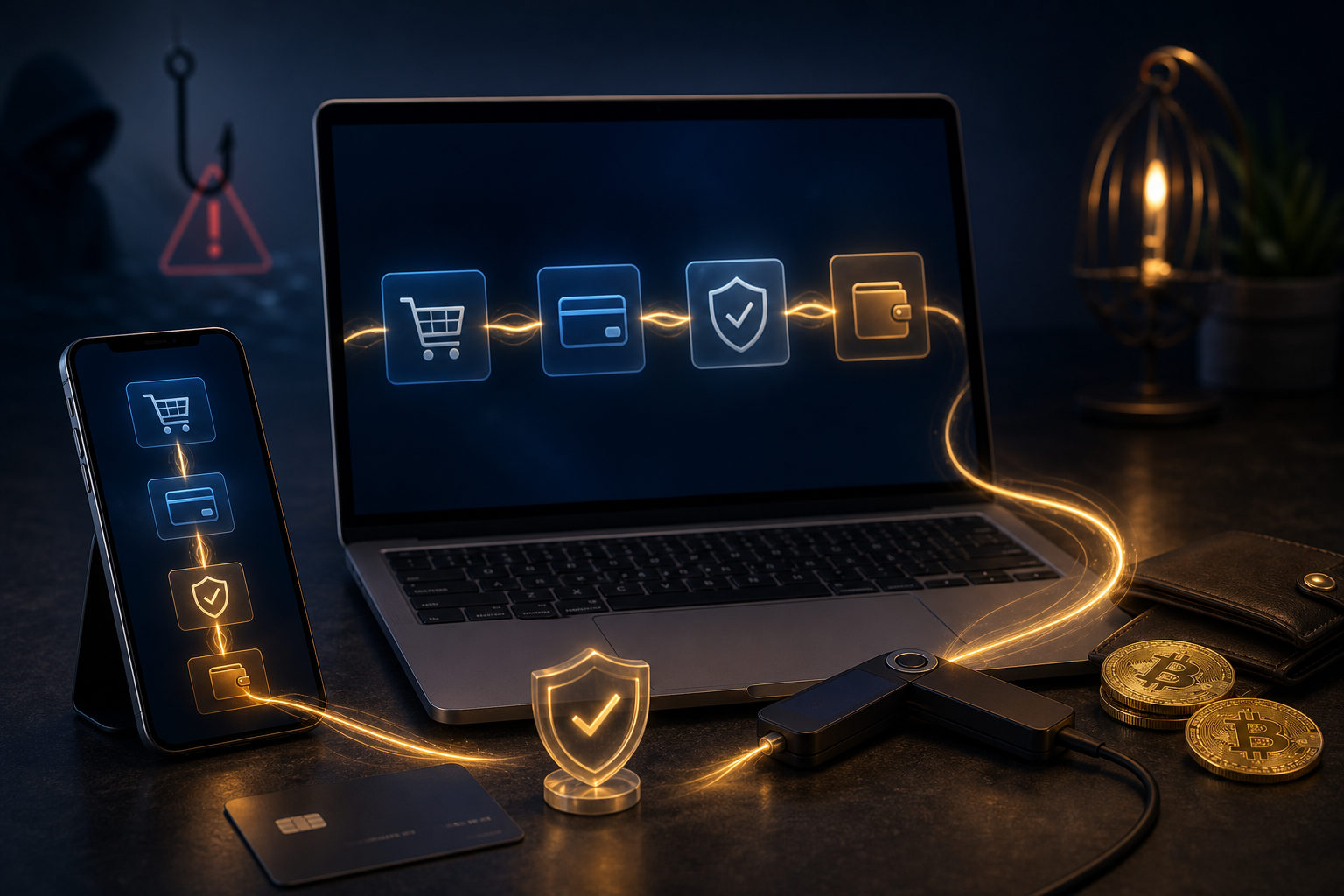
Yes, you can buy Bitcoin online. The real issue is not whether it is possible, but whether you can do it with a clear process, proper account security, and a plan for custody after the purchase.
Start with the right question: what are you actually buying?
When people buy Bitcoin online, they often assume the transaction ends at payment. It does not. In many cases, what you first receive is a balance inside a service account, and your level of control depends on whether you can withdraw the BTC to a wallet you manage yourself.
That distinction matters because it affects every later decision, from payment setup to long-term storage. It also helps you avoid a common mistake: treating easy online access as a reason to rush into a larger purchase than you intended.
Step 1: Decide your goal before choosing a buying method
Your first action should be simple: define the purpose of the purchase. Are you trying a small test buy to understand the process, or are you planning to build a position over time? A clear goal makes it easier to choose the right service flow and reduces the chance of getting distracted by extra features.
The reason is straightforward. If you sign up without a plan, the interface can push you toward actions you did not mean to take, such as changing your order size, leaving assets in the account without a storage plan, or using products you do not understand. Keep one warning in mind: do not borrow money for a Bitcoin purchase, and do not increase your budget just because someone else posted profits online.
Common ways people buy Bitcoin online
- Centralized trading services: usually more structured and easier for beginners to follow step by step, though you still need to secure your account and understand withdrawal rules.
- Peer-to-peer markets: can offer flexible payment choices, but disputes and fraud risk are higher, so extra caution is needed.
- Broker-style purchase flows: often simpler on the surface, which can help with a first purchase, but you still need to review fees, verification requirements, and withdrawal support.
Whichever path you choose, read the operating rules first. People often focus on the buy button and ignore verification limits, transfer restrictions, or account review rules until a problem appears.
Step 2: Set up your account, identity checks, and security tools
In practice, you will usually need to create an account with your own email address and mobile number, then complete identity verification before full features are available. Some services limit deposits, purchases, or withdrawals until those checks are done.
There is a practical reason for that. Verification is tied not only to access, but also to account recovery, suspicious login reviews, and protection against impersonation. Be careful where you submit personal documents: use only the official website or official app, never a message from a so-called support agent in chat.
Security actions to complete right away
- Turn on two-factor authentication and prefer an authenticator app over text messages.
- Create a unique password that is not reused anywhere else.
- Enable login alerts, withdrawal confirmation, and device management if available.
- Store backup codes offline instead of leaving them in cloud notes or screenshots.
These steps may feel tedious. They still matter. Many losses happen long after the purchase, when an account was left exposed and someone gained access through weak security habits.
Step 3: Add a payment method and make the first purchase
The next step is usually to connect a payment method, enter the amount you want to buy, review fees and order details, and confirm the transaction. The exact screen flow varies by service, but the core path is similar: fund the account or pay directly, confirm the order, and receive Bitcoin in the account balance.
This structure exists for a reason. The service needs to confirm payment and settlement status, and you need a chance to see the total cost before you commit. Watch for three things: make sure you are buying BTC rather than a similarly named token, check the fee and spread terms, and avoid making payments on public networks or shared devices.
If this is your first time buying Bitcoin online, a small test purchase is often the safer move. It lets you confirm that payment works, identity checks are complete, and withdrawal features are available before you commit more funds.
Step 4: Decide whether to keep it on the service or move it to your own wallet
After the purchase, the key question is control. If the Bitcoin stays inside a third-party account, your access depends on that service. If you withdraw it to a wallet you control, you hold the transfer authority yourself.
That difference is central to how Bitcoin works. It can be held directly by the user, but only if the wallet setup and recovery information are handled correctly. The main caution for beginners is not to rush. Before making a withdrawal, confirm the receiving address, understand your wallet backup process, and test carefully rather than moving funds back and forth without a plan.
What to review when choosing a wallet
- Who controls the recovery information: this is the core of ownership and access.
- Whether it fits your usage pattern: everyday transfers and long-term holding call for different habits.
- Whether backup is realistic: write it down, store copies separately, and do not rely only on connected devices.
Even if you plan to leave the Bitcoin in the service account for now, learn the withdrawal process early. Waiting until you urgently need to move funds can lead to mistakes, especially when fake interfaces or social engineering are involved.
Step 5: Put scam prevention ahead of speed
The biggest danger in buying Bitcoin online is often not the price swing. It is the number of people trying to exploit urgency, confusion, or inexperience. Anyone promising guaranteed returns, asking you to hand over verification codes, or offering to buy and hold Bitcoin on your behalf should be treated as a major warning sign.
Common scam patterns
- Fake support agents: they contact you first, claim there is an account issue, and try to collect passwords, codes, or transfer approvals.
- Fake websites and apps: the layout may look convincing, but the goal is to steal your login details or wallet recovery data.
- Managed buying or custody offers: they claim to make the process easier while removing your control over payment records and assets.
- Private deals in chat groups: these often rely on fake payment proof, pressure tactics, or disappearing after you send funds.
- Yield pitches after purchase: once you have BTC, someone pushes you into a so-called income product that requires sending coins away.
A simple rule helps here: create the account yourself, complete verification yourself, make payment yourself, and keep recovery information yourself. Every extra hand in the process adds another point of failure.
FAQ
Do I need a wallet before I buy Bitcoin online?
Not always. Some people open an account and complete a first purchase before moving on to wallet setup. Even so, you should learn the basics of wallet control early, or it will be hard to judge who actually holds access to the Bitcoin.
What payment method is best for an online Bitcoin purchase?
That depends on your region and on what a given service supports. Whatever method you use, keep it in your own name and save your order records so you can review them if anything looks wrong.
Do I have to buy a whole Bitcoin?
No. Bitcoin is divisible, and the smallest unit is the satoshi, where 1 satoshi equals one hundred millionth of a BTC. For beginners, a small test purchase is usually more practical than trying to buy a full coin.
Is it okay to leave Bitcoin on the platform after buying?
Some people do that for convenience, especially at the start. The tradeoff is that account restrictions, device compromise, or fake support messages can become much harder to deal with, so you should at least understand withdrawal and backup before deciding.
What if I only want to learn the process and not trade often?
Then focus on getting the workflow right instead of making repeated buys and sells. You can set up the account, secure it, make a small purchase, and test the withdrawal path before deciding whether to keep holding Bitcoin.
Checklist before you place the order
Before you buy Bitcoin online, check these points in order: are you on the official site or app, is two-factor authentication enabled, is the payment method yours, are you buying BTC, do you understand the fees and withdrawal rules, and do you know where the Bitcoin will be stored afterward. That short review can prevent mistakes that are much harder to fix later.
Disclaimer: This article is for informational and educational purposes only and is not investment, financial, or legal advice. Crypto assets are highly volatile and you could lose your entire investment. Do your own research and decide carefully.