
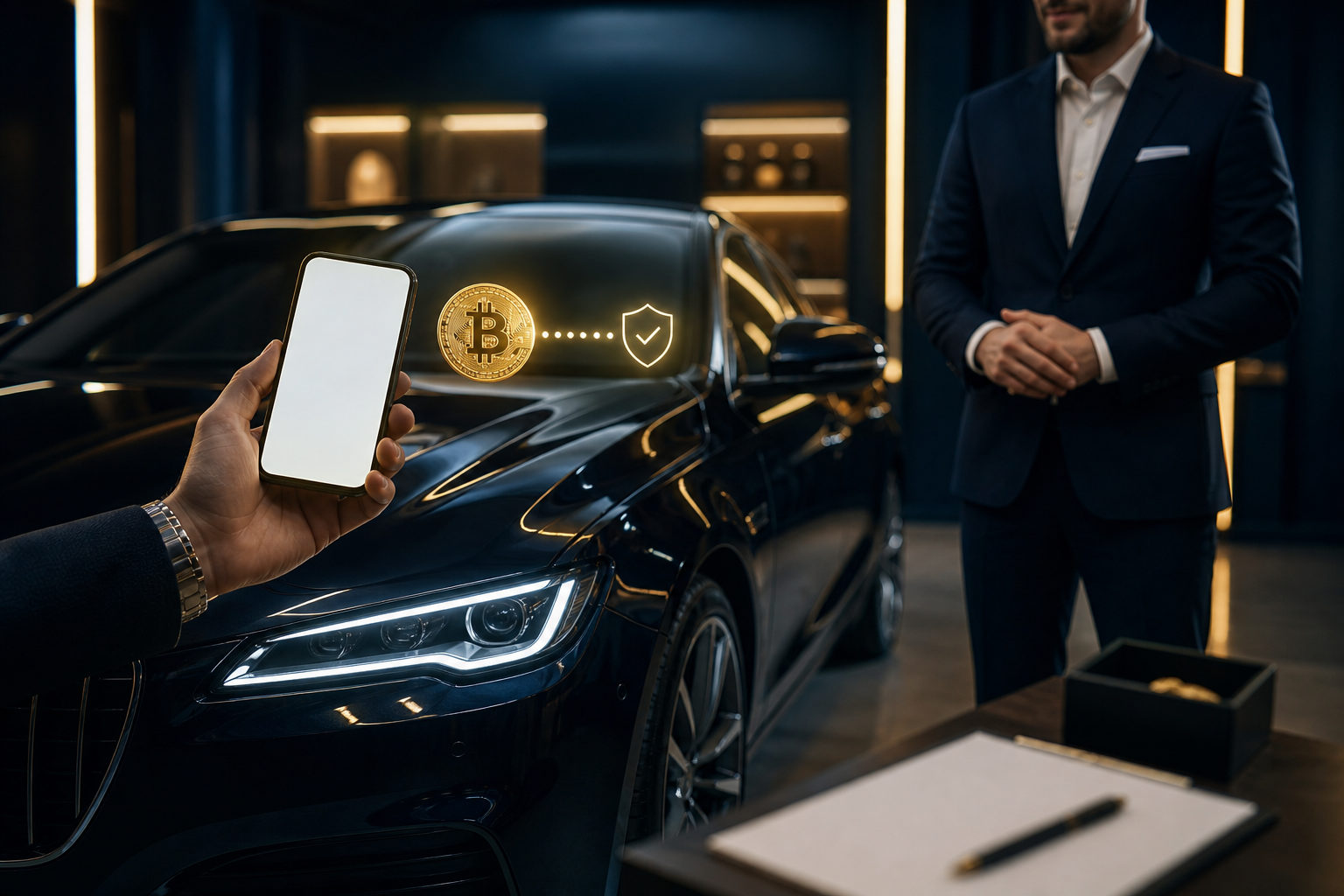
Can I buy a car with bitcoin? Yes. The real question is whether the seller accepts BTC on clear terms and can complete delivery and title transfer without confusion.
Step 1: Find out what the seller actually accepts
Some sellers take bitcoin directly. Others advertise crypto payments but only accept a service that converts BTC into dollars before the deal closes. Those are not the same thing, and the gap matters.
A car sale is rarely treated like a casual retail purchase. The seller may care about accounting, refund handling, internal approval, or how long a quoted amount stays valid. If you skip that first conversation, the deal can fall apart right when you think you are ready to pay.
Ask plainly: Do you accept BTC itself, or do you only allow a crypto-funded dollar payment? Also ask how the price is set, when it is locked, and what happens if the market moves before the transaction is finished.
Step 2: Get the pricing rules in writing
The sticker number alone is not enough. You need the full payment picture: vehicle price, taxes and fees, any deposit terms, whether add-ons are included, and how a cancellation would be handled.
That sounds picky. It should. Bitcoin transfers usually cannot be reversed the way a card payment might be challenged, and car deals often involve extra items that appear late in the process. A vague agreement is where trouble starts.
- Price basis: Is the car priced in dollars and converted into BTC at payment time, or is the deal fixed in a specific bitcoin amount?
- Quote window: How long does the quoted amount stay valid?
- Extra charges: Are taxes, paperwork, transport, or optional features already included?
- Refund method: If the sale is canceled, does the seller return dollars or BTC?
Written confirmation changes the tone of a deal. It forces both sides to name the rules before money moves, which is exactly what you want in a high-value purchase.
Step 3: Verify the seller and the payment address before sending anything
This is where many buyers get careless. A professional-looking listing or a quick chat does not prove that the person on the other side can deliver the car, receive payment safely, and complete the paperwork.
Check the business identity if you are dealing with a dealership. If it is a private seller, match the person to the vehicle documents and make sure they can transfer ownership. Then verify the receiving wallet address through a second channel. Not the same message thread. A separate confirmation.
Why be this strict? Because address substitution scams are simple and effective. A fake staff member, a compromised email account, or a copied message at the wrong moment can redirect funds to an attacker. Once bitcoin is sent to the wrong address, recovery is usually difficult.
- Review the vehicle details first so the car itself is clearly identified.
- Confirm the payment address through another trusted contact point.
- Send a small test payment before the main amount.
- Wait for both blockchain confirmation and seller confirmation under the terms already agreed.
One more thing. No honest seller needs your seed phrase, private key, or wallet verification codes to receive payment. If anyone asks for them, stop there.
Step 4: Treat delivery and title transfer as part of the payment plan
People tend to focus on the coin transfer because it feels technical and risky. Fair enough. Still, the deal is not really done until the vehicle is delivered and ownership can be transferred properly.
Ask who handles the paperwork, when you get the keys, what documents must be signed, and whether any restriction could delay transfer. Do that before the main payment goes out. Afterward is late.
| Stage | What to confirm | What buyers often miss |
|---|---|---|
| Before payment | Seller identity, vehicle details, pricing terms | Relying on chat messages instead of formal documents |
| During payment | Wallet address, timing of price lock, receipt standard | Sending the full amount under pressure |
| After payment | Delivery timing, paperwork, title transfer steps | Assuming on-chain payment equals completed ownership transfer |
A blockchain transfer settles the money side. It does not move the car title by magic. If the seller says paperwork can be sorted out later, slow the process down and get specifics first.
Step 5: Watch for pressure, confusion, and last-minute changes
Fraud does not always look dramatic. Sometimes it is just speed. A seller pushes you to send a deposit “right now,” changes the wallet address at the last minute, avoids written terms, or keeps saying the car will go to someone else unless you act immediately.
That kind of pressure is a warning sign because it cuts you off from the normal checks that make a transaction safer. Good sellers may move fast, but they should still be able to identify the vehicle clearly, explain the payment route, and put the conditions in writing.
If the deal starts simple and becomes messy only when payment is discussed, pause. You are not losing your chance by verifying details. You are protecting it.
FAQ
Can a dealership say it takes crypto but still refuse direct BTC?
Yes. Some dealerships allow crypto-funded purchases only through a processor that converts bitcoin into dollars. That still lets you use BTC, but the seller may never hold the bitcoin directly.
What happens if bitcoin moves in price while I am buying the car?
That depends on the quoted terms. If the seller has not stated when the price is locked, a market move can turn into a dispute very quickly.
Is buying from a private seller with bitcoin easier?
It can feel faster because there are fewer layers. At the same time, identity checks, vehicle ownership, and title transfer become even more dependent on your own review.
What should I do if I sent BTC and the seller says it never arrived?
Check the transaction hash, the destination address, and the blockchain status first. Some disputes come from an address mismatch or a disagreement over when payment counts as received.
Where can I check the live bitcoin price before deciding?
You can look at major market data sites or large trading services for a live quote. The amount that matters for your purchase, though, is the one defined in your written agreement with the seller.
Before you send the full amount
Put the sequence in order: confirm what kind of payment the seller accepts, get the terms in writing, verify identity and wallet details, send a test transaction, and only then move to the main payment, delivery, and title transfer. If the seller will not document the rules or keeps changing payment instructions, walk away from the deal.
Disclaimer: This article is for informational and educational purposes only and is not investment, financial, or legal advice. Crypto assets are highly volatile and you could lose your entire investment. Do your own research and decide carefully.